
Mara River
Crossing Guide
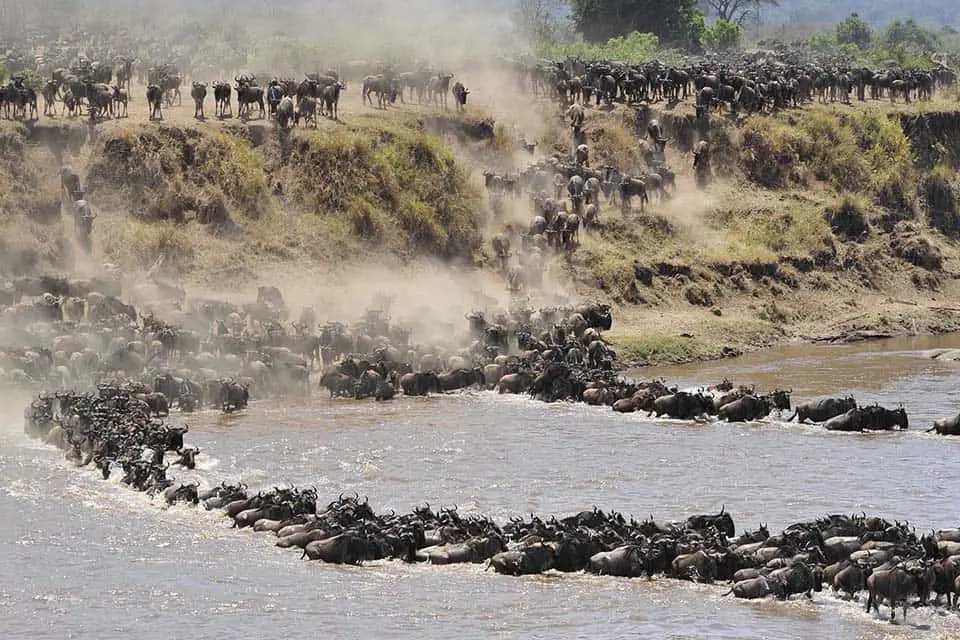
The single most dramatic scene in the Great Migration — wildebeest plunging into crocodile-infested waters. Here is how crossings actually happen, and how to give yourself the best chance of seeing one.
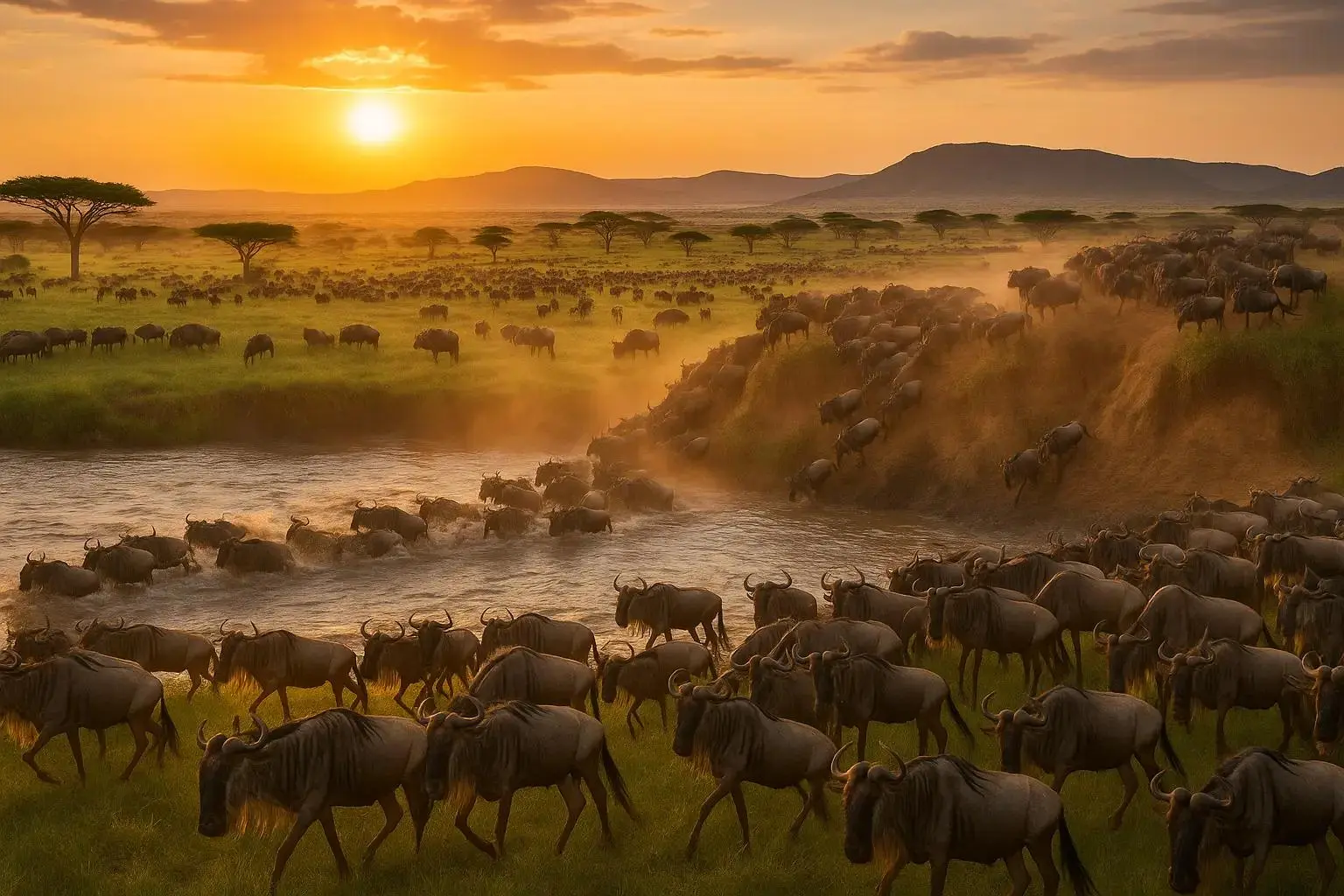
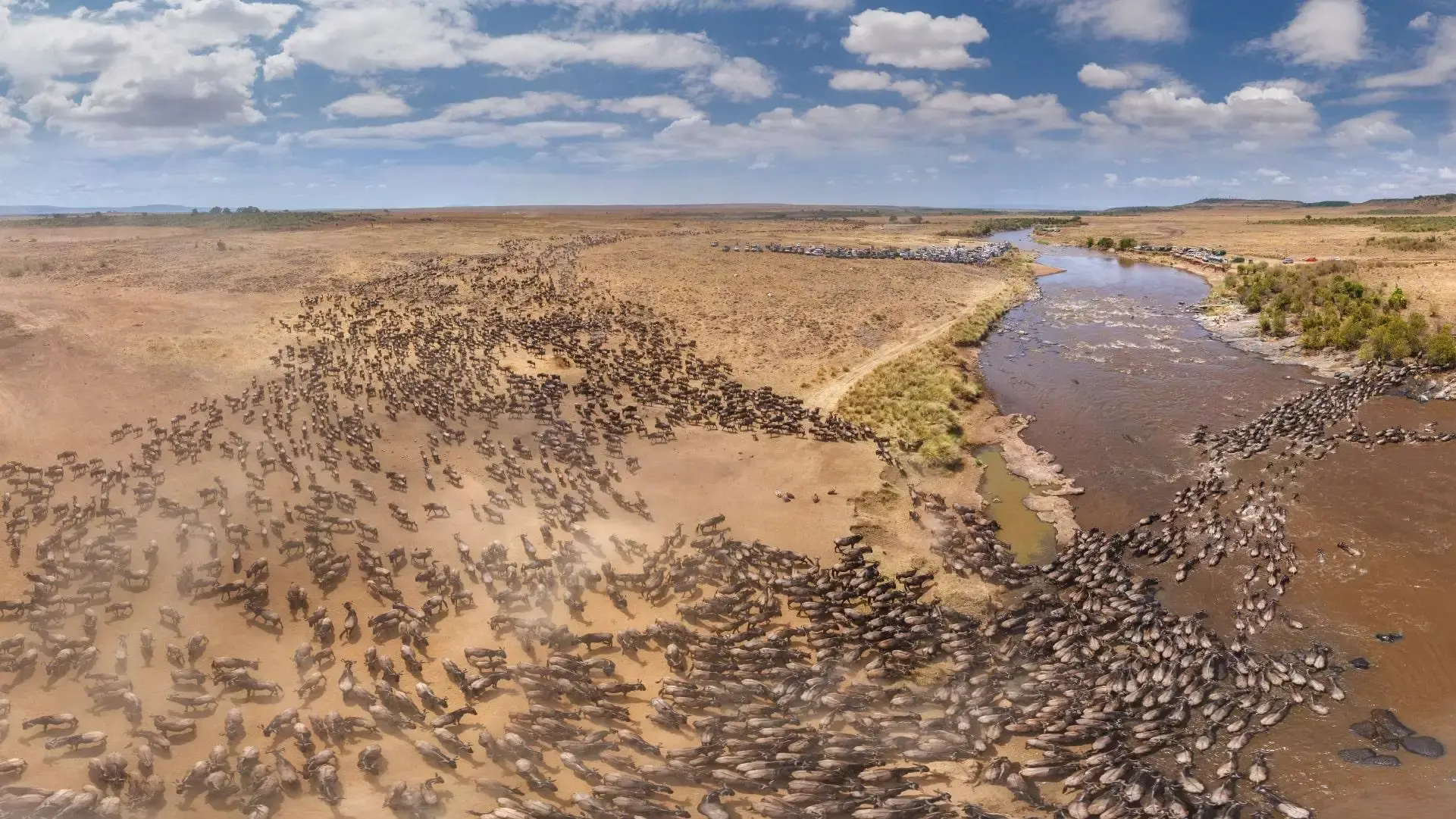
As the migration pushes north each dry season, wildebeest and zebra reach the Mara River in Northern Serengeti and must cross it to keep following the rains. The river is wide, fast-flowing in places, and home to large Nile crocodiles.
Herds can gather at the riverbank for hours — or days — before committing to cross, often triggered by a single animal's move. This is why crossings cannot be scheduled: guides read herd behaviour and position vehicles at likely crossing points, then wait.
Seeing a crossing is one of the most sought-after safari moments in Africa, but it rewards patience and enough time in the right zone far more than luck alone.
Crossings are not random accidents — herds are responding to grazing pressure on their current bank and the pull of fresh grass beyond the river, part of the same rainfall-driven cycle that governs the entire migration. Once one section of the herd crosses, it is common for the same animals to cross back a day or two later if conditions on the original bank improve, meaning a single stretch of river can see repeated crossing activity through a season.
The Mara River itself is only around 400km long, but the stretch relevant to Serengeti safaris — roughly between Kogatende and the Kenyan border area — concentrates an outsized share of migration drama each year because it is one of only two major water barriers (alongside the Grumeti) that the herds must physically cross on their annual circuit.
Reality check: even in peak season, no operator can guarantee a crossing on a specific day. Staying longer in the Northern Serengeti is the single biggest factor in your odds.
The gathering
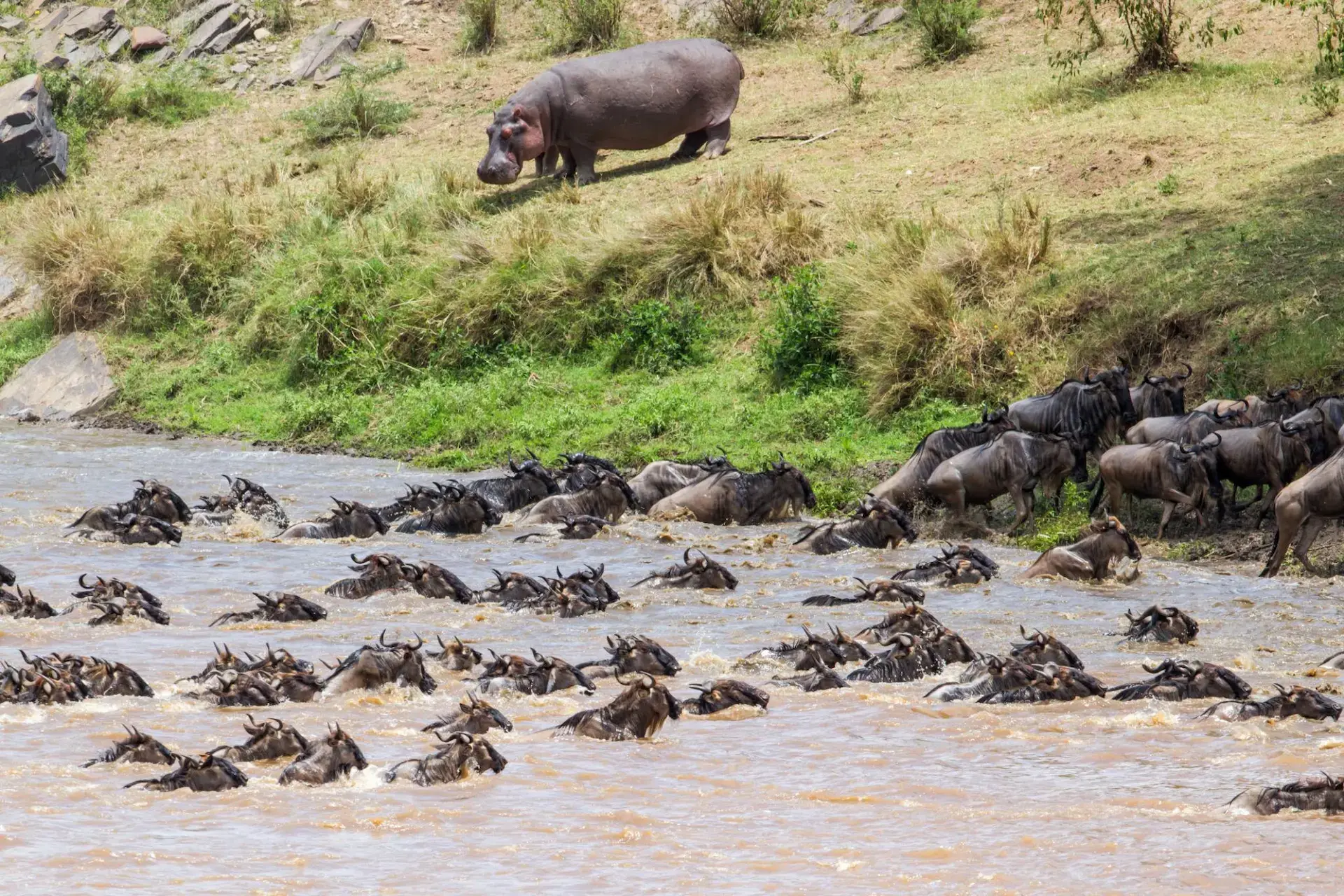
Hundreds to thousands of wildebeest bunch up at the riverbank, sometimes for hours, building nervous energy before anyone moves.
The trigger
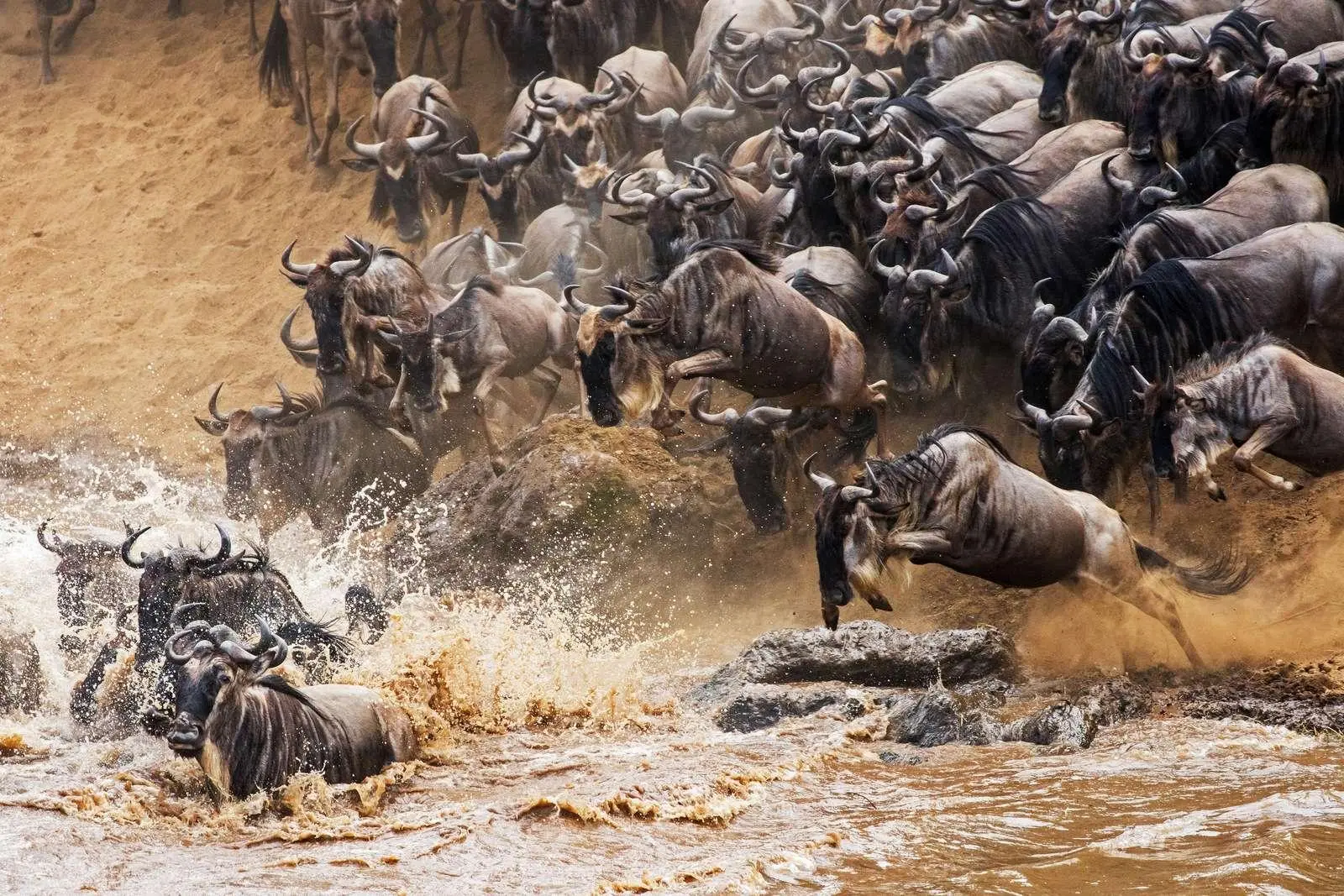
A single animal breaks first — often after a false start or two — and the rest of the herd follows in a chaotic rush.
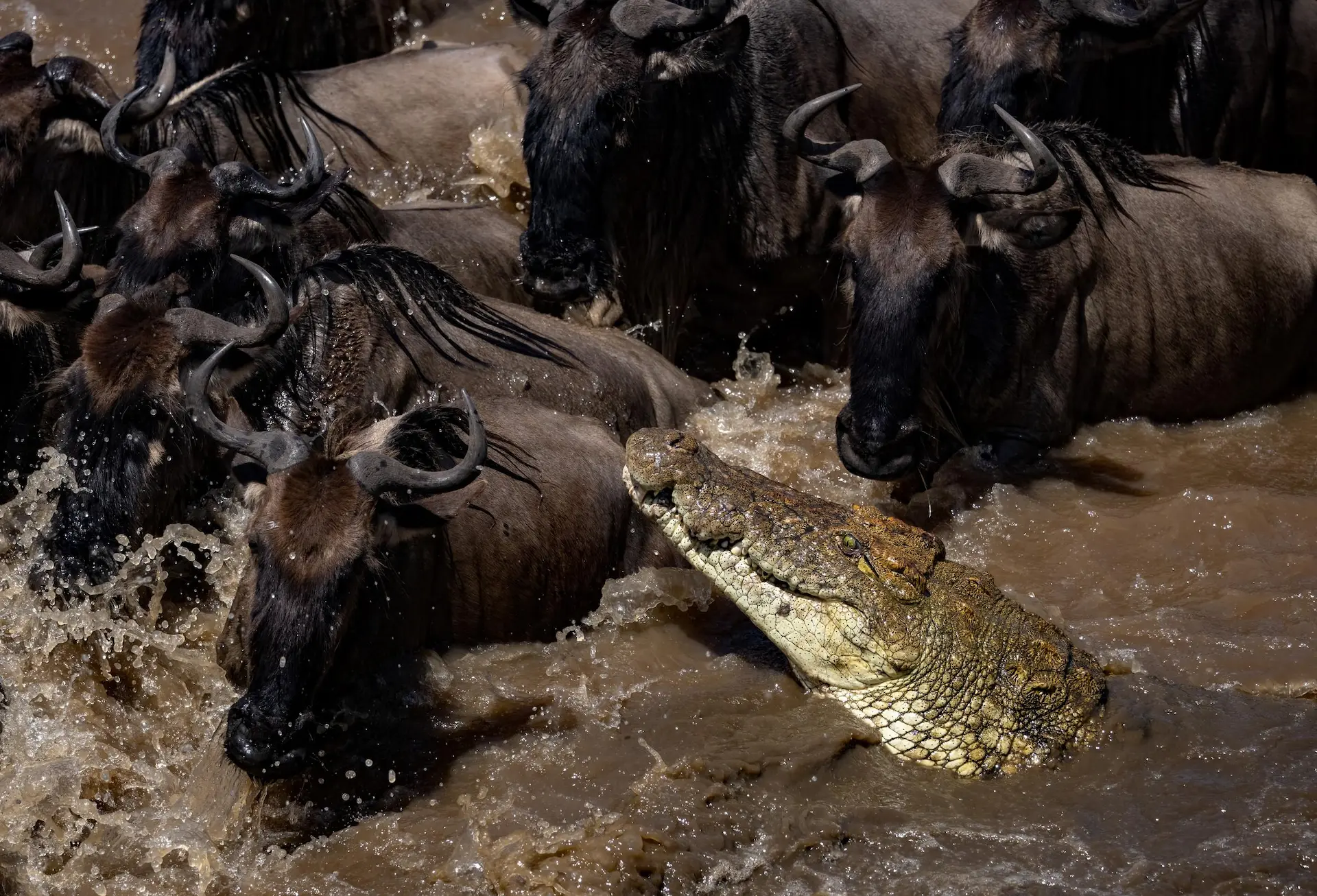
The crossing itself
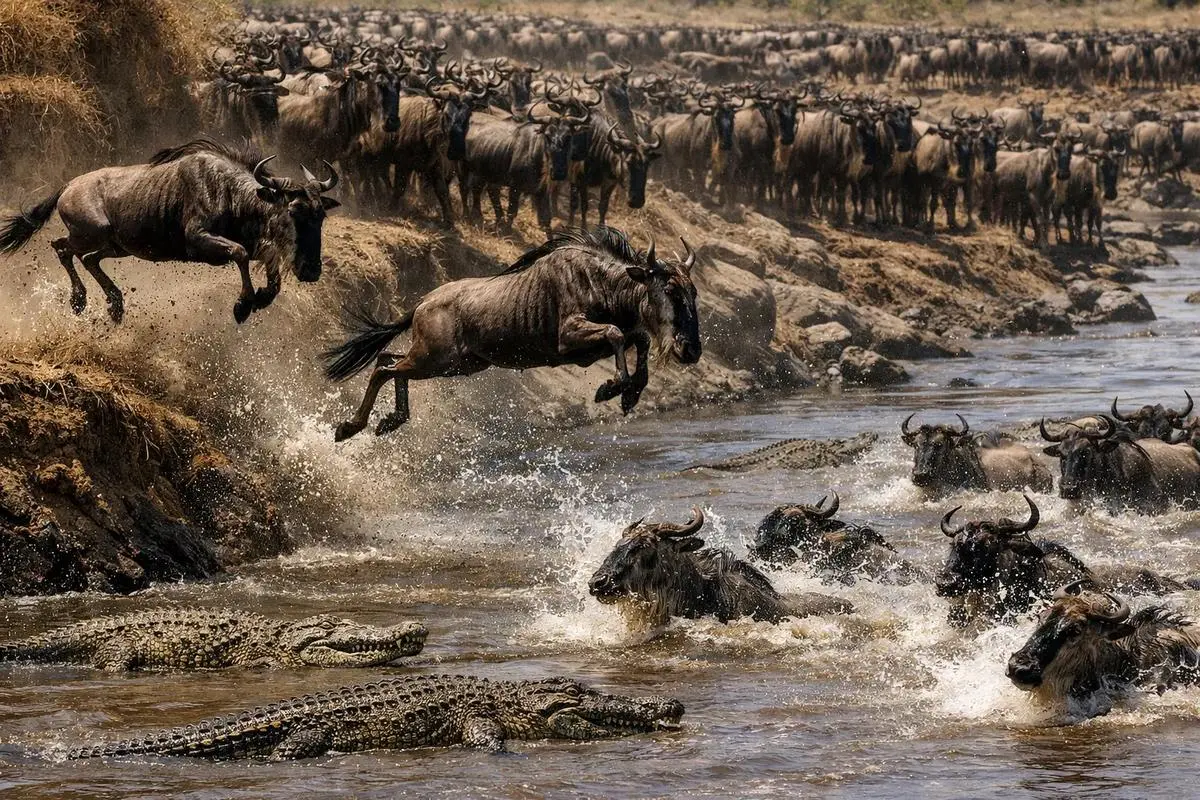
Animals leap, swim, and scramble across, navigating strong currents, steep banks, and resident crocodiles.
The aftermath
Survivors regroup and continue grazing north; predators and crocodiles take advantage of the chaos at the water's edge.
July: the first herds arrive at the Mara River and early crossings begin, though numbers are still building.
August–September: peak season — the largest herd numbers are in the Northern Serengeti and crossings happen most consistently.
October: crossings continue but taper off as herds begin their journey back south.
- →Stay at least 3–4 nights in the Northern Serengeti — crossings can take days to happen at any one point.
- →Choose camps in Lamai or Kogatende, both close to well-known crossing points along the river.
- →Ask your guide about recent activity — camps share sightings daily, which helps position vehicles at the most active bank.
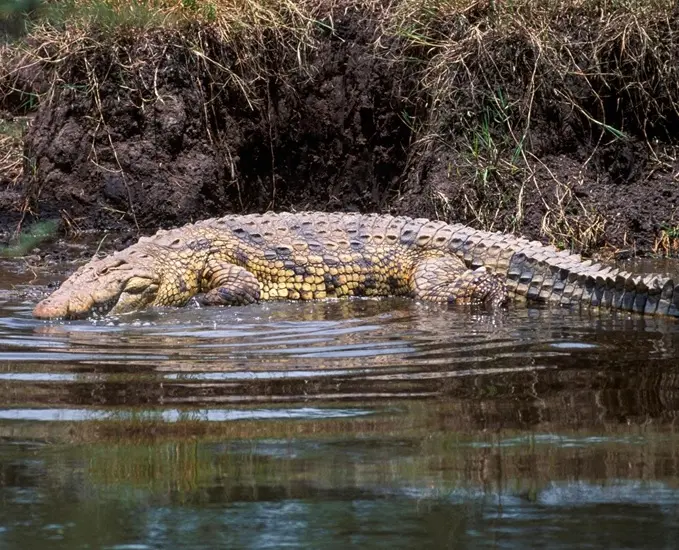
Very high
Large resident crocodiles position themselves at known crossing points, an ever-present risk for crossing herds.
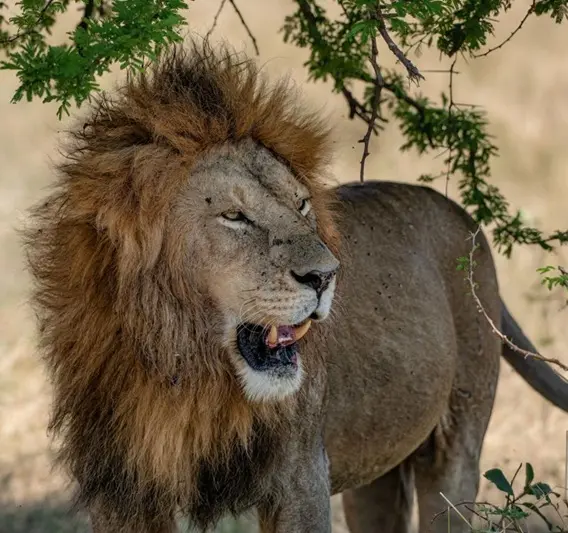
High
Prides patrol riverbank approaches, taking advantage of herds bottlenecked near the water.
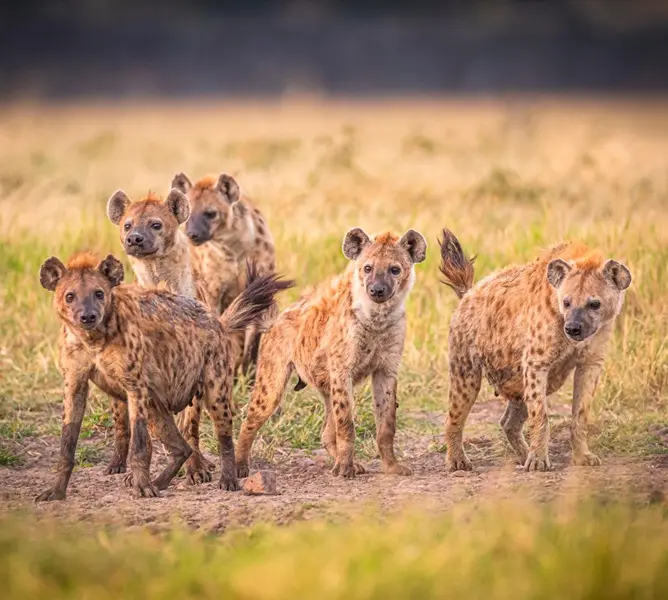
High
Opportunistic scavengers and hunters, common around crossing aftermath.
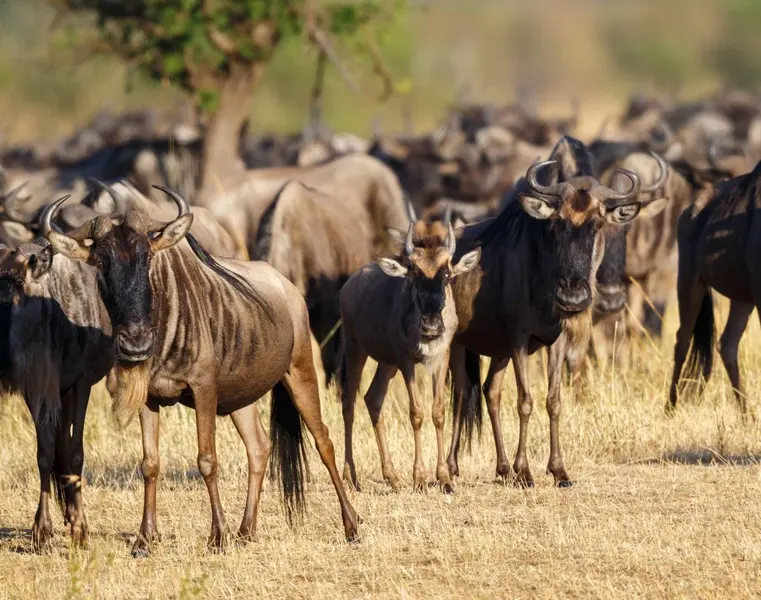
Very likely in season
The migration's main players, gathering in their thousands at known crossing points.
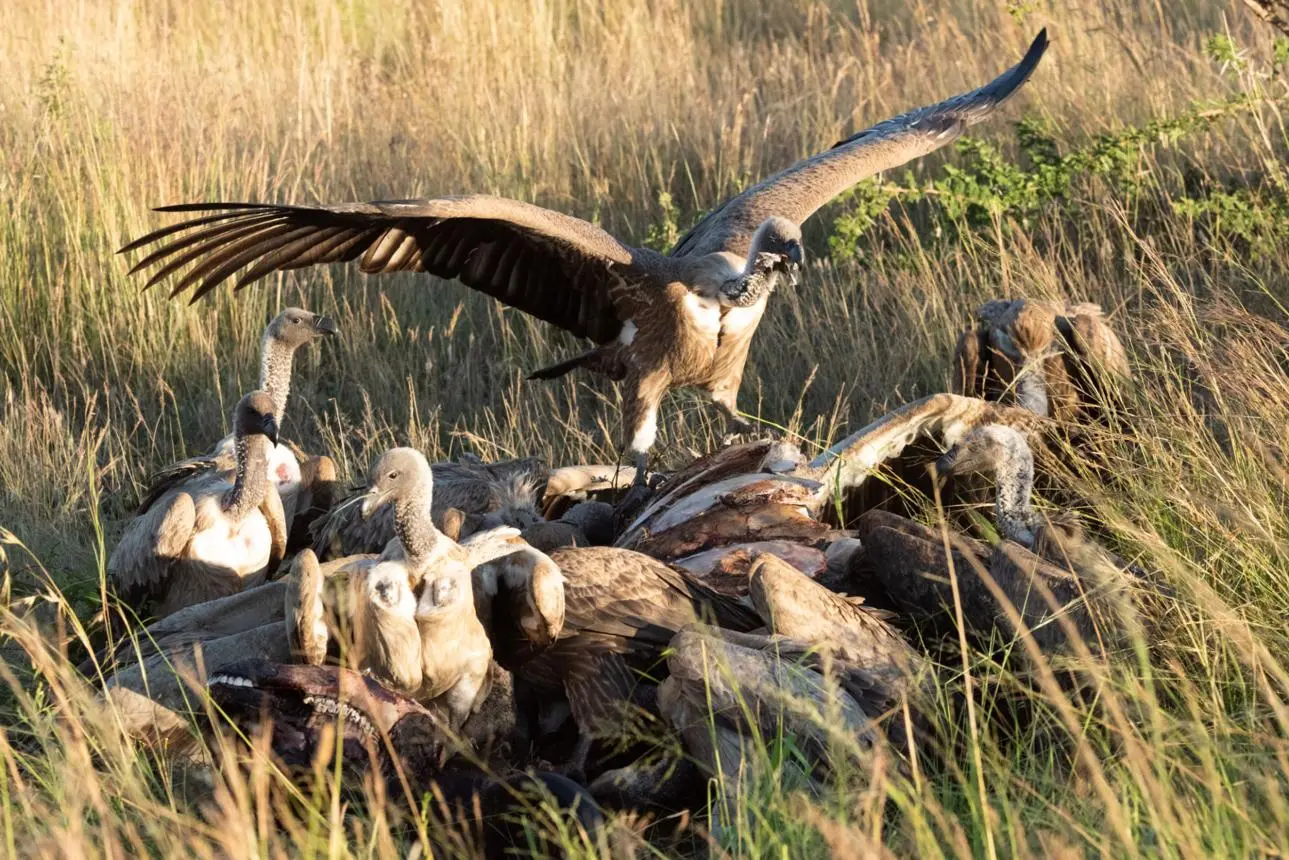
High
Circle overhead and gather quickly once a crossing produces a carcass.
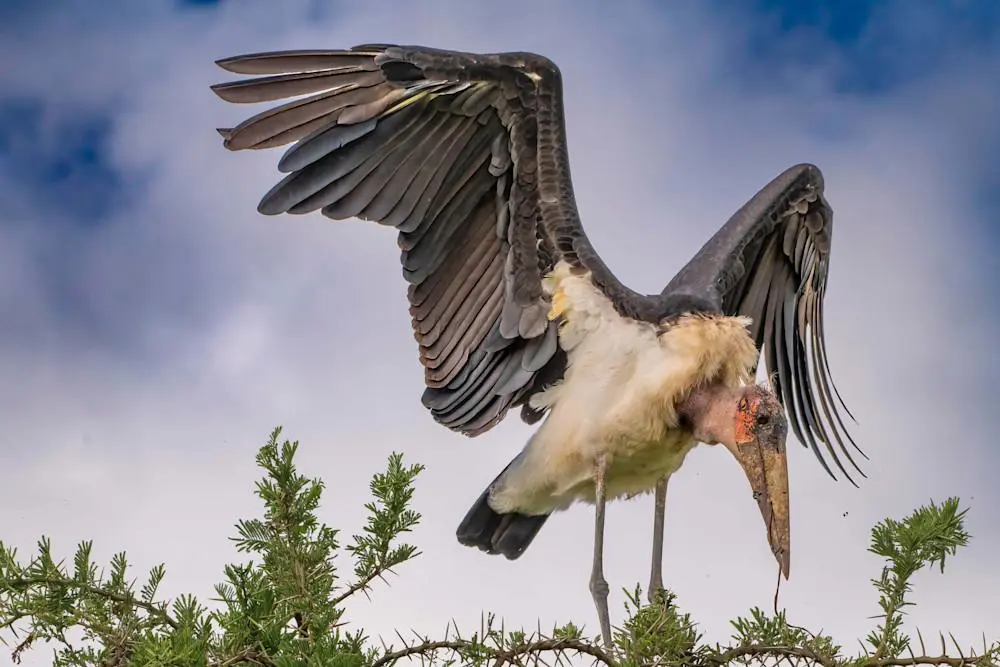
Moderate
Often seen alongside vultures at the water's edge, cleaning up remains after a crossing.
Vehicle positioning
Experienced guides position vehicles at a respectful distance from likely crossing points, balancing view quality with not disturbing the herd.
- →Wait quietly upwind of the gathering point
- →Avoid crowding the riverbank with multiple vehicles
- →Let the guide judge timing — herds are easily spooked
Photography tips
Crossings move fast once they start, so preparation matters more than reaction speed alone.
- →Use a fast shutter speed (1/1000s or faster) for action shots
- →Pre-focus on the riverbank where animals are likely to enter
- →Bring a zoom lens (200mm+) for compressed, dramatic shots
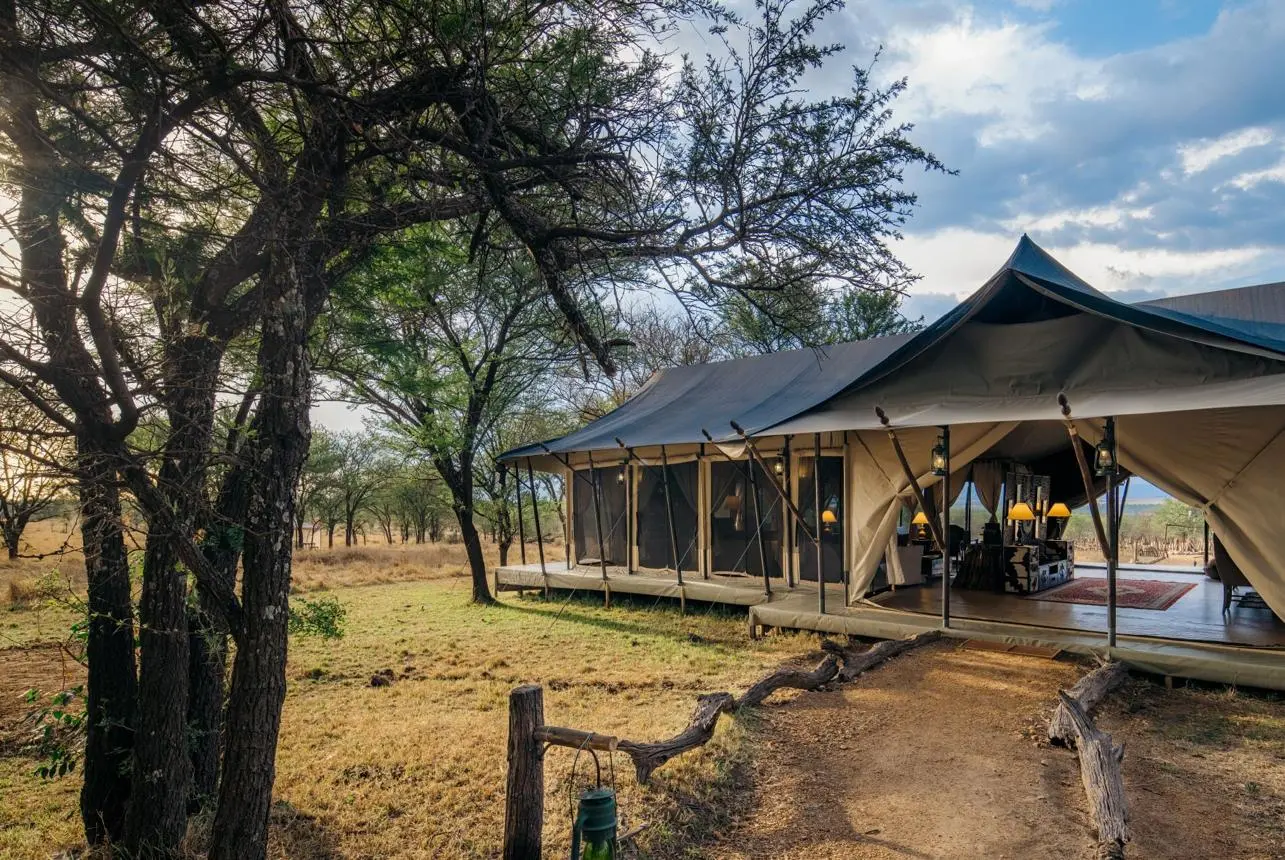
Kogatende camps
Seasonal camps clustered near well-known crossing points, offering quick access when activity is reported.
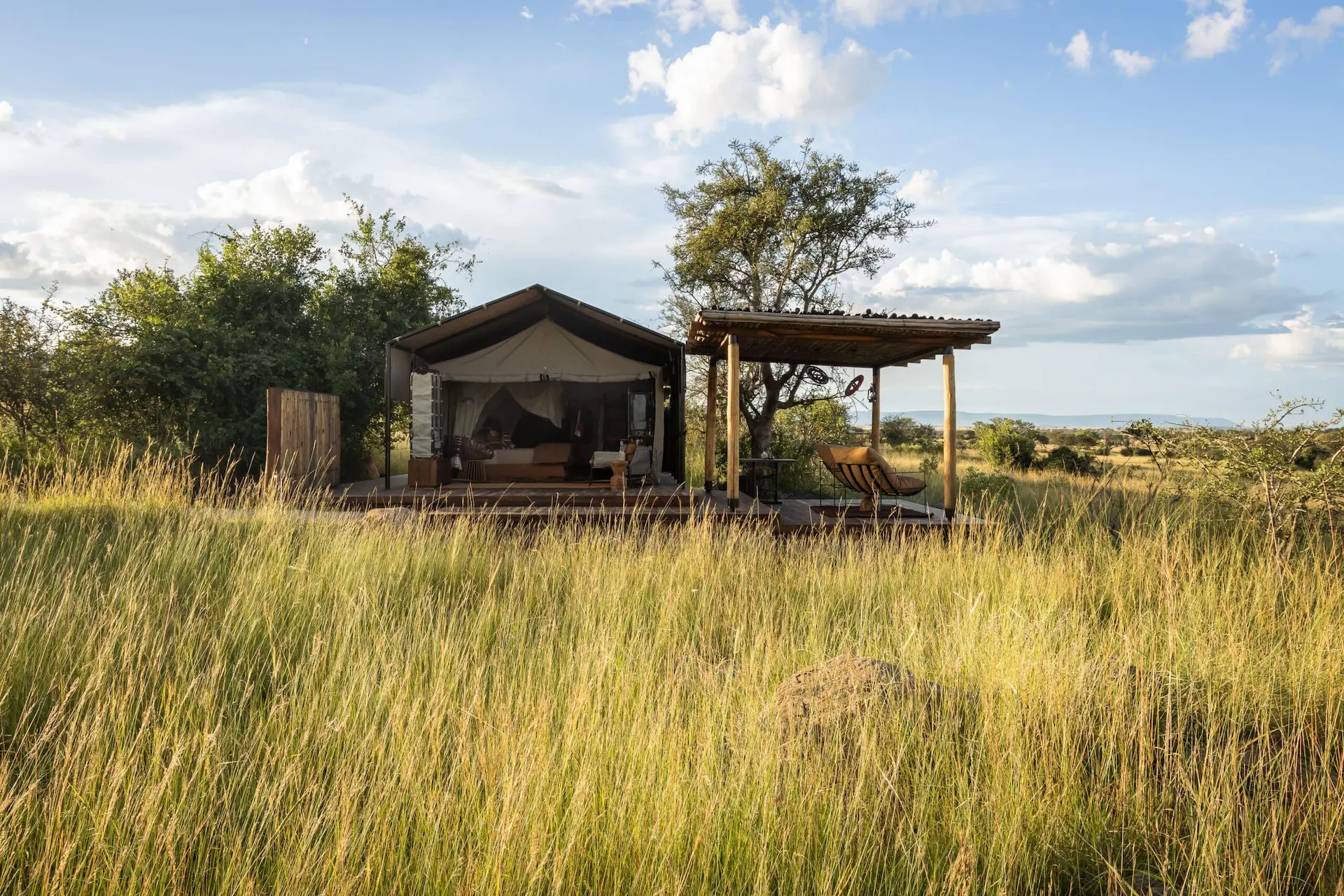
Lamai Wedge camps
A quieter pocket of the Northern Serengeti with strong crossing access and typically less vehicle congestion.
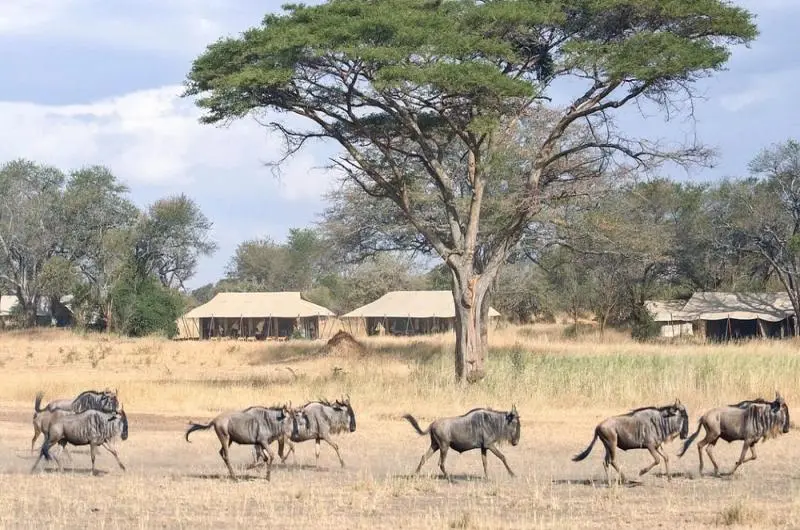
Mobile migration camps
Seasonal camps that relocate to track herd positions, maximising your odds during a short stay.
Most travellers fly into Kogatende airstrip from Arusha, Seronera, or the Ngorongoro Crater — typically 45–75 minutes by light aircraft.
Road access from Central Serengeti (Seronera) is possible but takes 3–4 hours on rougher tracks, so flying in is strongly recommended for shorter trips.
- Fly-in access saves a full day of driving compared to overland transfers.
- Combine with a few nights in Central Serengeti for a mix of resident wildlife and crossing potential.
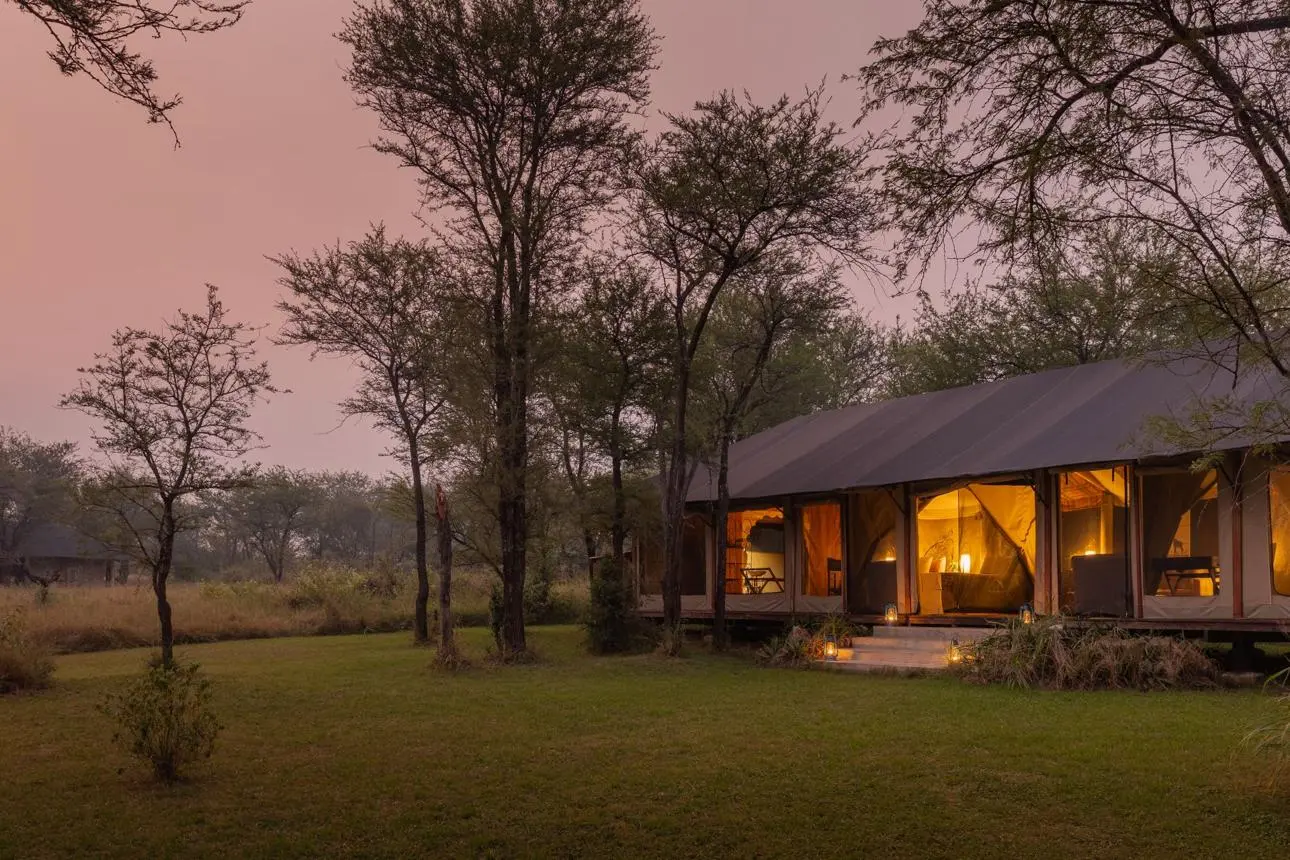
3 nights
The bare minimum to give herds time to move and a crossing time to happen nearby.
4–5 nights
Meaningfully improves your odds without needing a guaranteed crossing on day one.
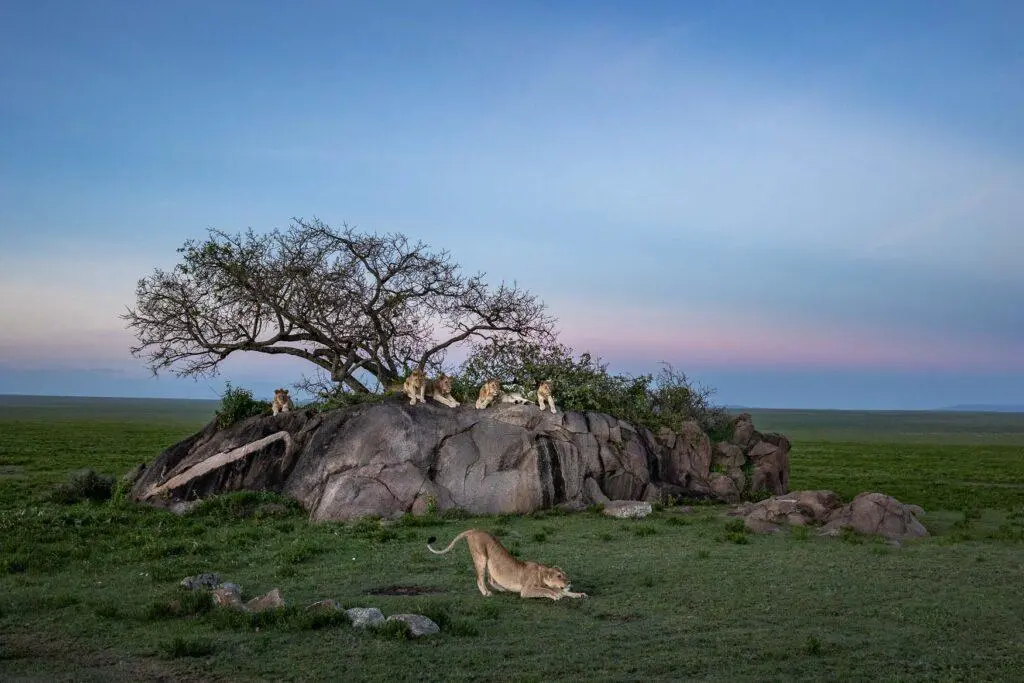
6–7 nights, split zones
Combine Northern Serengeti with Central Serengeti or Ngorongoro for a fuller circuit alongside crossing chances.
Plan your Mara crossing safari
Tell us your travel window and we'll recommend nights, camps, and zone positioning in the Northern Serengeti to maximise your crossing odds.