
Everything to know before your Tanzania safari
Straight answers on planning, booking, packing, safety and what to expect on the ground — gathered from questions our travelers actually ask us, in Arusha and on the road.
About Januz Safaris
Januz Safaris is a premier African safari company specializing in unforgettable wildlife and cultural experiences across the diverse landscapes of Africa.
Januz Safaris offers safaris in mainly Tanzania and part of Kenya, each with its unique attractions.
Januz Safaris provides a wide range of safaris, from classic game drives and walking safaris to birdwatching and photography safaris, tailored to meet your preferences.
Your safety is a top priority for Januz Safaris. They have experienced guides and follow strict safety protocols to ensure a secure and enjoyable safari experience.
Yes, Januz Safaris offers personalized safari packages to suit your interests and budget, allowing you to create your dream African adventure.
Depending on your chosen destination, you can witness Africa's iconic wildlife, including the Big Five (lion, elephant, buffalo, leopard, and rhinoceros) and many other fascinating species.
Booking with Januz Safaris is easy. Visit their website, choose your preferred safari, and contact their team for reservations and inquiries.
Januz Safaris caters to all types of travelers, offering solo safaris, romantic getaways, and family-friendly adventures.
Januz Safaris distinguishes itself through its commitment to responsible tourism, community engagement, and conservation efforts, ensuring a meaningful and sustainable safari experience.
More About Us
Yes. We are a registered Tanzanian tour operator and are listed with recognized industry directories including SafariBookings, SafariGO and TripAdvisor, where past travelers share verified reviews of their trips with us.
Responsible tourism is core to how we operate. We prioritize community-run camps and conservancies where possible, employ local guides and staff, and brief every guest on low-impact wildlife viewing before departure.
Booking & Payment
For July–September and the December holidays, we recommend booking 4–6 months ahead, since prime camps sell out early. For quieter shoulder seasons, 6–8 weeks is usually enough — though earlier booking always gives you more room to customize.
We accept bank transfer and major credit cards. A deposit of 20–30% of the total cost secures your booking and reserves accommodation, with the balance due typically 30–45 days before arrival.
Cancellation terms scale with how close to departure you cancel, since deposits paid to lodges and parks are often non-refundable on our end. We share the exact policy in writing with every quote, and strongly recommend travel insurance that covers trip cancellation.
We arrange safaris for solo travelers, couples, families and groups of any size. Most game-viewing vehicles seat up to 6–7 guests comfortably; larger groups are simply split across additional vehicles traveling together.
Weather & Packing
Tanzania offers good game viewing year-round. June to October (dry season) gives the easiest wildlife sightings and the Serengeti migration's river crossings; December to March is greener, quieter, and best for calving season and birdlife.
Expect warm days (roughly 24–30°C) and cool mornings and evenings, especially at higher-altitude camps near the Crater. The 'long rains' fall March–May and 'short rains' in November — showers are usually brief afternoon downpours rather than all-day rain.
Neutral-colored, lightweight clothing, a warm layer for early morning drives, a hat, sunglasses, sunscreen, insect repellent, comfortable closed shoes, and a good pair of binoculars. We send every confirmed guest a detailed packing checklist tailored to their exact itinerary.
Yes — light aircraft used for fly-in safaris typically limit luggage to 15kg per person in a soft-sided bag (no hard suitcases). We'll flag this clearly in advance for any itinerary that includes an internal flight.
Health & Documents
Most nationalities need a visa, obtainable online in advance through the official Tanzania e-Visa portal or on arrival at major entry points. We recommend applying online at least a few weeks before departure to avoid queues.
A yellow fever certificate is required if you're arriving from a country with risk of transmission, and malaria prophylaxis is strongly recommended for this region. Always confirm current requirements with a travel clinic or doctor before you go, as guidance can change.
Tanzania is one of Africa's more politically stable countries and welcomes large numbers of safari travelers each year. Our guides are trained in field safety, vehicles are well maintained, and we follow strict protocols around wildlife distance and camp security.
We don't sell insurance directly, but we require all guests to hold comprehensive travel insurance that includes emergency medical evacuation, and we can recommend providers commonly used by our travelers.
Our guides carry first-aid training and satellite communication in remote areas. Serious cases are coordinated with flying-doctor evacuation services that operate across northern Tanzania's parks, and we assist directly with your insurer throughout.
Accommodation & Vehicles
Depending on your budget and style, we arrange everything from comfortable tented camps to boutique lodges and luxury properties. Every option is personally vetted by our team for cleanliness, service and location before it goes on an itinerary.
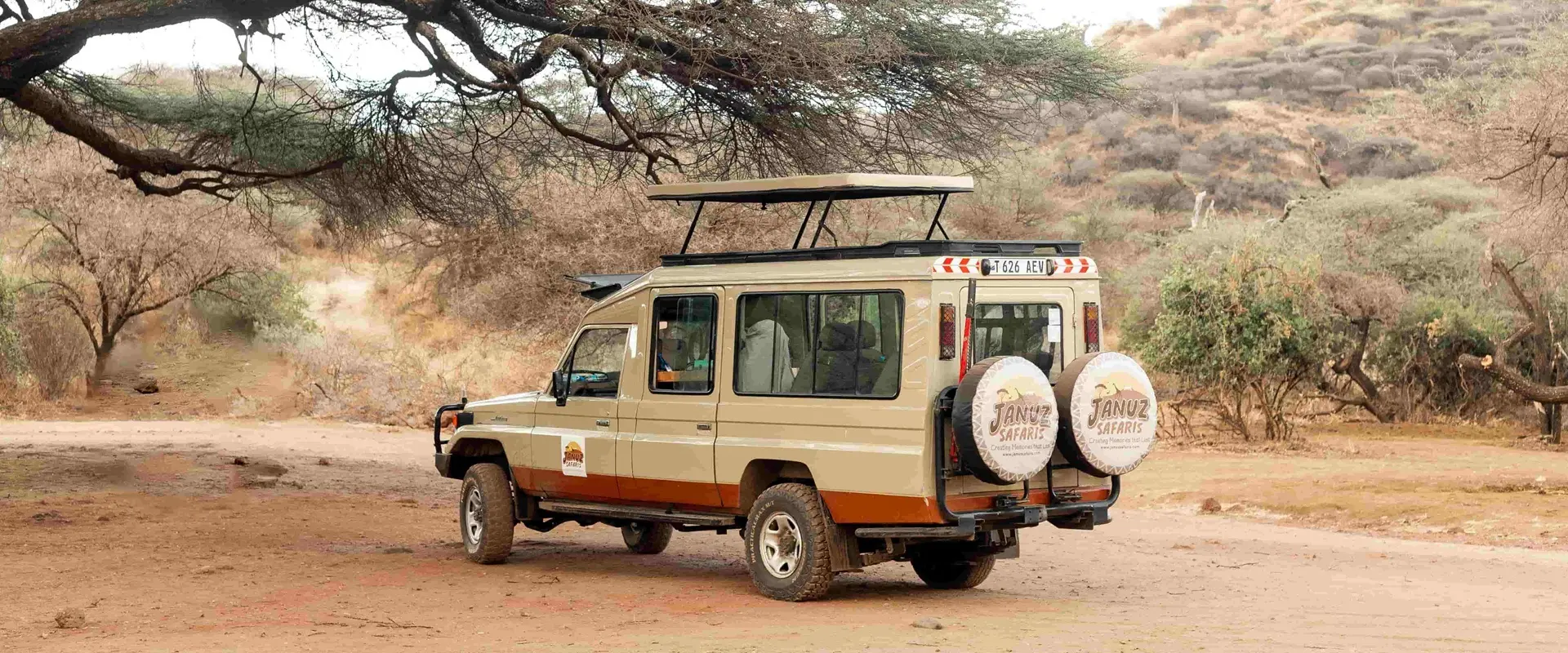
We use custom 4x4 safari Land Cruisers with pop-up roofs for unobstructed game viewing, individual charging ports, and a cooler box for drinks. Vehicles are driven by our own experienced, English-speaking guides.
Yes — vegetarian, vegan, gluten-free, halal and other dietary needs are accommodated at every camp and lodge we work with. Just let us know when you book so we can confirm with each property in advance.
Most lodges offer electricity for charging and Wi-Fi in communal areas, though signal can be slow or intermittent in remote parks. More remote tented camps may rely on solar power and limited connectivity — we'll flag this per property so there are no surprises.
During Your Safari
The dramatic Mara River crossings typically peak between July and September in the northern Serengeti, though the migration moves through the ecosystem year-round. We track herd movements closely and route your itinerary to maximize your chances.
Yes. We design family-friendly itineraries with shorter drive times, kid-friendly camps, and guides experienced at keeping younger travelers engaged. Some remote camps set minimum age limits, which we'll factor into your planning.
Tipping is customary and appreciated, though never obligatory. As a guideline, many travelers tip around USD 15–20 per day for their guide and a smaller shared amount for camp staff — we're happy to share a detailed breakdown with your final itinerary.
Absolutely — many of our guests combine their safari with a Kilimanjaro trek beforehand or unwind on Zanzibar's beaches afterward. Both extensions are easy to build into your itinerary from Arusha.
Local SIM cards work well in and around most park entrances and lodges, though signal fades in the deeper bush. We recommend downloading offline maps and letting family know that connectivity may be limited for a day or two at a time.
US dollars (2009 or newer notes) and Tanzanian shillings are widely accepted; credit cards work at most lodges but rarely in the bush itself. We recommend carrying some cash for tips, curio shops and incidentals.
Still have a question?
No FAQ page can cover everything. Message us directly and a Januz Safaris planner will reply personally, usually within a few hours.