Best Time to Visit
the Serengeti
The Serengeti rewards visitors year-round, but the right month depends on whether you want migration crossings, calving season, quieter roads, or the best value. Here is how to decide.
The Serengeti is a year-round safari destination. Wildlife is resident, roads stay open, and every season has a genuine highlight — the question is which experience matters most to you.
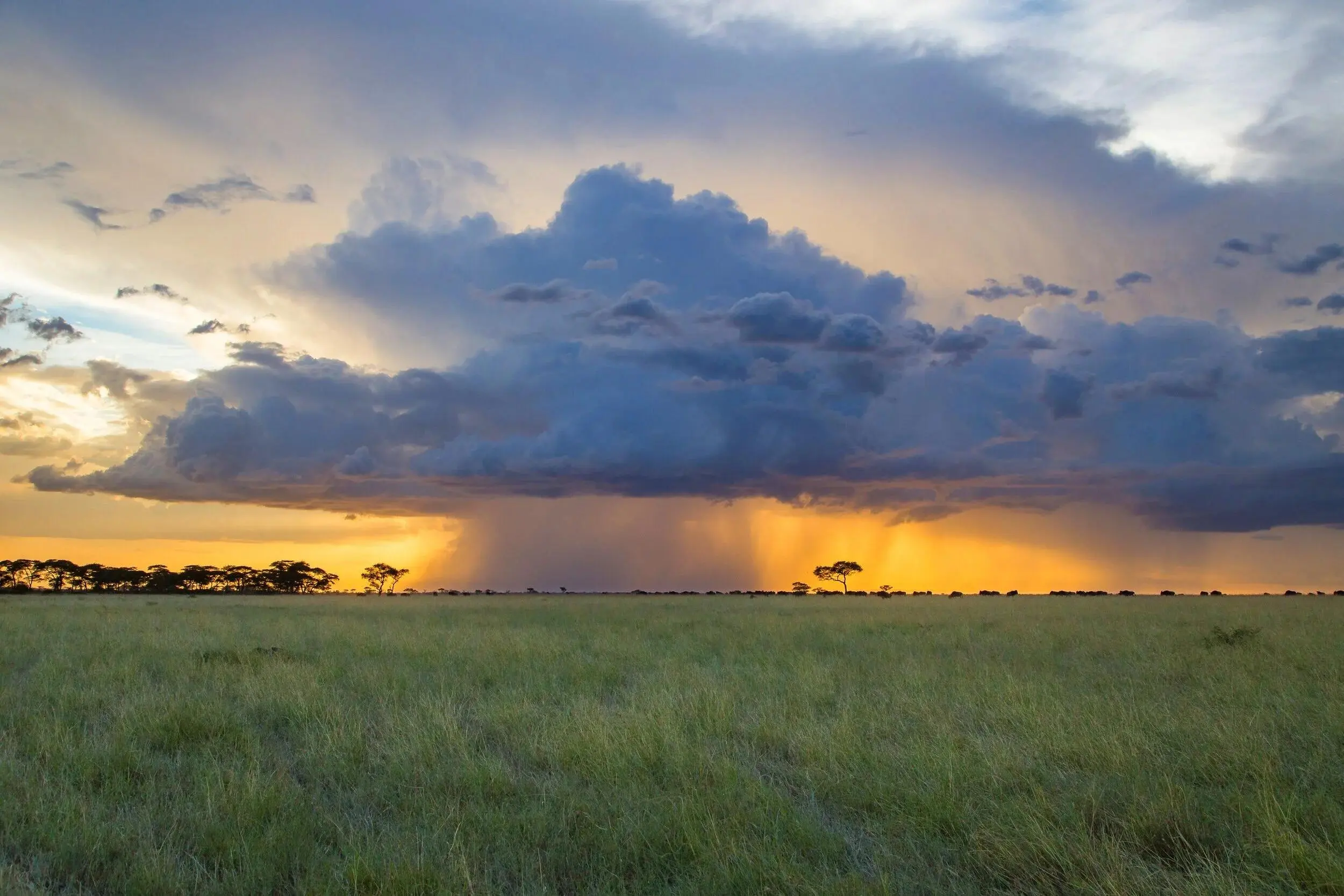
Dry season (June–October) means easier wildlife viewing, dusty golden landscapes, and the famous Mara River crossings in the north. Green season (November–May) means dramatic skies, newborn animals, migratory birds, and noticeably lower camp rates.
Below we break down both seasons honestly — including the trade-offs — so you can match your travel dates to the Serengeti experience you actually want.
It helps to think of the Serengeti calendar as one continuous story rather than a set of unrelated seasons. The same wildebeest herds that calve on the Ndutu plains in February are the ones queuing at the Mara River in August — timing your visit is really about choosing which chapter of that story you want to witness in person.
Because the Serengeti spans roughly 14,750 square kilometres, weather and herd location can genuinely differ between its northern, central, southern, and western zones on the same date. A forecast for "the Serengeti" is really an average of several distinct microclimates, which is why local, zone-specific advice matters more than a single generic seasonal calendar.
Quick answer: Want river crossings? Go July–September. Want calving and value? Go January–February. Want to avoid crowds entirely? Go April–May.
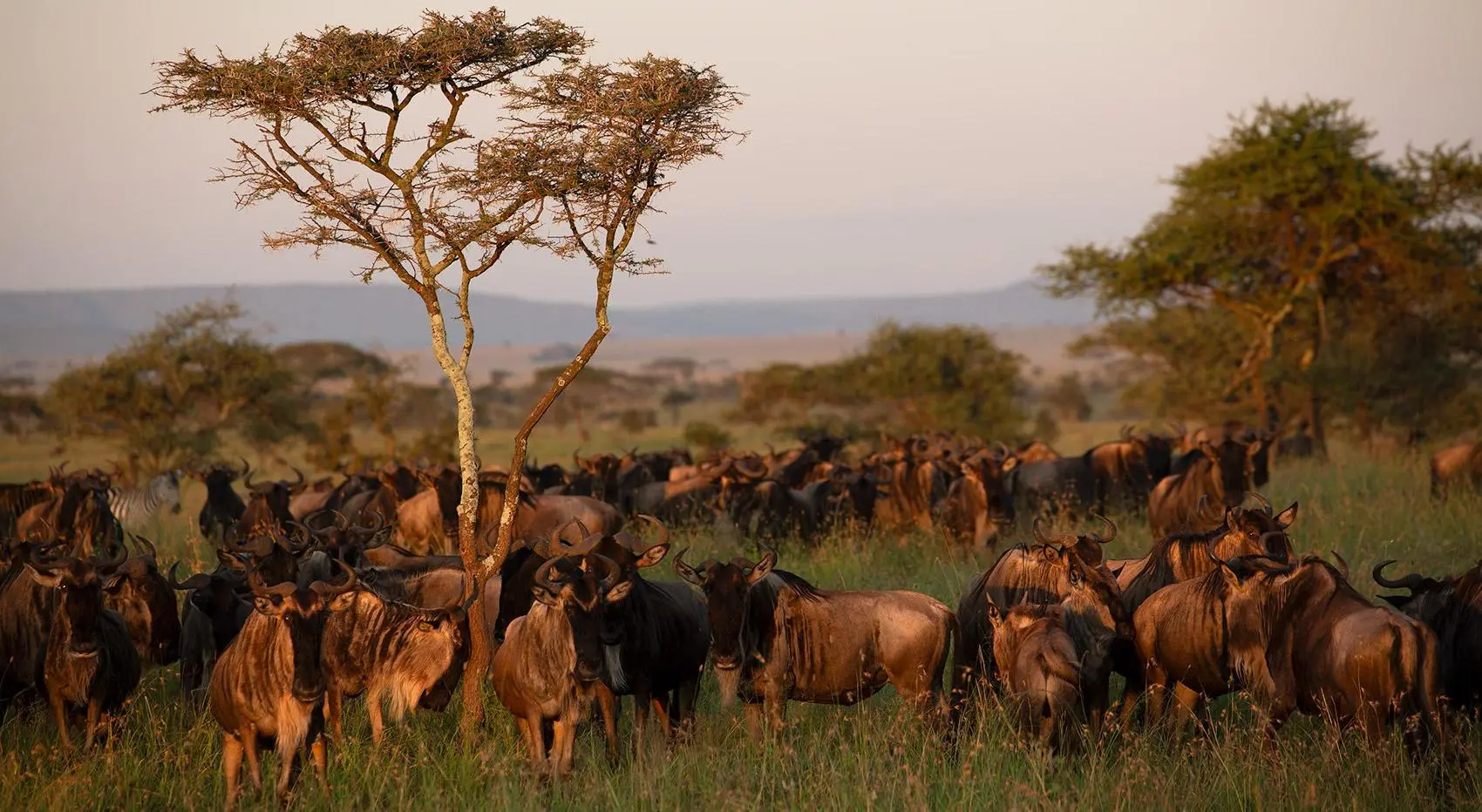
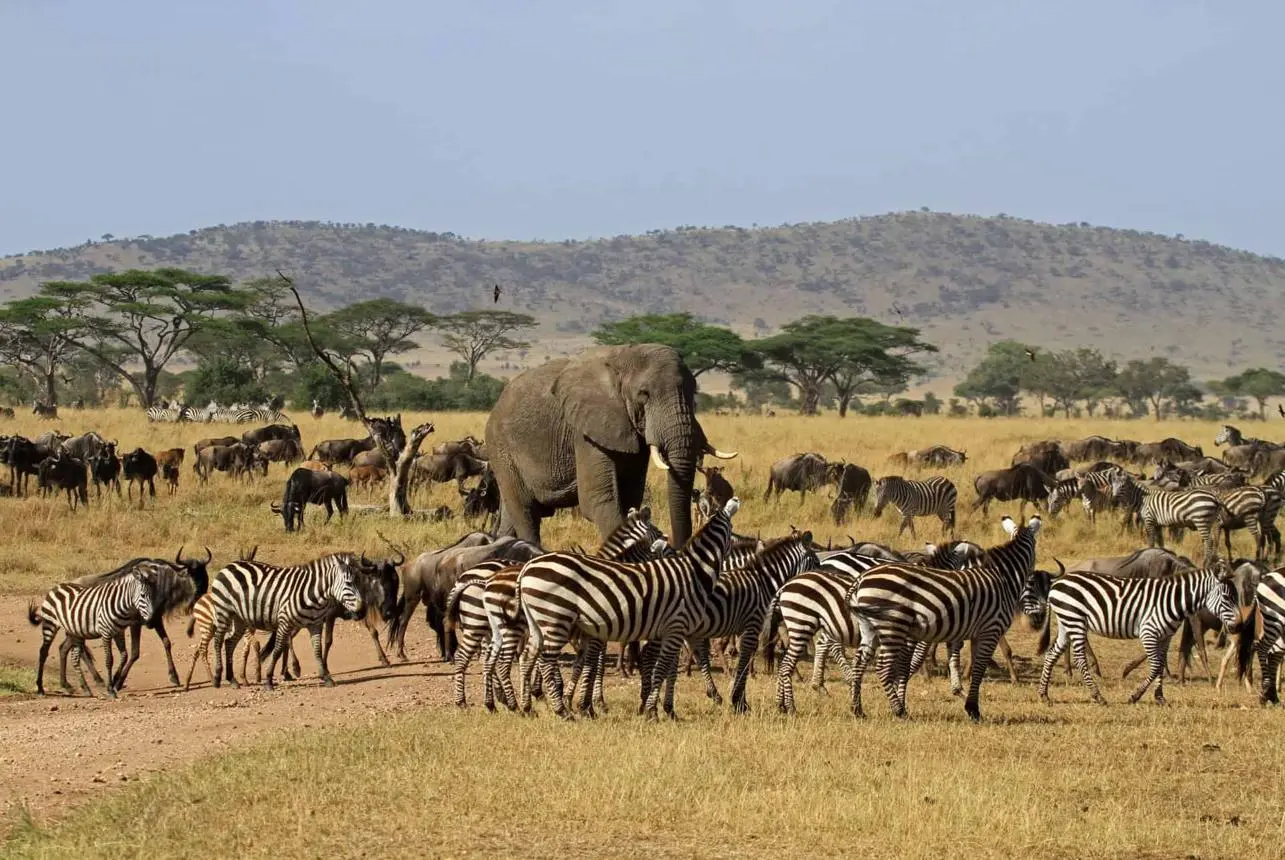
Dry Season — Jun–Oct
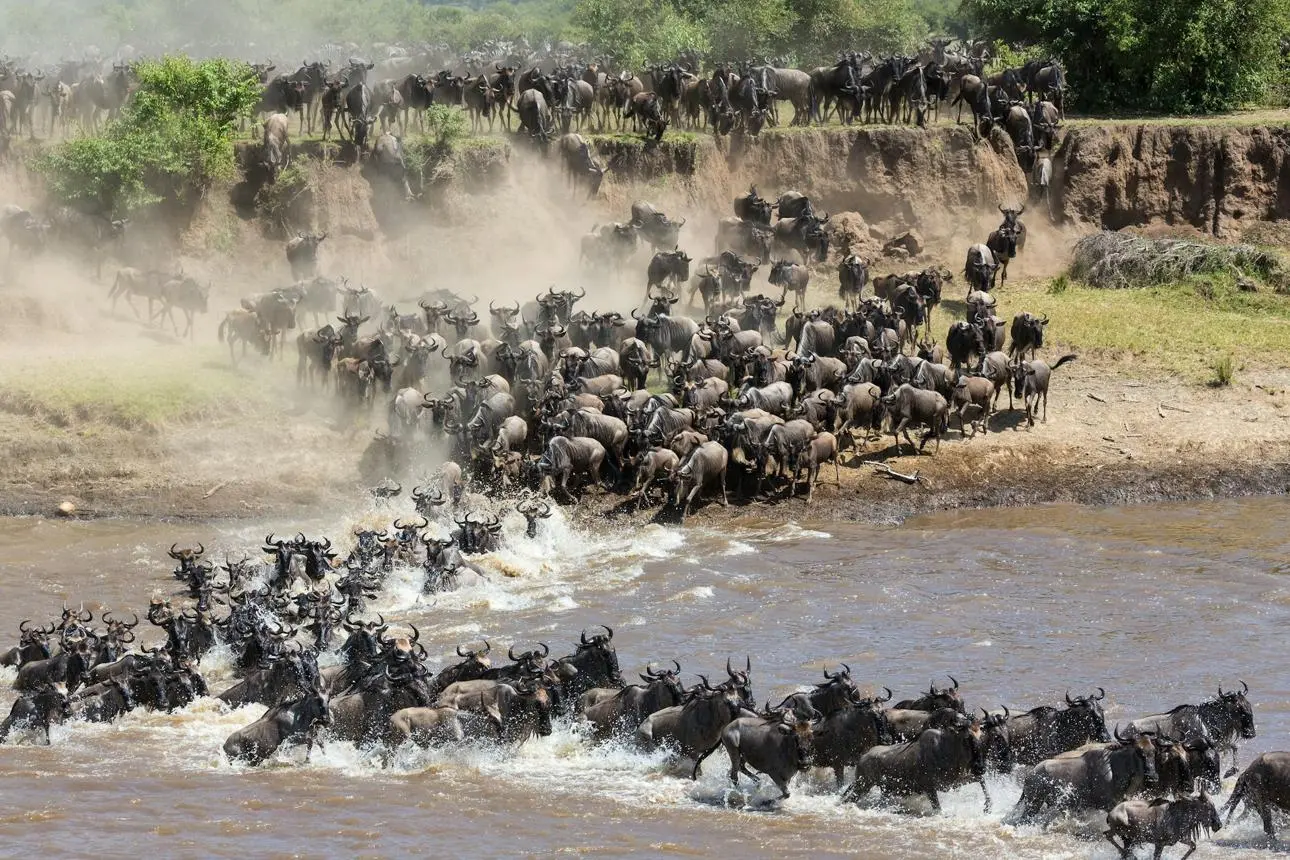
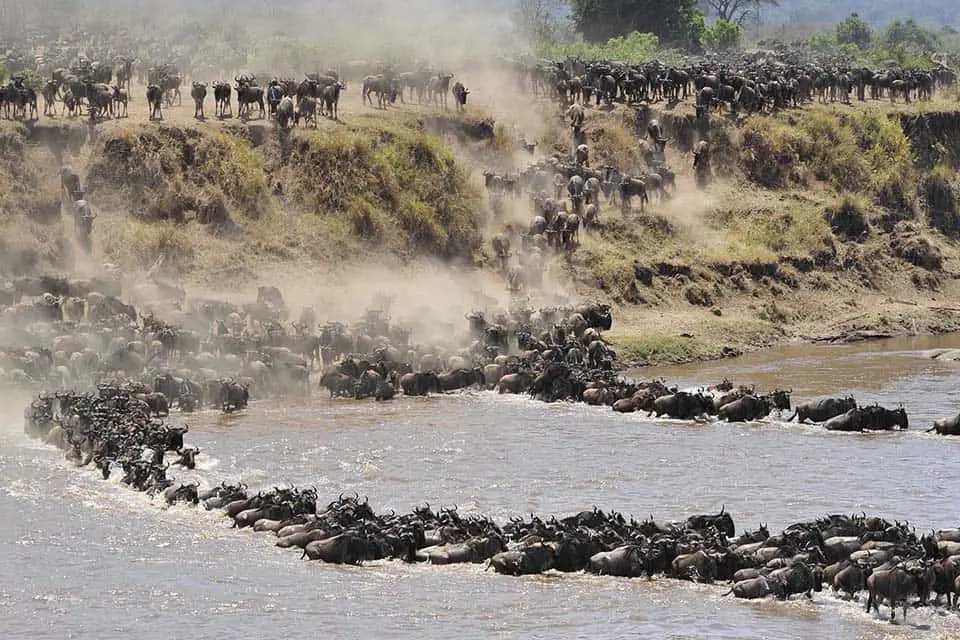
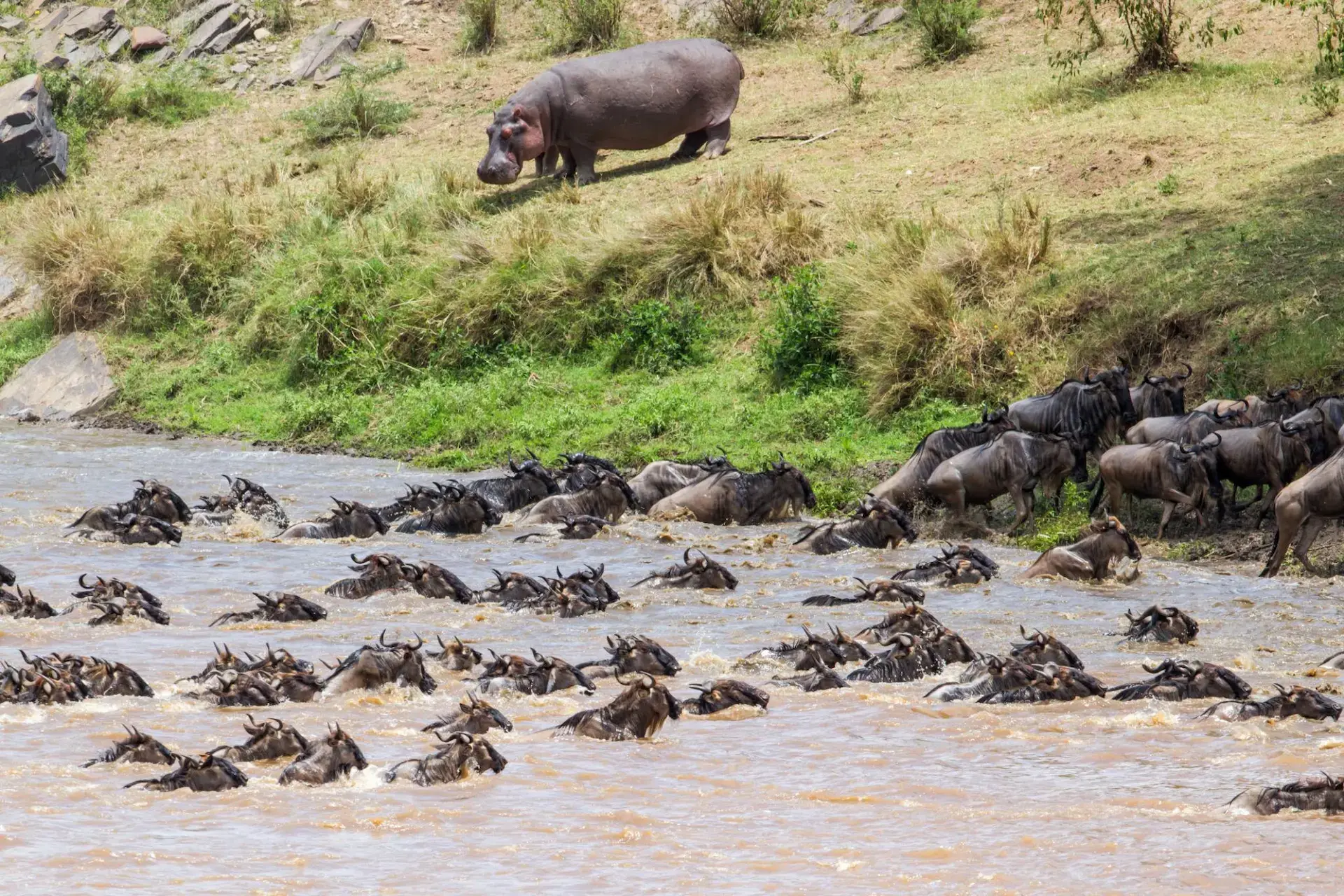
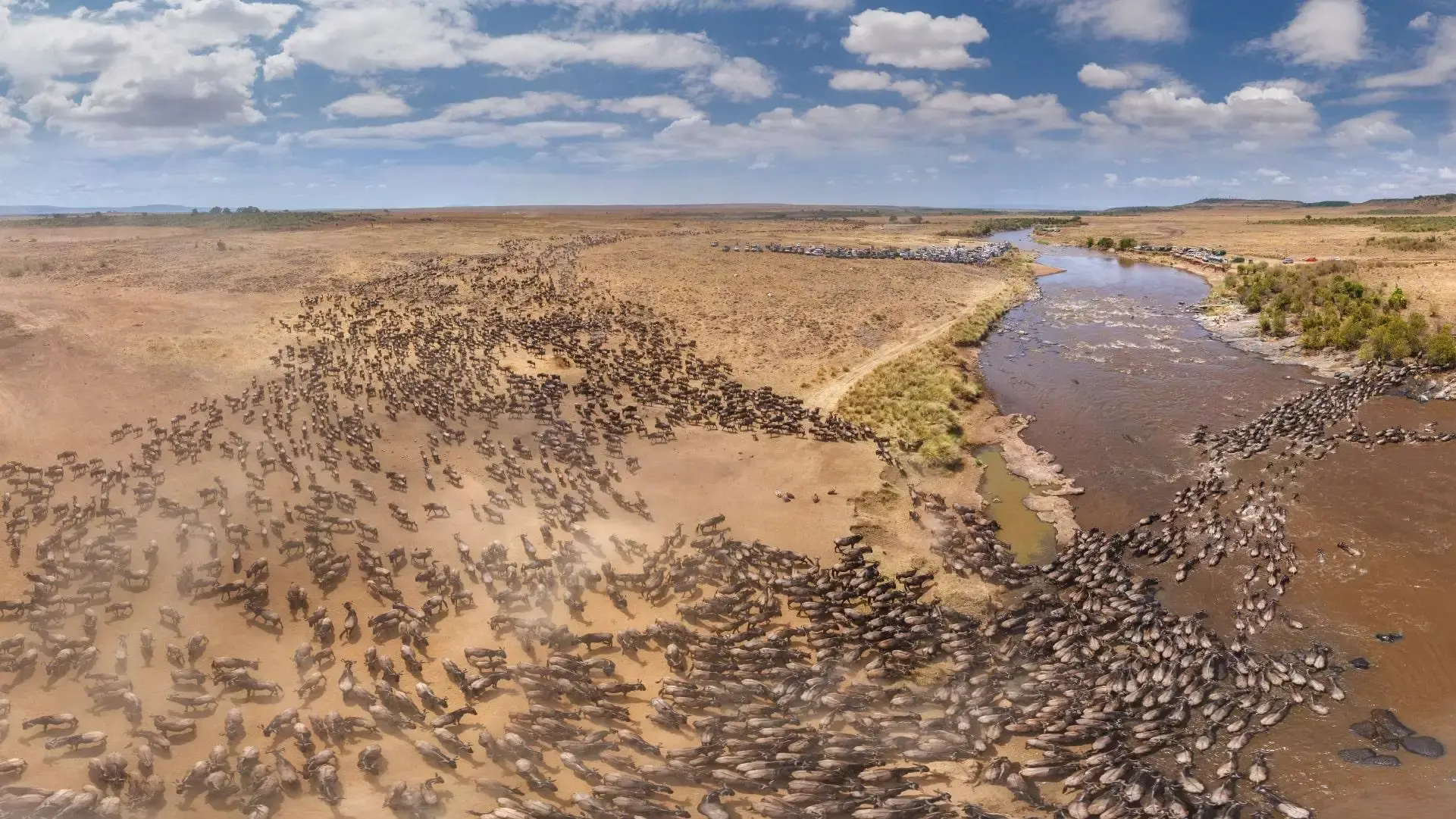
Peak wildlife viewing. Animals gather at permanent water; Northern Serengeti Mara crossings run July–September.
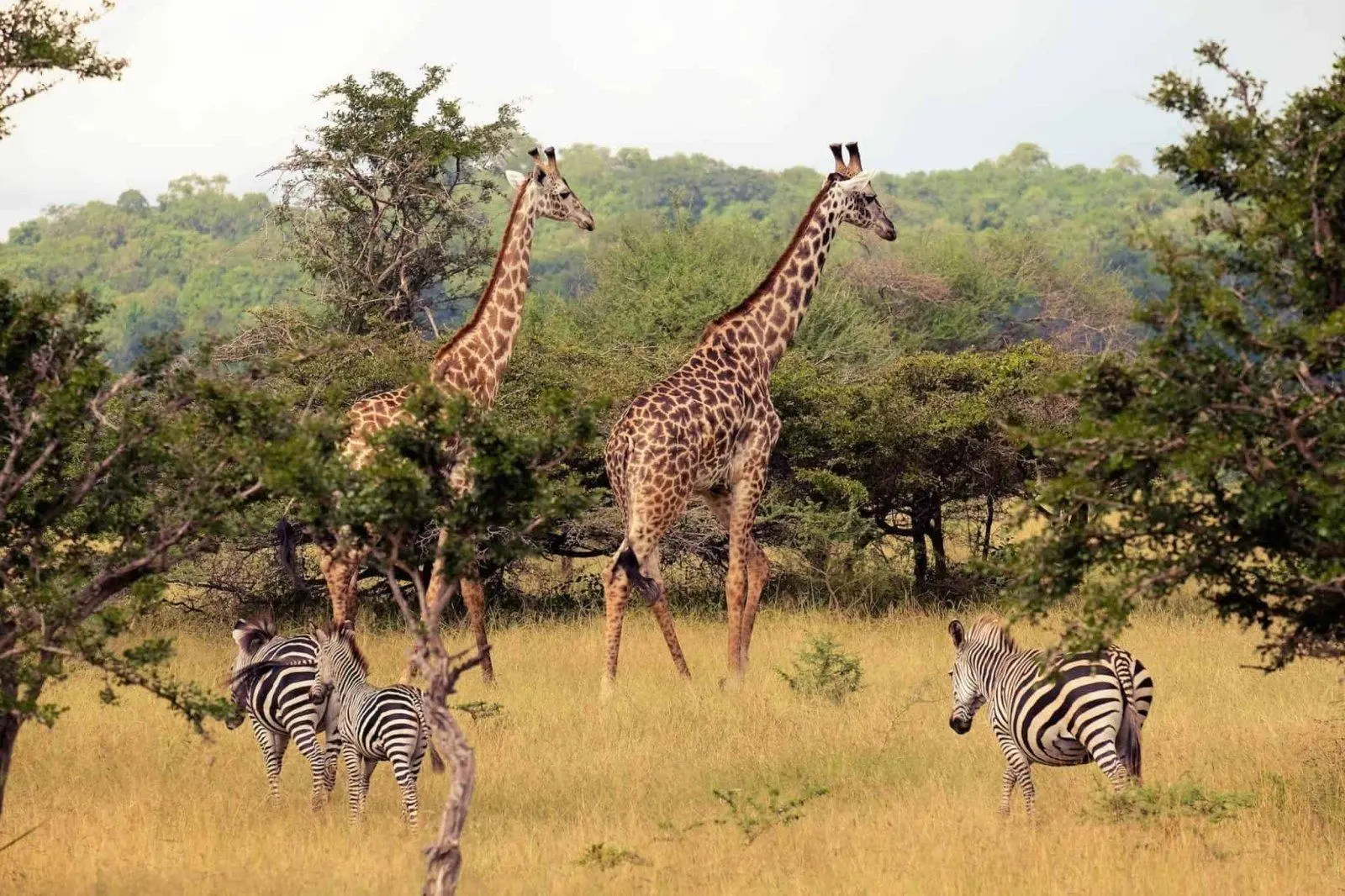
Short Rains — Nov
Brief afternoon showers, herds start moving south again, landscapes turn green fast. Good value, few crowds.
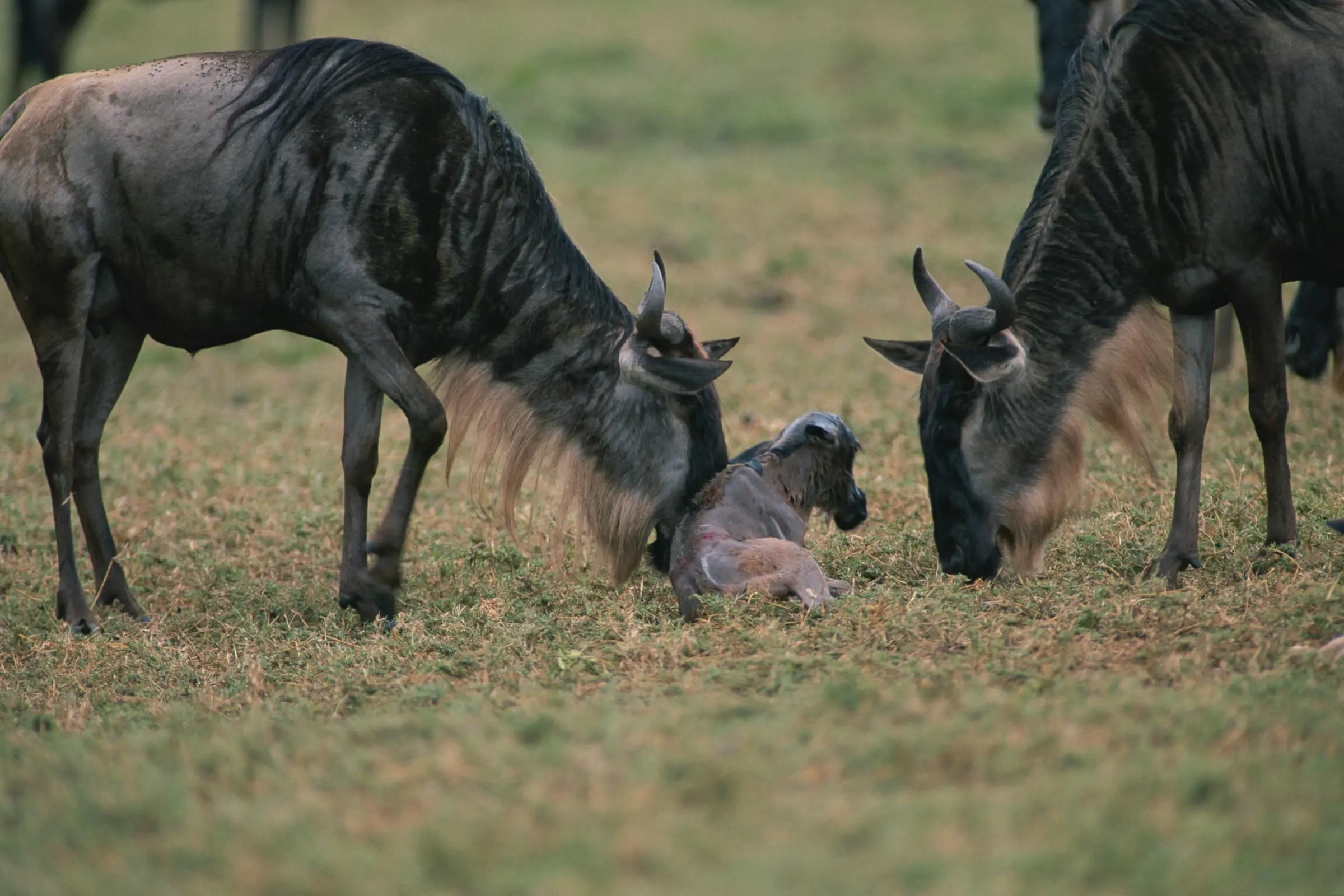
Calving & Green Season — Dec–Mar
Southern Ndutu plains fill with newborn wildebeest and dramatic predator action. Warm, mostly dry days with lush scenery.
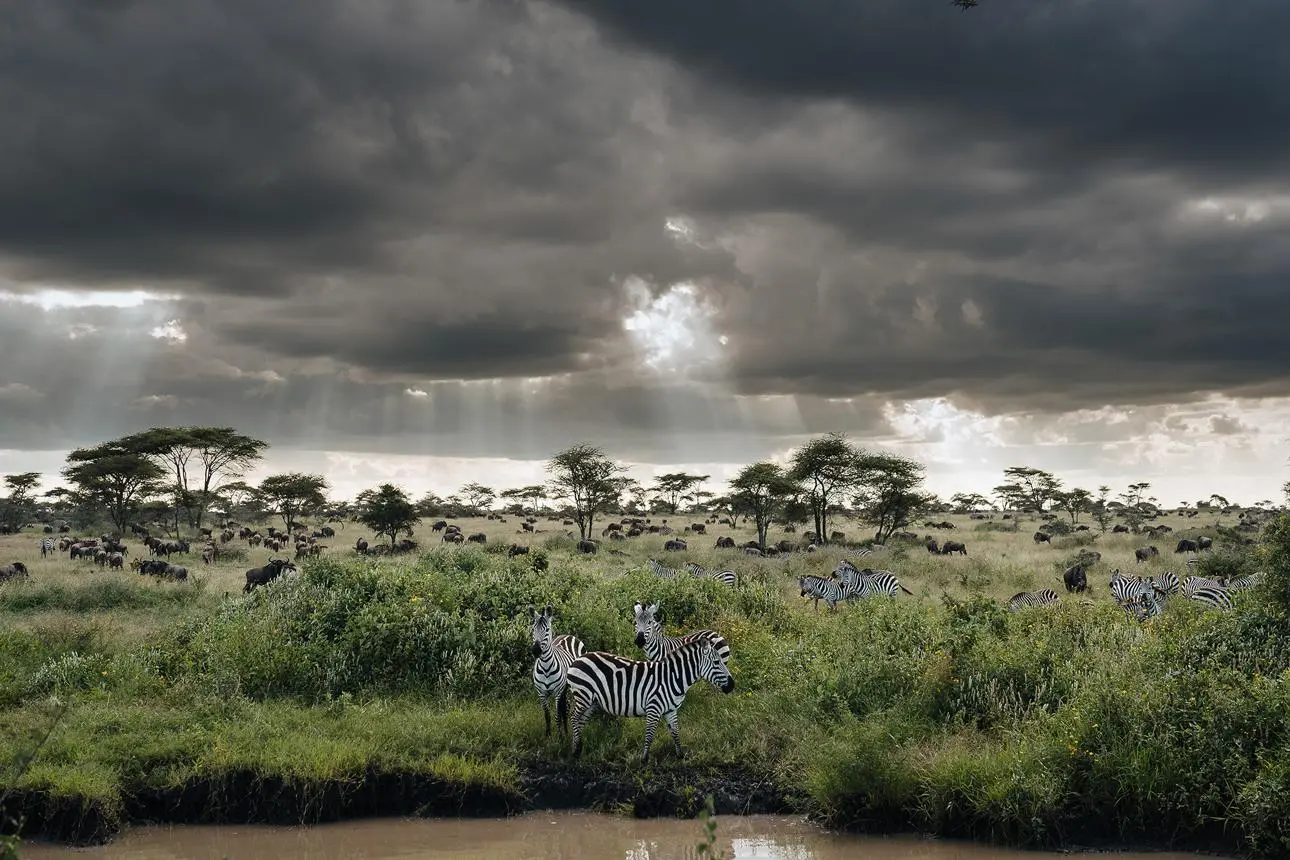
Long Rains — Apr–May
Quietest, cheapest months. Some camps close; roads can be muddy. Best for budget travellers who don't mind rain.
Want the Mara River crossings? Book July–September, and stay in the Northern Serengeti (Lamai/Kogatende) for at least 3–4 nights — crossings are dramatic but never guaranteed on a single day.
Want calving season and predator action? Book late January to February in the Southern Ndutu plains — this is when most wildebeest births happen, drawing lions, cheetahs, and hyenas into the open.
Want lower prices and fewer vehicles? April and May are the quietest months park-wide, with some camps offering their lowest rates of the year — a good trade if you don't mind occasional rain.
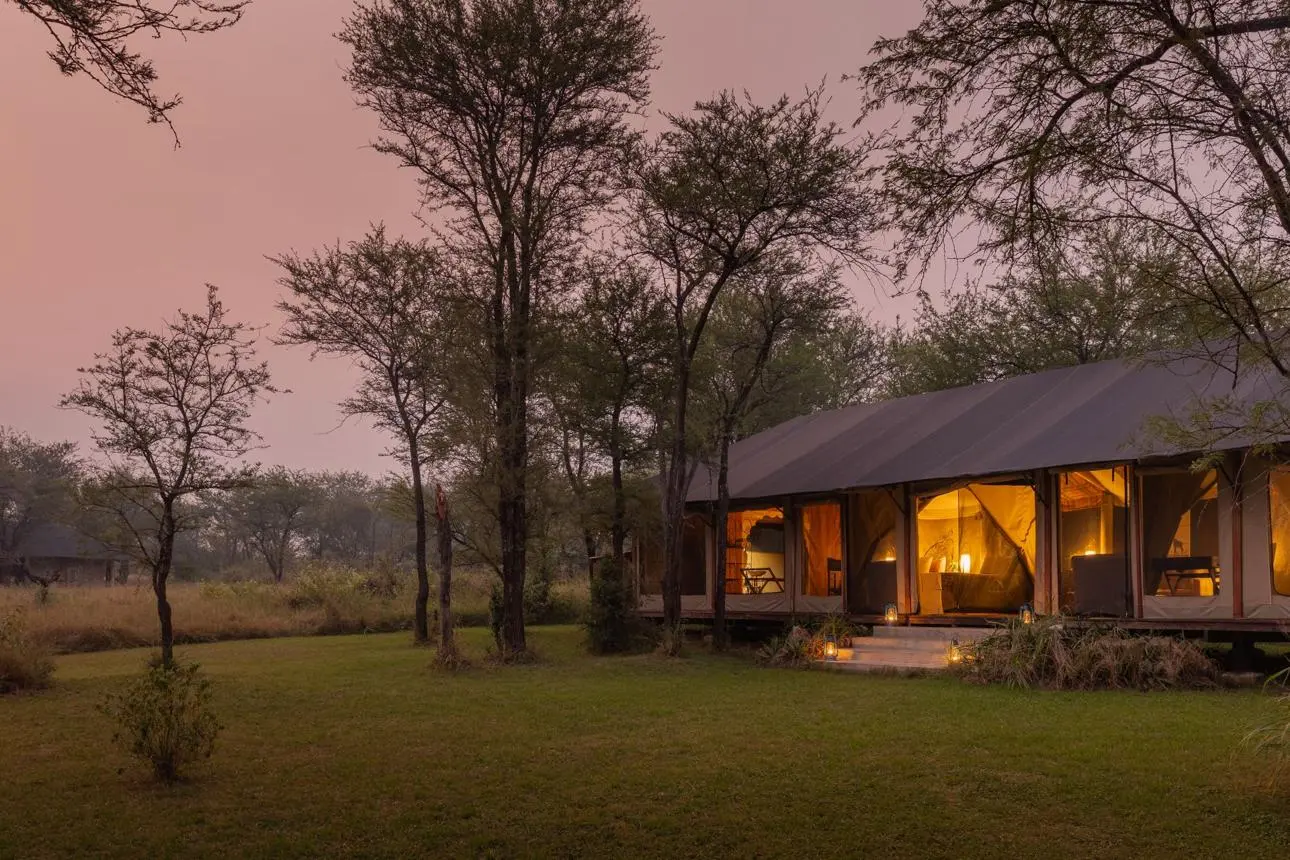
Not sure, or travelling outside migration season? Central Serengeti (Seronera) has resident lions, leopards, and good game viewing in every month, making it a reliable year-round base.
- →Book camps 6–12 months ahead for July–September and January–February — these are the two busiest windows.
- →Combine seasons on longer trips — e.g. Ndutu in February plus Ngorongoro, or Central Serengeti plus a Northern extension in September.
- →Temperatures stay mild year-round (roughly 15–27°C) — pack layers for cool mornings rather than planning around heat.
- →Rain rarely cancels a safari — showers are usually short, afternoon events even in the wetter months.
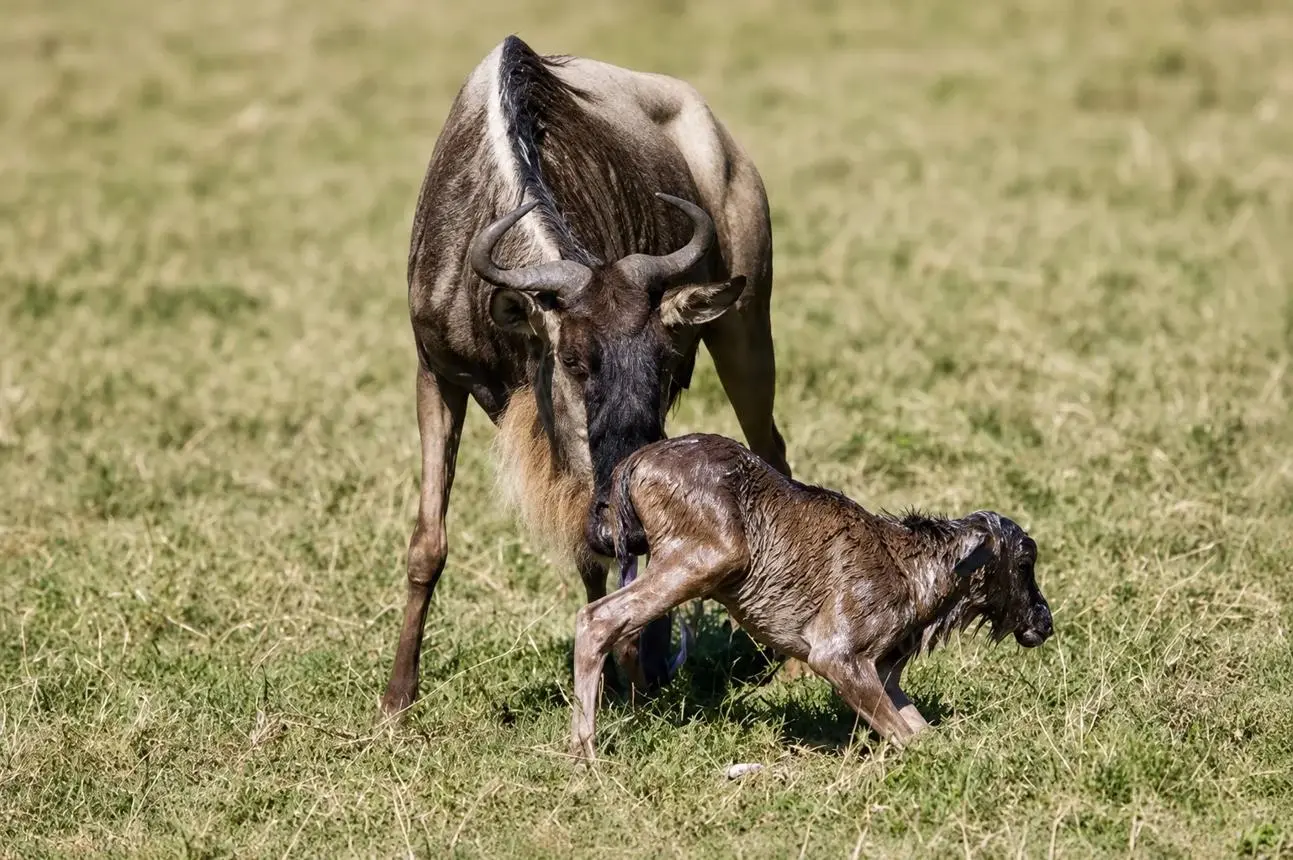
Calving peak
Newborn wildebeest flood the Ndutu plains; predator action is at its most concentrated all year.
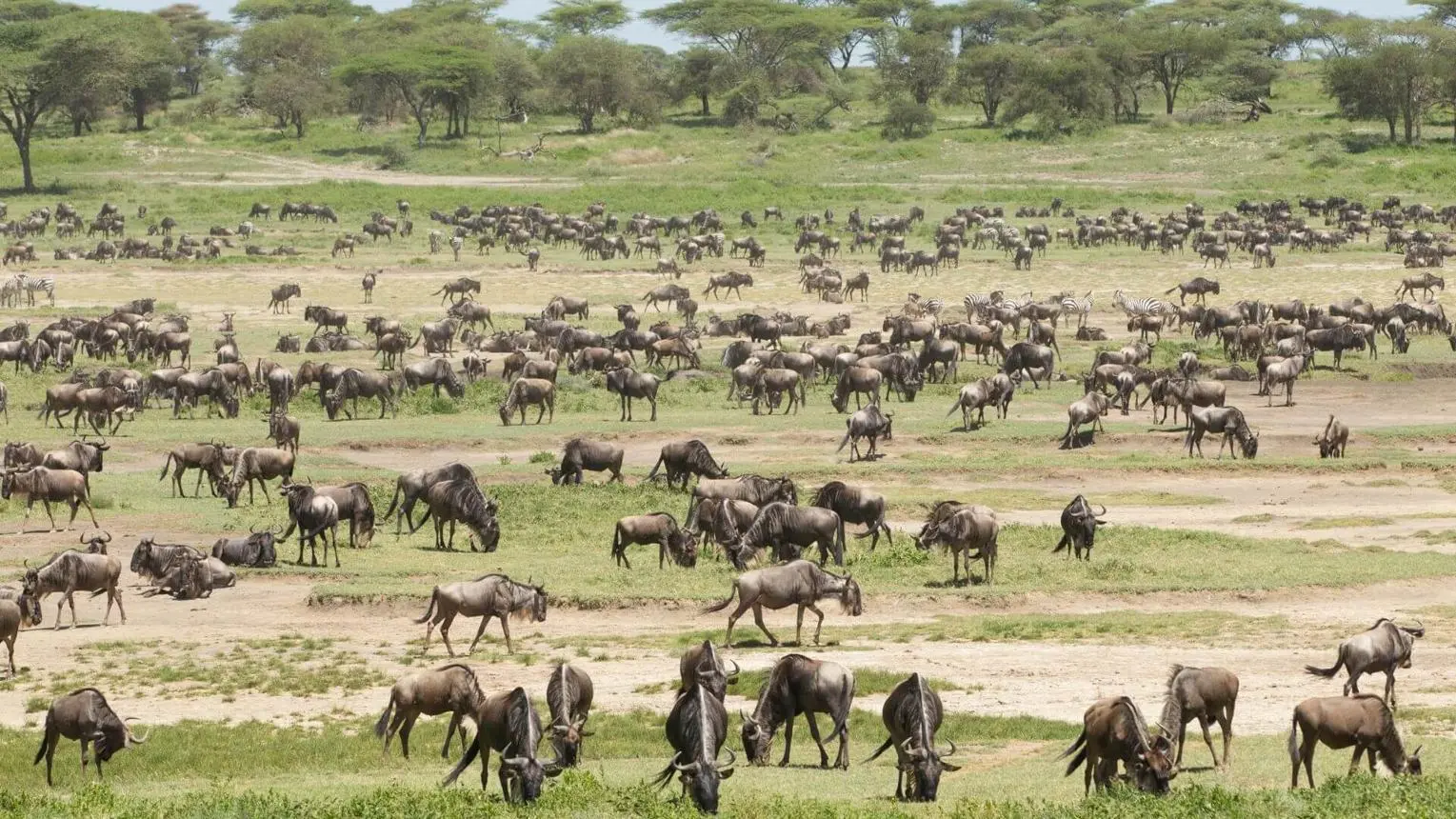
Green season
Herds still on southern plains; lush scenery and lower rates before the long rains intensify.
Quietest
Long rains bring the lowest prices and fewest vehicles of the year; some camps close for maintenance.
Transition
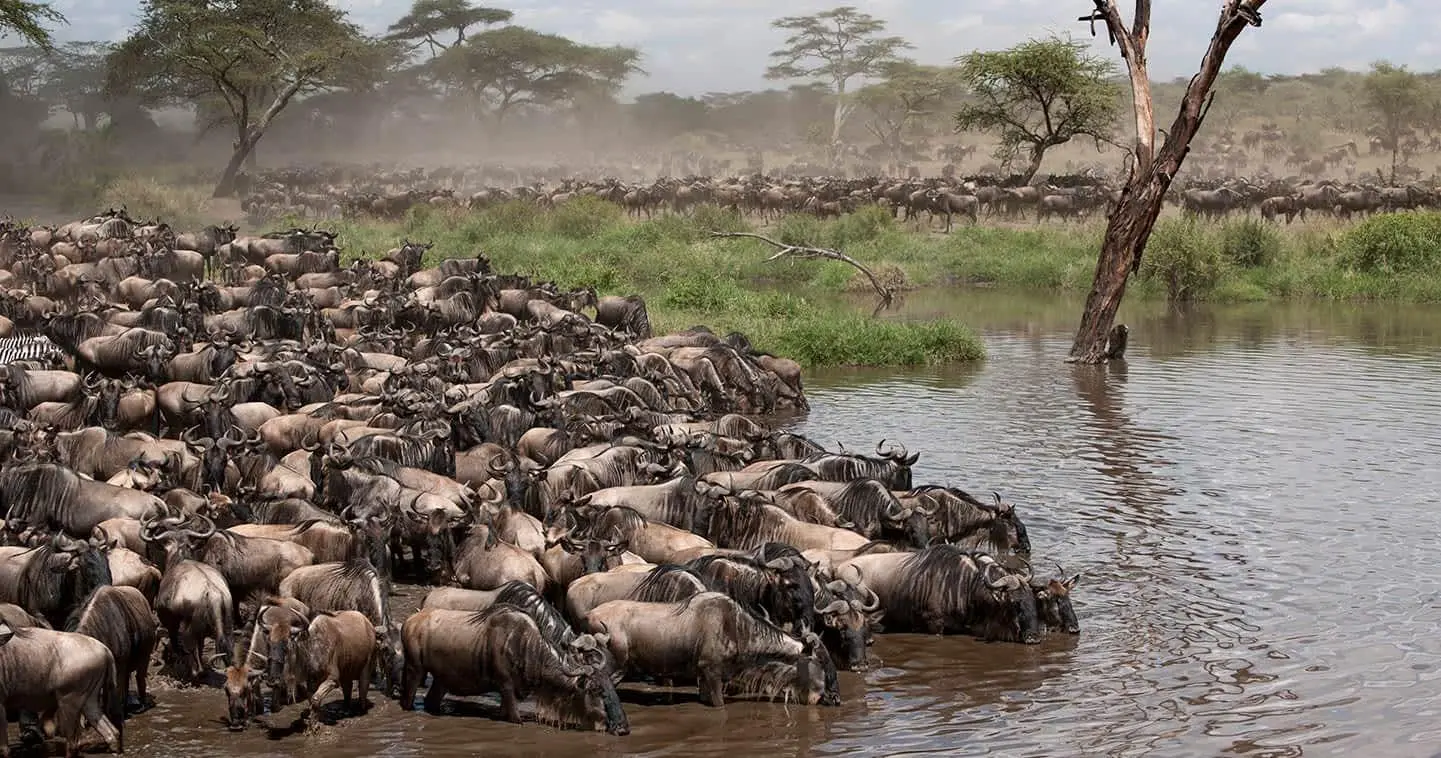
Herds move north through the Western Corridor toward the Grumeti River; landscapes start drying out.
Crossing peak
Mara River crossings in the north; the busiest, most dramatic, and most heavily booked window of the year.
Southward return
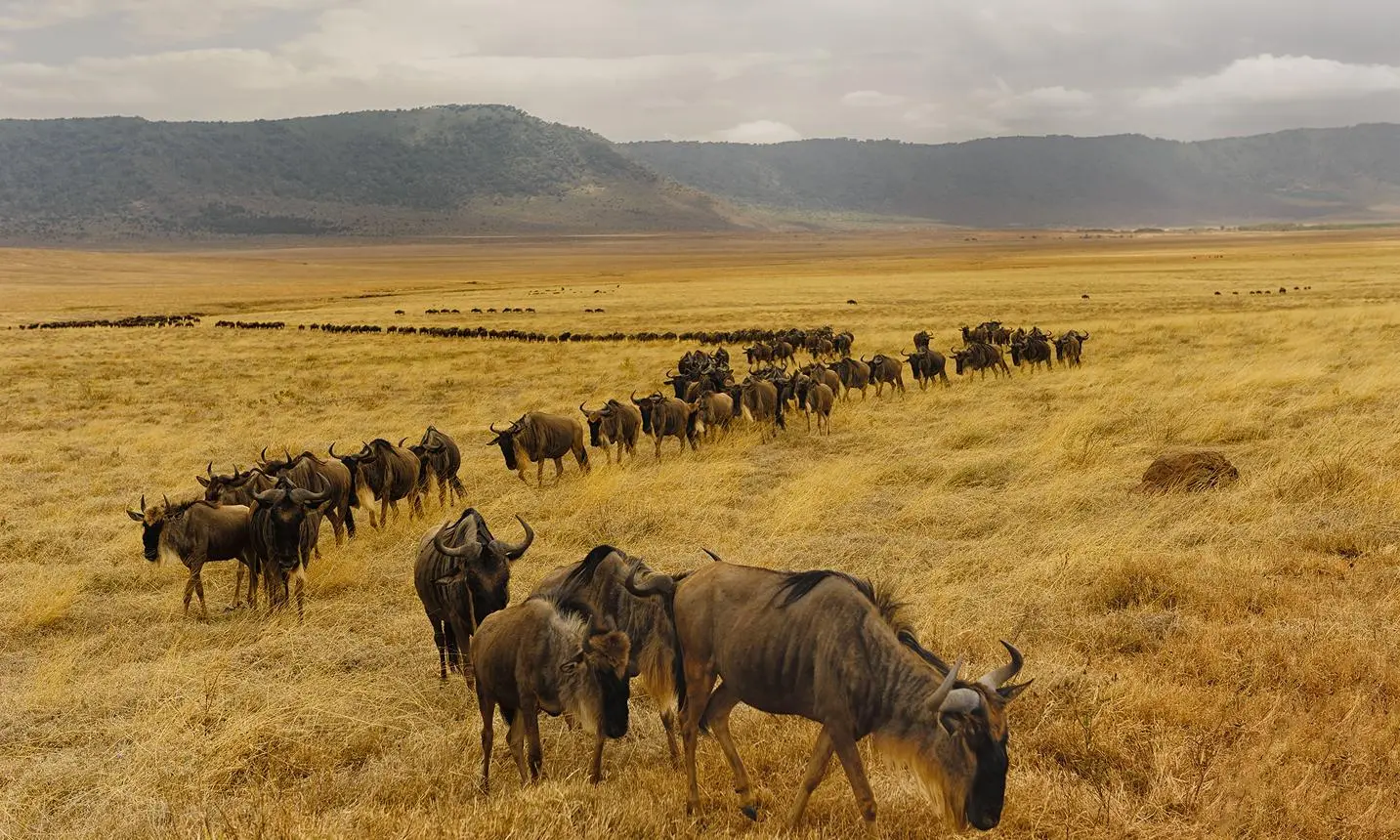
Herds head back south through Central Serengeti toward the plains, ahead of the next calving cycle.
Dry season (Jun–Oct)
Expect dust, warm days, and genuinely cold early mornings on open-vehicle game drives.
- →Fleece or warm layer for dawn drives
- →Dust-proof camera bag or covers
- →Neutral-coloured clothing
Calving & green season (Dec–Mar)
Warm, mostly dry days with occasional short afternoon showers on the southern plains.
- →Light rain jacket
- →Quick-dry clothing
- →Extra memory cards — predator action is intense
Long rains (Apr–May)
The wettest stretch of the year, though showers are usually brief rather than constant.
- →Waterproof bag for electronics
- →Closed shoes rather than sandals for muddy camp paths
- →Insect repellent for lush, green landscapes
Tell us your travel dates
Share when you'd like to travel and what you most want to see — migration, calving, or a quieter trip — and we'll recommend the right Serengeti zone and camps.