
- Social structure
- Solitary
- Primarily active
- Nocturnal
- Central Serengeti odds
- High, w/ patience
- Kill dragged up trees
- 3x bodyweight
- Territory size
- 10–30 km²
- Typical litter size
- 2–3 cubs
Leopards in
the Serengeti
Solitary, powerful, and famously hard to spot — leopards reward patient travellers with one of the most satisfying sightings in the Serengeti.
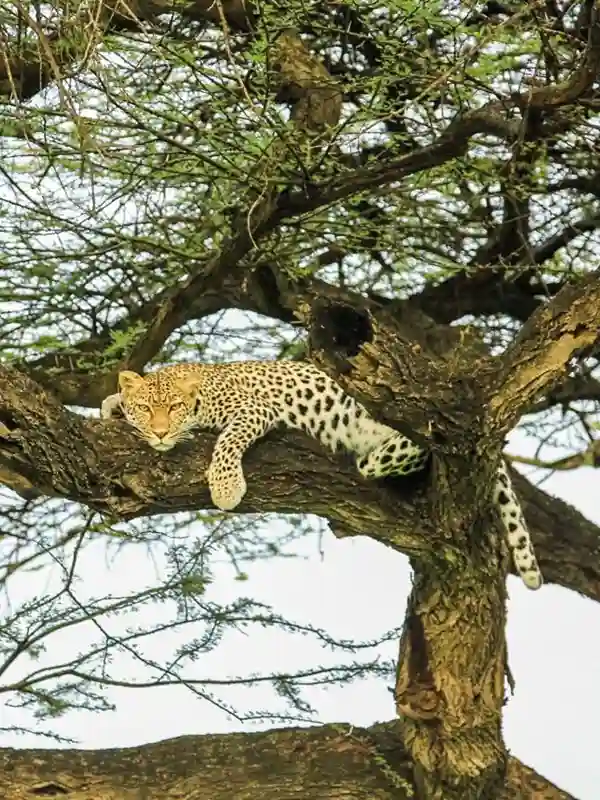
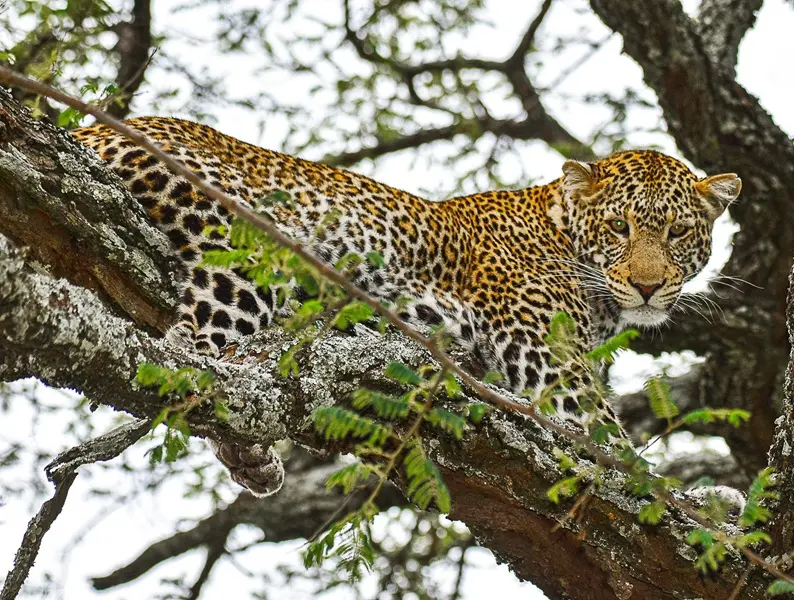
Leopards are solitary, territorial, and largely nocturnal — a combination that makes them considerably harder to find than lions or cheetahs. They rely on stealth, patience, and camouflage rather than open pursuit or cooperative hunting, favouring riverine forest, rocky kopjes, and dense cover where their rosette-patterned coat blends almost perfectly with dappled light and shadow.
Cubs stay with their mother for 18–24 months — unusually long for a big cat — learning to hunt, climb, and read territory before striking out on their own. Because so much of a leopard's life happens under cover of darkness or hidden in foliage, even experienced researchers estimate population numbers are difficult to pin down precisely, though Central Serengeti is considered one of the healthier, better-studied leopard populations on the continent.
Because leopards are so difficult to track visually, guides rely heavily on secondary evidence: alarm calls from baboons, vervet monkeys, or impala often reveal a leopard's presence long before it's seen directly, as does a carcass hanging in a tree or vultures gathering nearby. Learning to read these cues — rather than simply scanning branches at random — is what separates an experienced Serengeti guide from a generalist one, and it's worth asking your guide directly about their leopard-tracking approach before setting out.
Leopards are not currently considered endangered on a continental scale, but localised pressure from habitat loss and conflict with livestock farmers outside protected areas makes strongholds like the Serengeti increasingly important. Inside the park boundary, leopards face no major direct threats beyond natural competition with lions and hyenas, which is part of why Central Serengeti's population has remained stable and relatively easy to study compared to leopard populations in less-protected parts of Africa.
Guide tip: experienced Serengeti guides know specific tree and kopje territories used repeatedly by resident leopards — sometimes for years at a time — which meaningfully improves sighting odds versus randomly scanning the bush.
 Zone
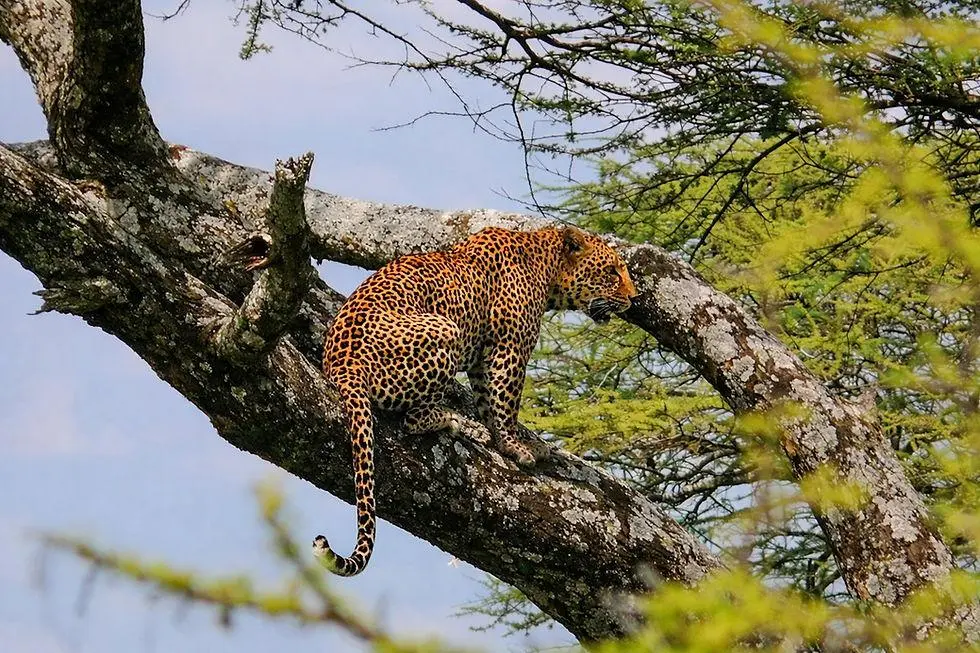
ZoneCentral Serengeti (Seronera)
The top zone in the park, thanks to riverine forest along the Seronera River and a healthy, well-documented resident population that guides track across multiple known territories.
 Zone
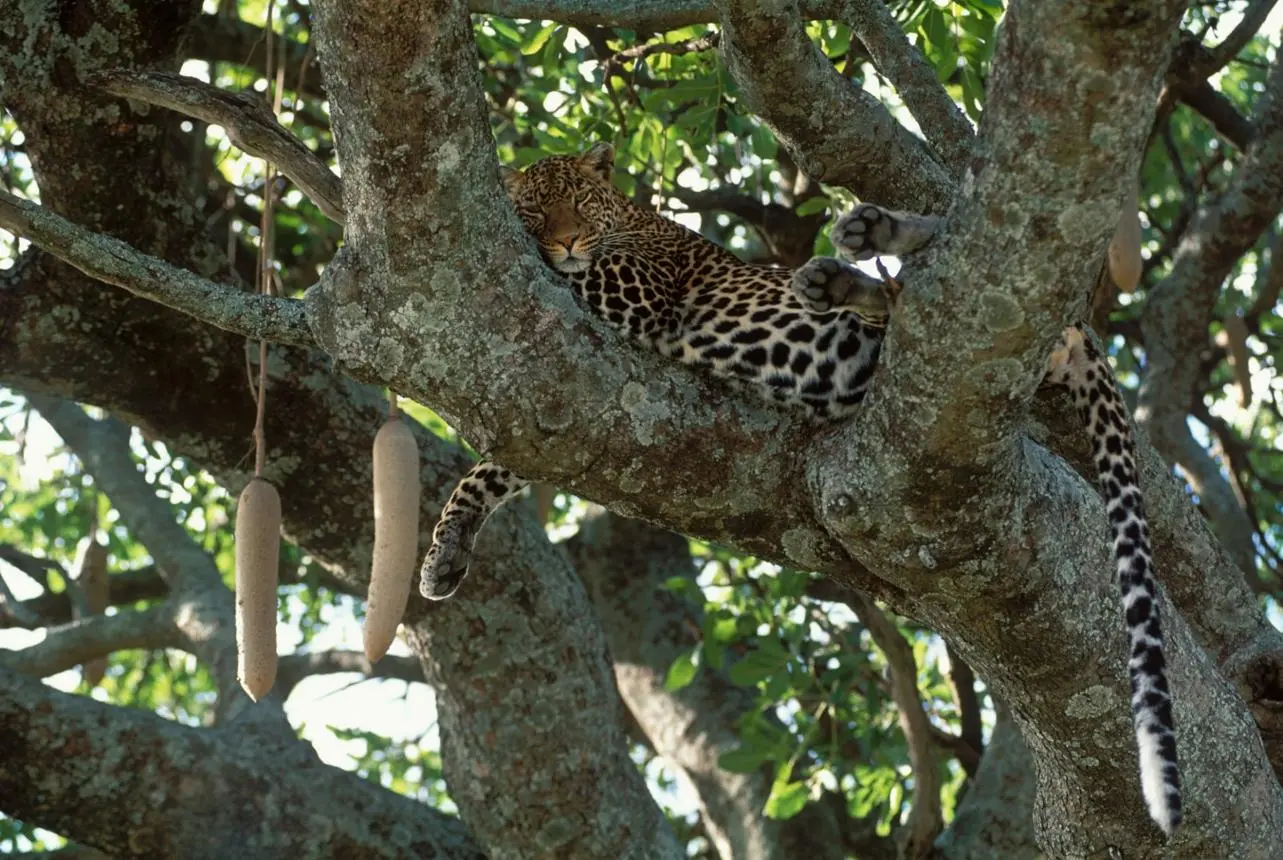
ZoneRiverine tree lines
Scan overhanging branches near rivers and kopjes carefully — leopards often rest here in full view during daylight hours, appearing almost invisible until you know exactly where to look.
 Zone
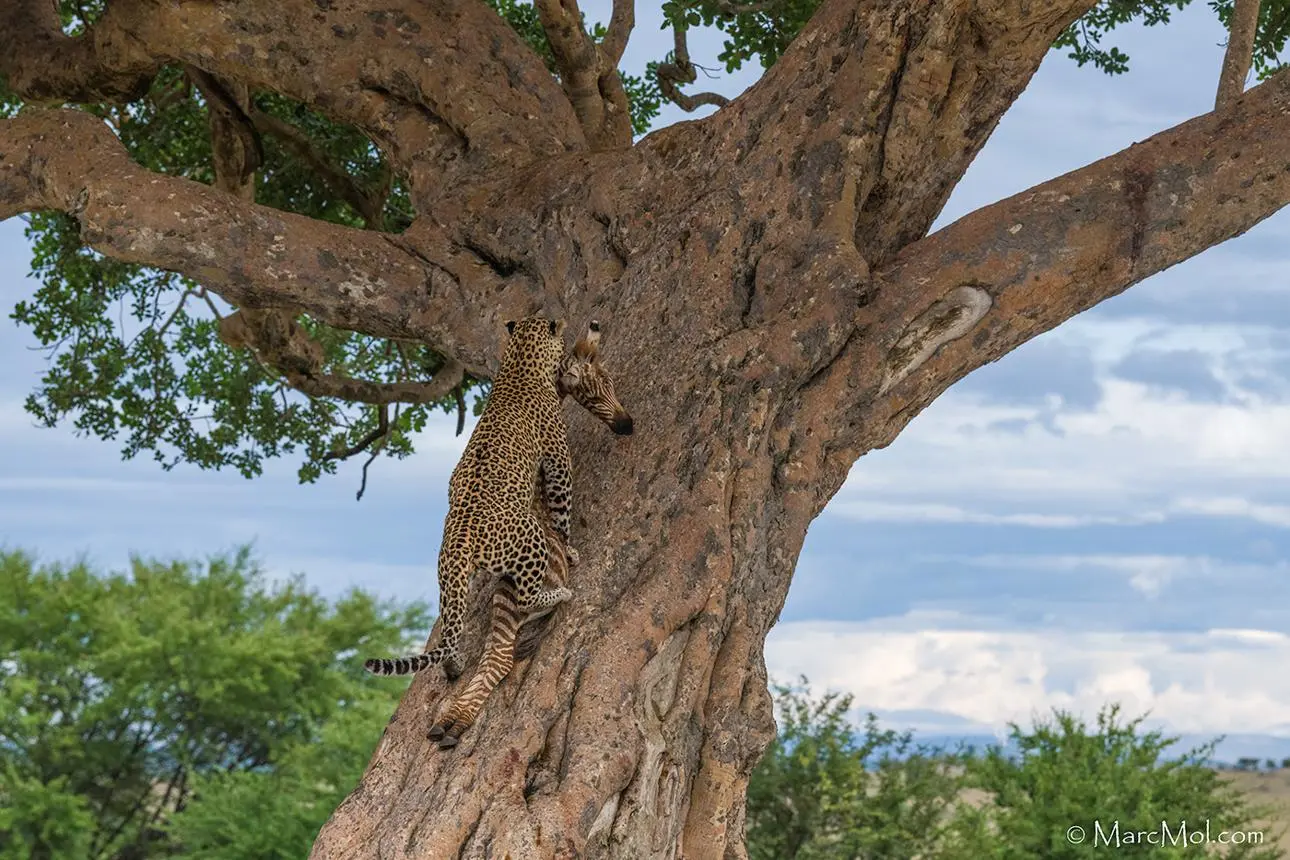
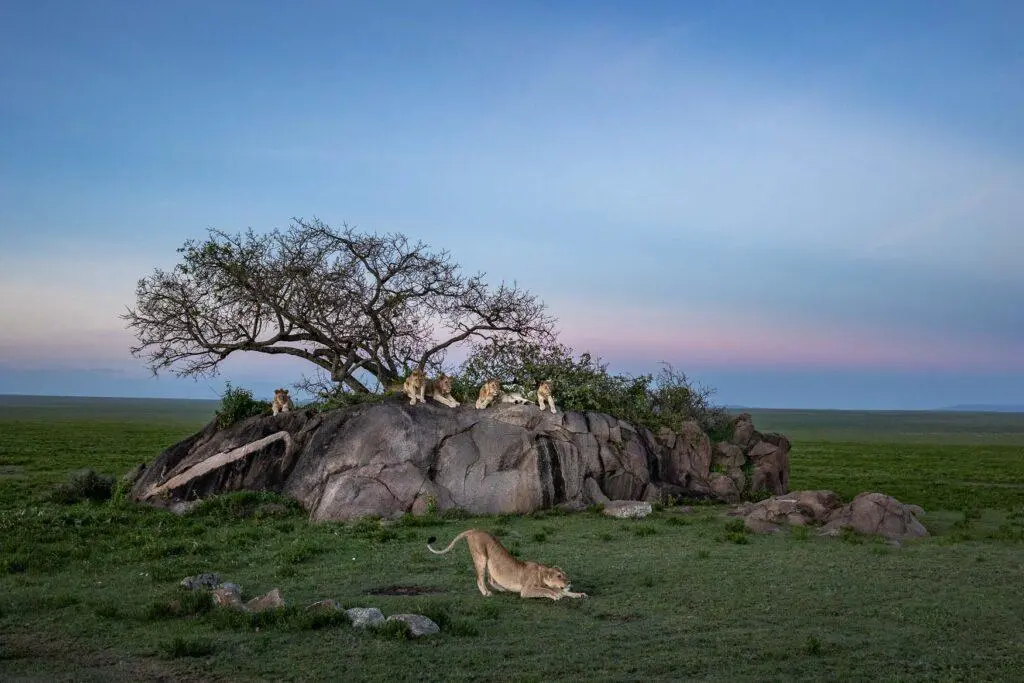
ZoneKopjes with fig or sausage trees
Specific tree species near granite outcrops are favoured repeatedly by resident leopards for both resting and storing kills, making them worth a slow, deliberate pass on any drive through the area.
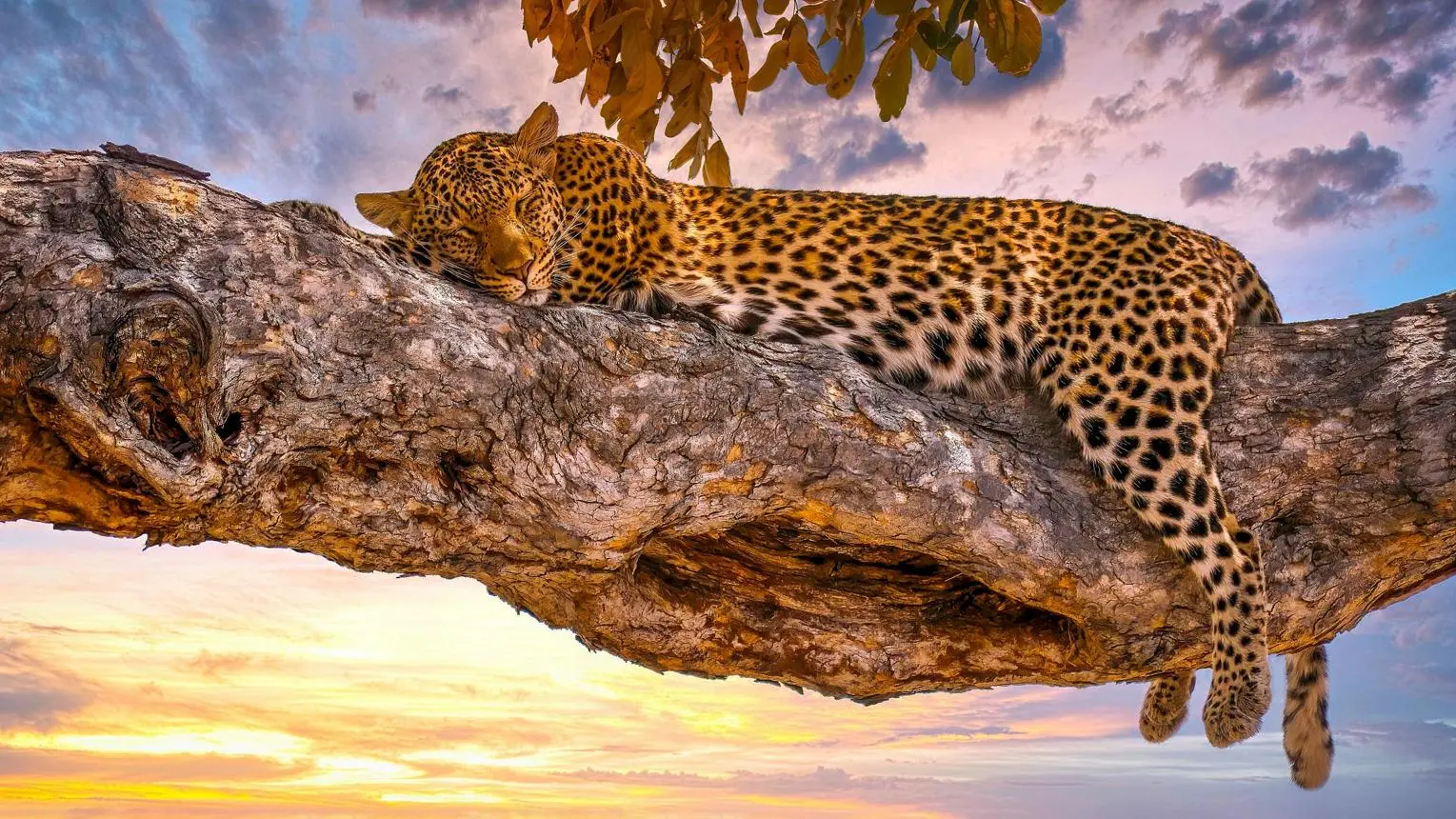 Zone
ZoneEarly morning and dusk
The best windows to find leopards still visible and active before they retreat into cover for the heat of the day, or as they re-emerge to begin hunting after dark.
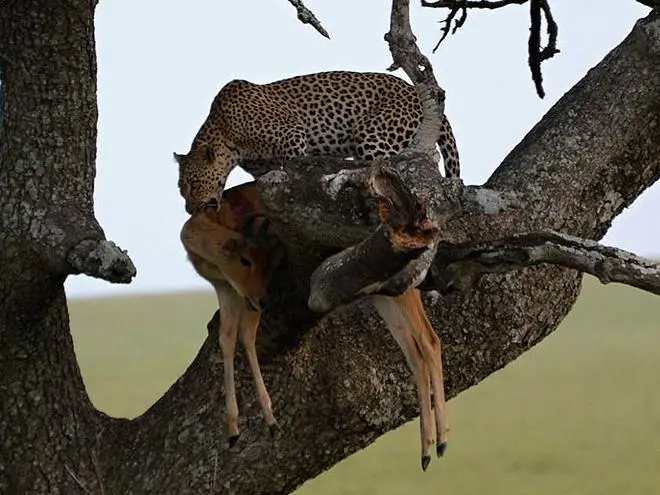
Tree-hoisted kills
Leopards drag prey up to three times their own bodyweight into trees to protect it from lions and hyenas — a classic, dramatic sighting whenever a carcass is found dangling in the canopy.
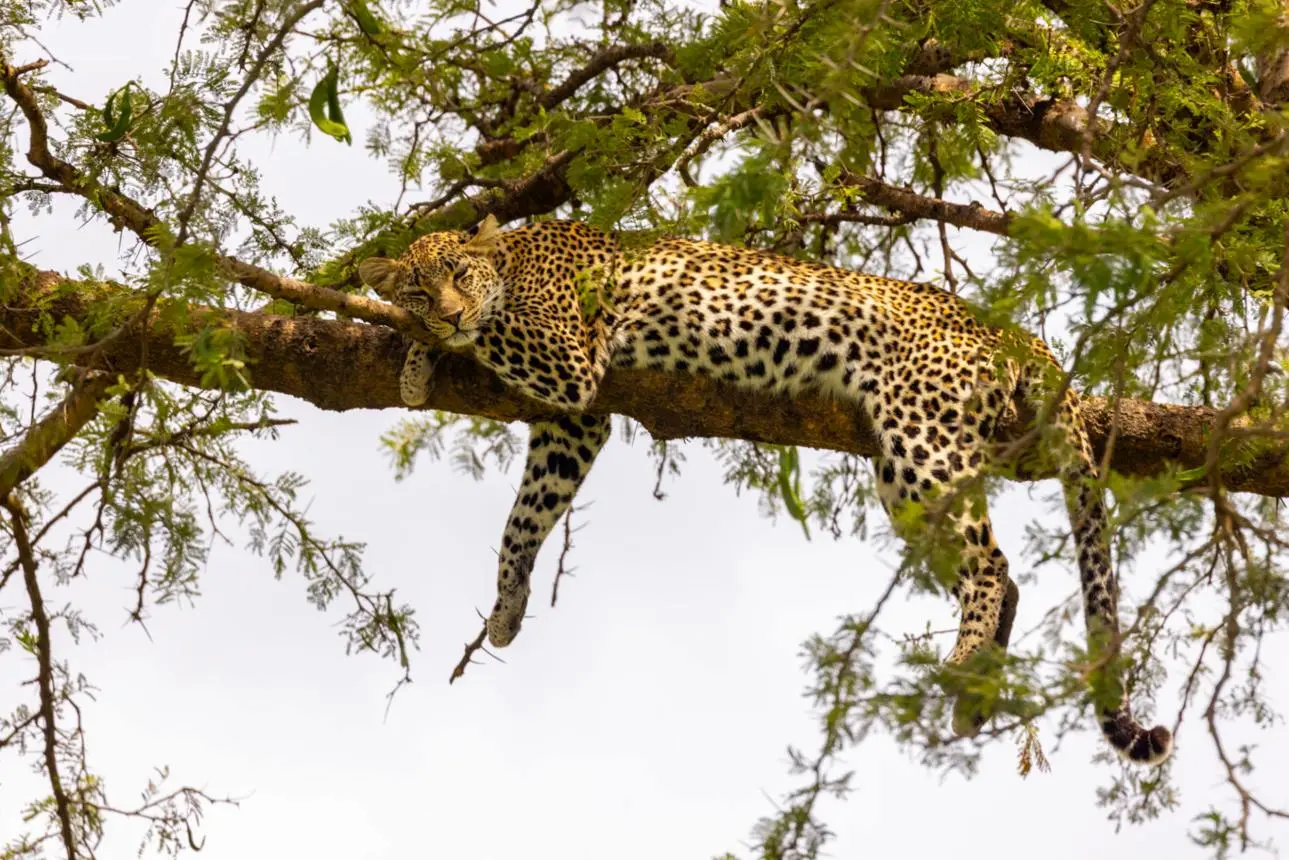
Riverine specialists
Dense vegetation along the Seronera River provides ideal cover and ambush points for hunting, which is why the river corridor holds the park's highest leopard density.
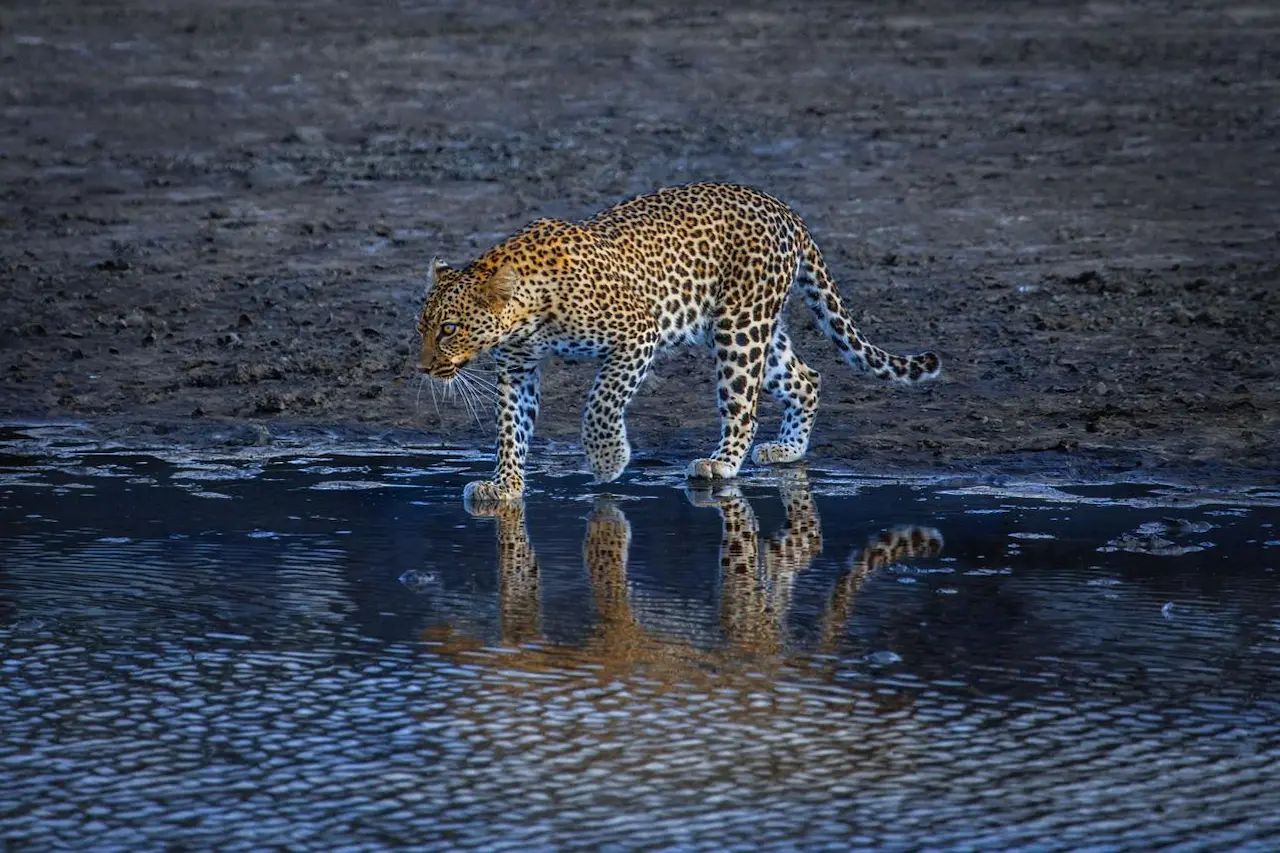
Mostly nocturnal
Most active hunting happens after dark, though daytime sightings of resting leopards draped over tree branches are common and often easier to photograph well.
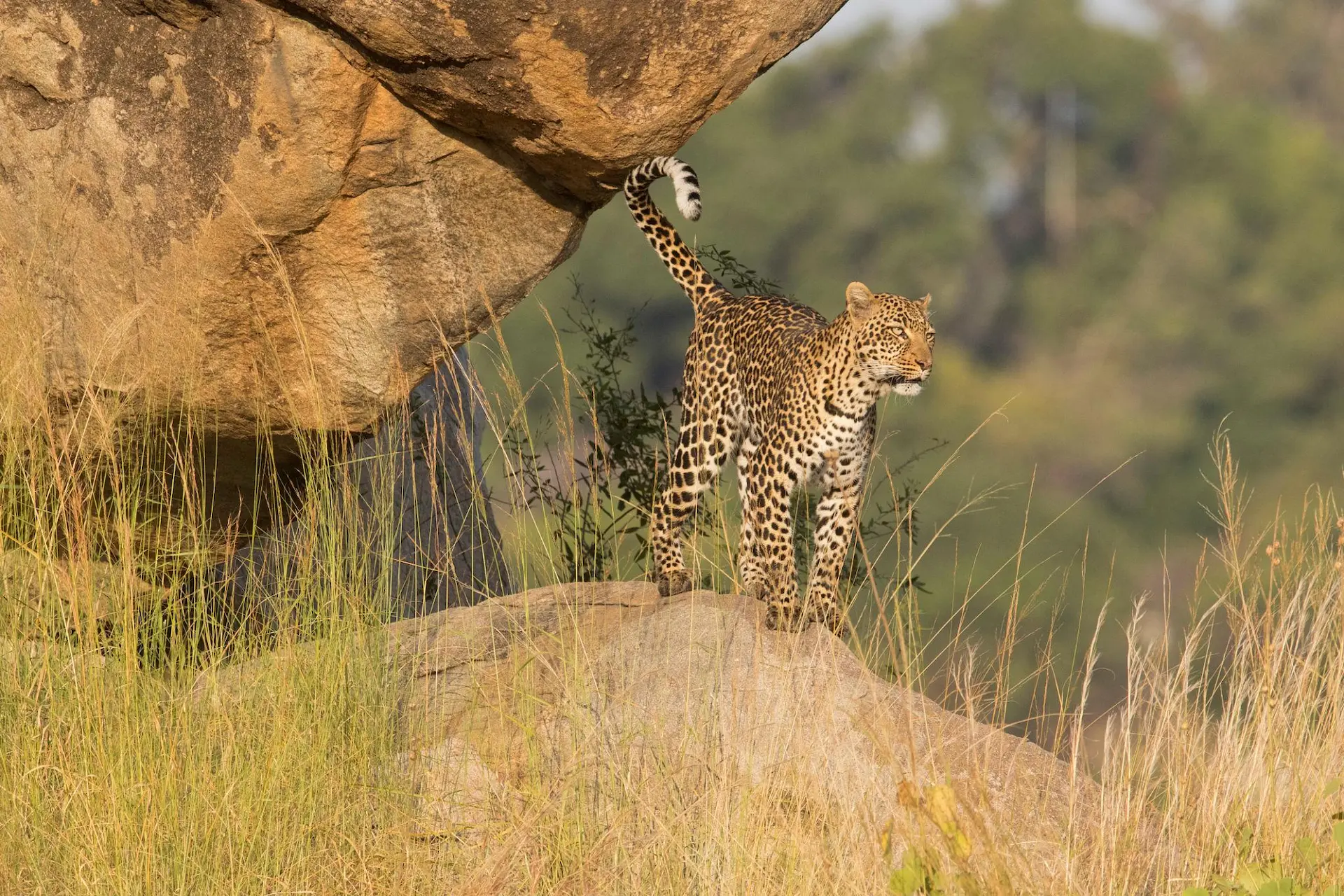
Strictly solitary
Unlike lions, leopards live and hunt entirely alone except for mothers with dependent cubs, making each sighting feel more personal and unhurried.
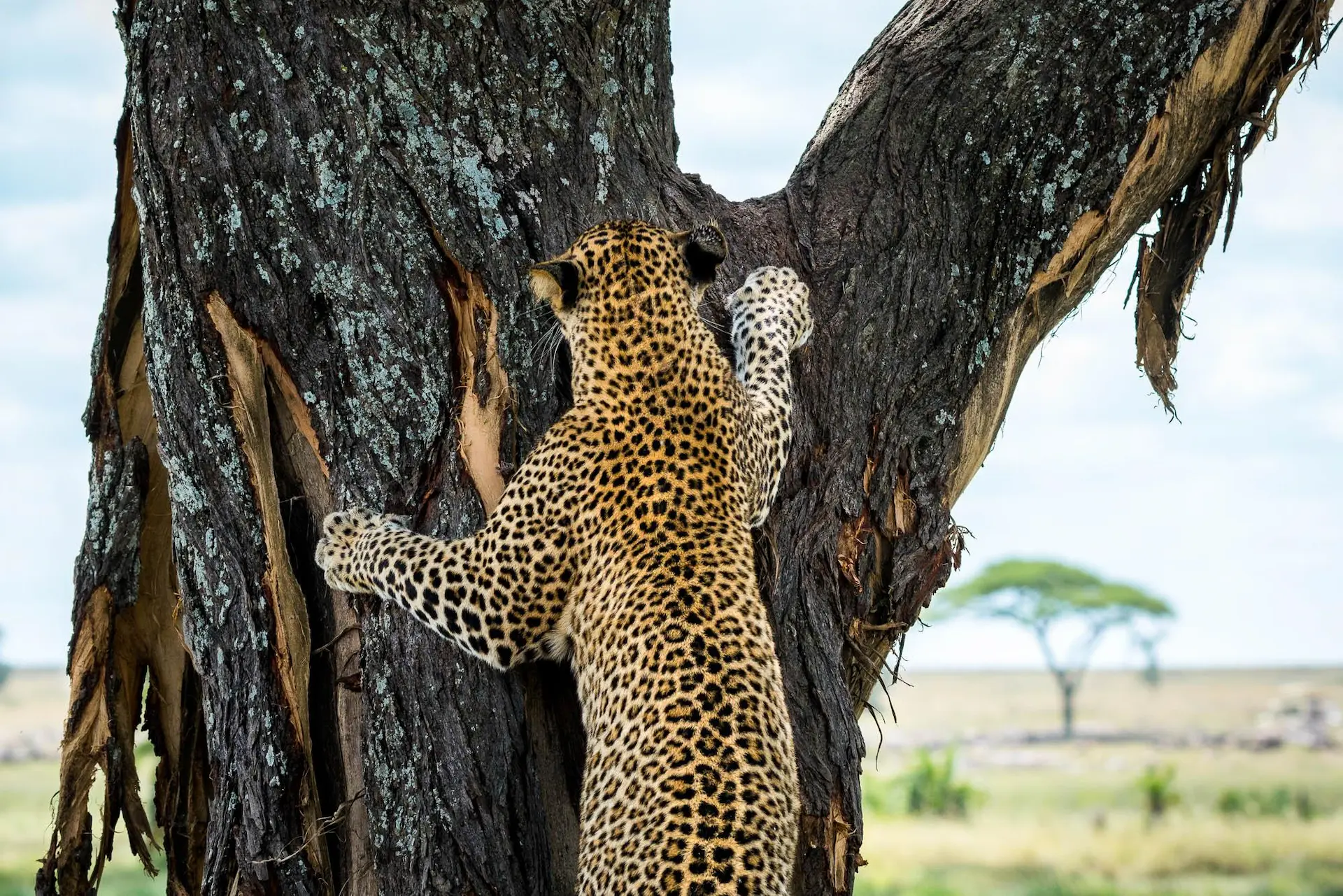
Territorial marking
Leopards mark territory boundaries with scent, scratch marks, and vocal calls resembling a rasping saw-cut sound, especially active around dusk during territorial disputes.
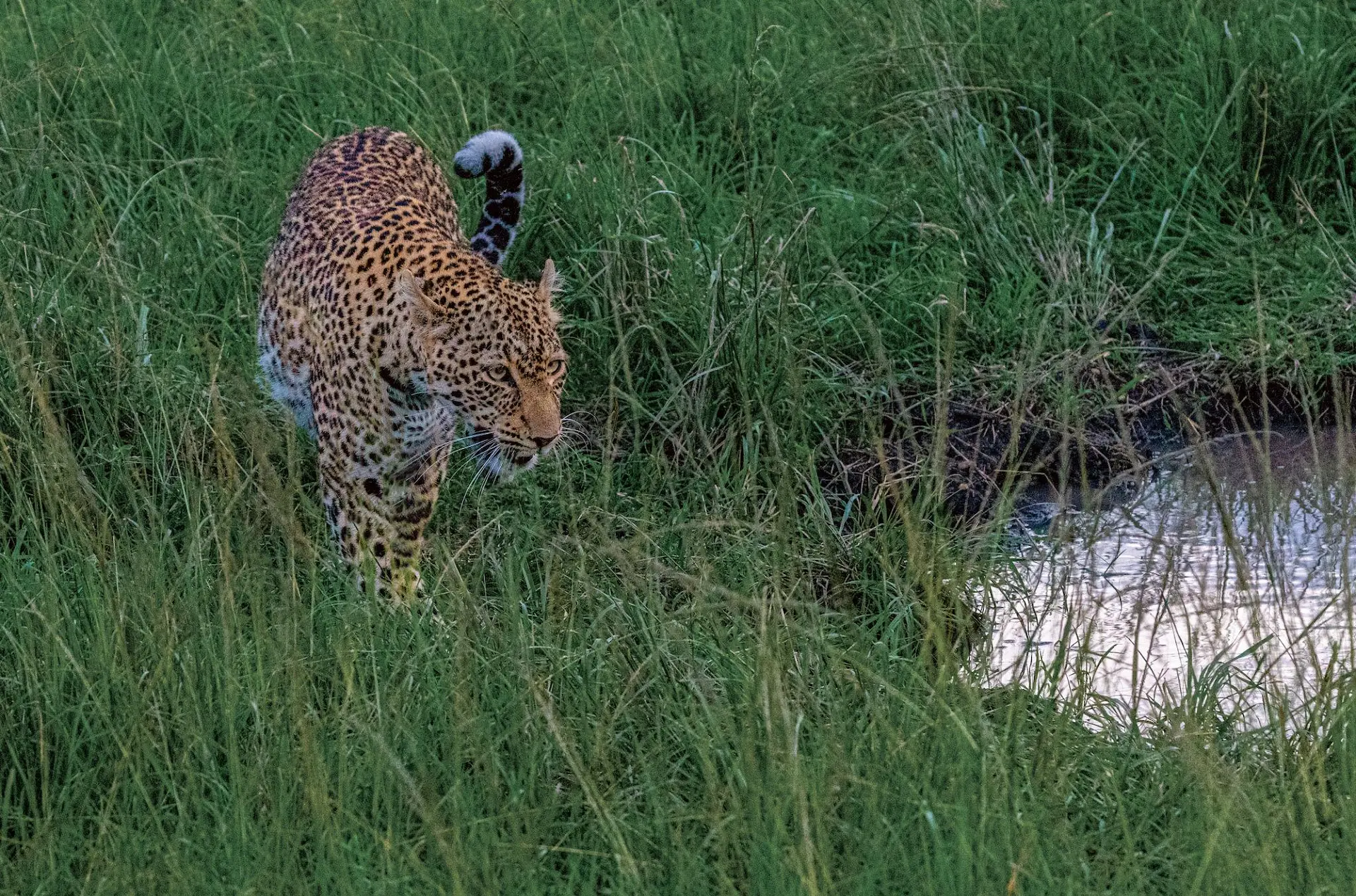
Ambush hunters
Rather than chasing prey across open ground like a cheetah, leopards stalk within a few metres before a short, explosive pounce — a strategy that depends entirely on cover and patience.

Capturing an elusive cat
- →Look up, not just ahead — many leopard photos start with spotting a tail, ear, or paw hanging from a tree branch.
- →Use a monopod, beanbag, or window mount for stability when shooting into dense foliage from a moving vehicle.
- →Shoot with a wide aperture (f/2.8–f/5.6) to blur distracting branches and foliage and isolate the leopard against the background.
- →Be ready for backlit, low-light conditions — leopards are often most visible near dawn or last light rather than midday.
- →A telephoto lens of 400mm or longer helps when a leopard is resting deep in a tree, well back from the road.
- →Patience matters more than gear here — a guide willing to wait quietly near a known territory often outperforms constant repositioning.
Plan your leopard-viewing safari
Tell us your travel dates and we'll base your itinerary in the Serengeti's strongest leopard territory, with a guide who knows the local trees and kopjes.