
- Estimated population
- 3,000+
- Continuous research
- 60+ yrs
- Sighting odds
- Very high
- Typical pride size
- 10–15
- Roar audible up to
- 8 km
- Cub survival, year one
- ~20%
Lions in
the Serengeti
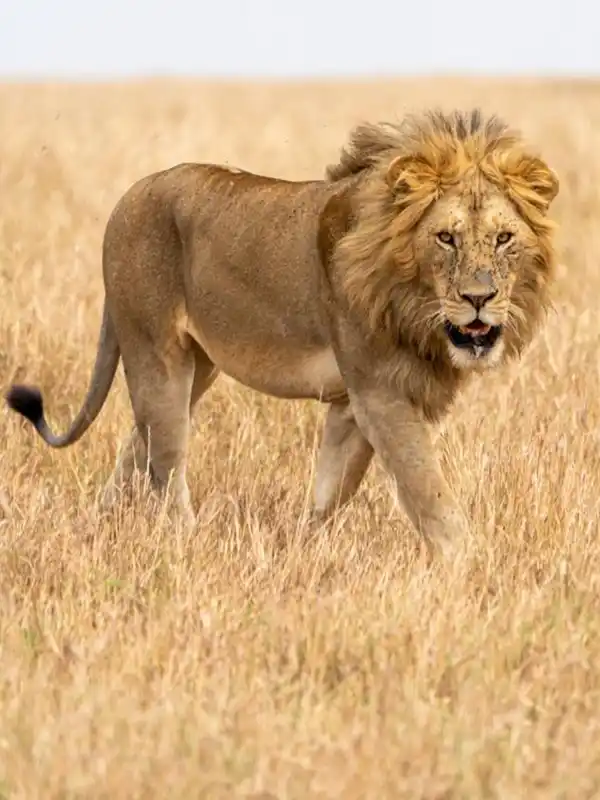
The Serengeti holds one of Africa's largest and healthiest lion populations — with prides that have been studied continuously for over 60 years and some of the most reliable sightings on the continent.
The Serengeti is home to an estimated 3,000+ lions, one of the largest populations left in Africa, supported by the year-round abundance of prey moving through the ecosystem. Densities are highest around Seronera in Central Serengeti, where resident prides benefit from permanent water and a steady supply of resident wildebeest, zebra, and buffalo even when the main migration is elsewhere.
Prides here have been studied continuously since 1966 through the Serengeti Lion Project, one of the longest-running carnivore studies in the world. Researchers know individual lions by their whisker-spot patterns and scars, track multi-generational family trees, and have documented everything from cub survival rates to the effects of disease outbreaks — knowledge that guides draw on directly when predicting where a pride is likely to be on any given morning.
A Serengeti pride typically consists of several related females, their cubs, and one or more resident males who hold territory through coalitions — usually brothers or unrelated males who team up, since a single male struggles to defend territory against rival coalitions. Females do the majority of cooperative hunting, often working in coordinated groups to bring down prey too large or fast for a lone lion, while males primarily patrol and defend territory and feed after the kill.
Cub mortality is strikingly high — only around one in five cubs survives to adulthood, mostly due to starvation, disease, and infanticide when a new male coalition takes over a pride and kills existing cubs to bring females back into oestrus. It's a harsh but well-documented part of pride dynamics that researchers have tracked across generations, and one reason lion numbers, despite being robust, still require careful ongoing conservation attention.
A canine distemper outbreak in 1994, transmitted from domestic dogs in villages bordering the park, killed roughly a third of the Serengeti's lion population within months — a sobering reminder of how connected the ecosystem is to the human communities around it, and part of why vaccination programmes for domestic animals near park boundaries remain an active conservation priority today.
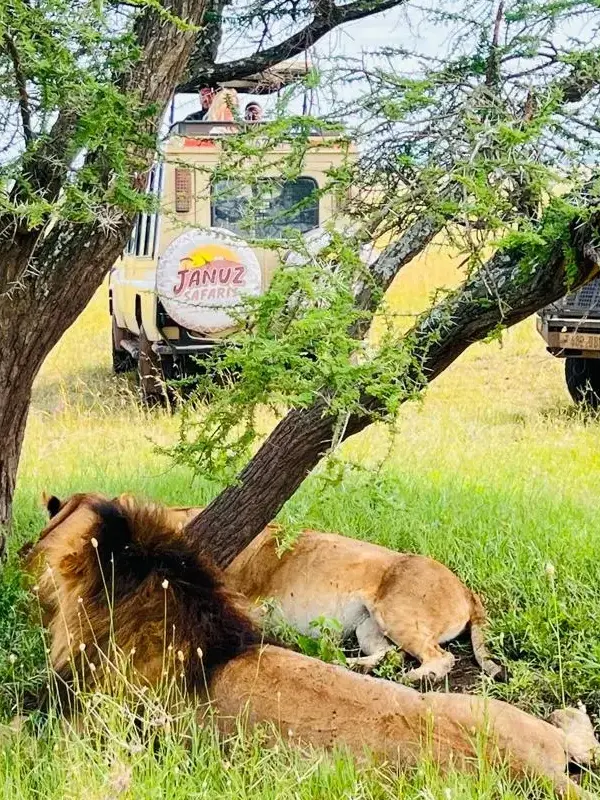
For visitors, this all translates into something very practical: guides in Central Serengeti often know individual prides by name, their approximate territory, and their recent movements, which is a major reason lion sightings here are consistently rated among the most reliable of any safari destination in Africa.
Lions also interact constantly with the Serengeti's other large predators, most visibly spotted hyenas. The two species compete directly for kills, and it's common to see a pride chase a hyena clan off a carcass, or — just as often — a large hyena clan overwhelm a lone lioness and steal her kill. Guides who understand these rivalries can often predict where competing predators are likely to converge, adding an extra layer of drama to an already active sighting.
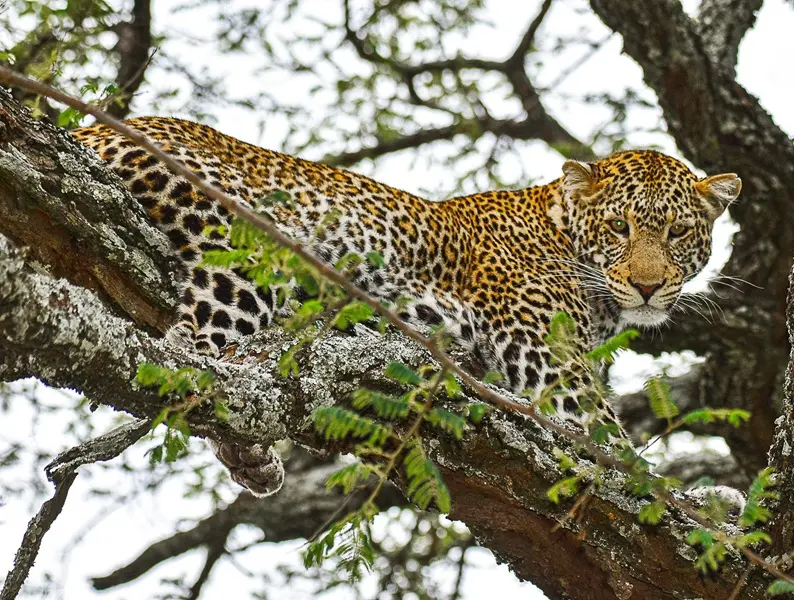
Fun fact: Serengeti lions are known for occasionally climbing trees, a behaviour more commonly associated with Lake Manyara's lions but documented here too, usually to escape biting flies or get a better vantage point over the plains.
 Zone
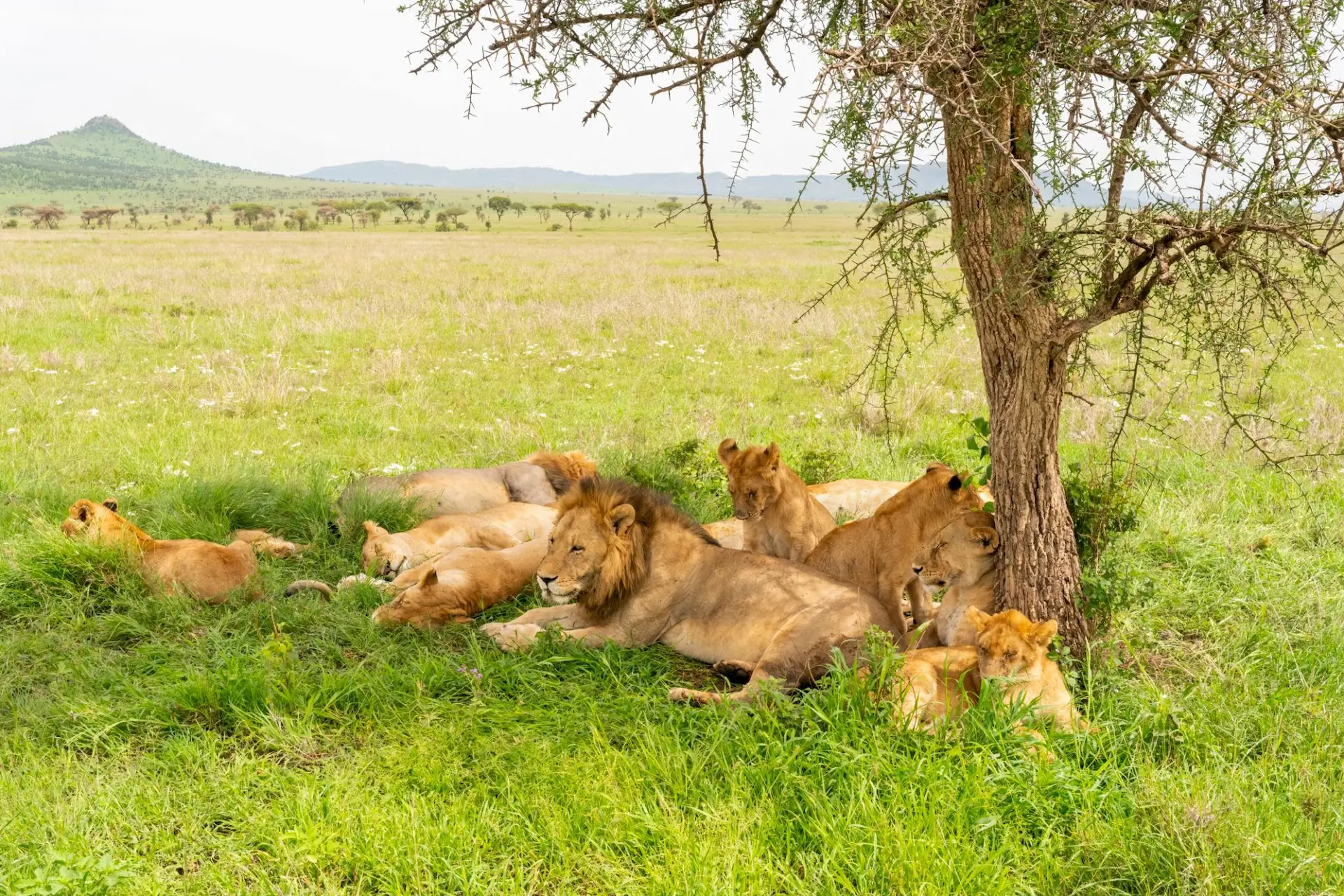
ZoneCentral Serengeti (Seronera)
The single best year-round zone, with dense, well-documented resident prides that guides can locate with high reliability on almost any given day, thanks to decades of research and daily guide radio reports.
 Zone
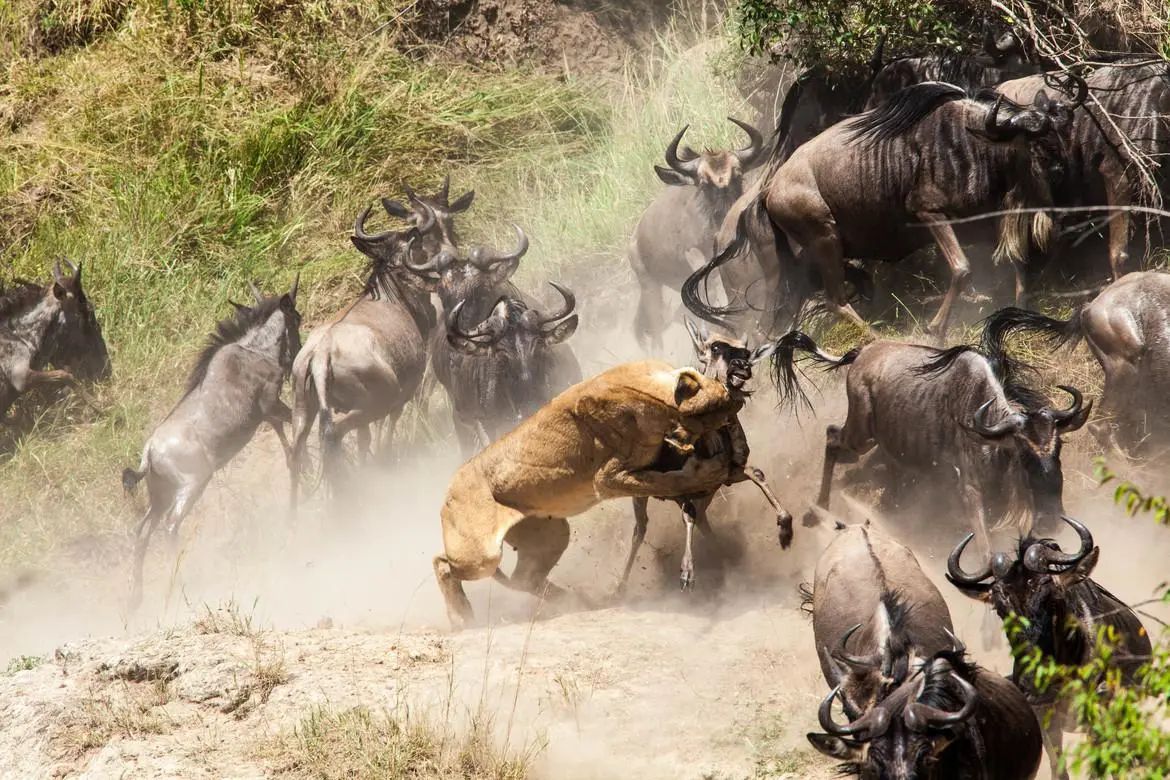
ZoneNorthern Serengeti, migration season
July–October, prides near the Mara River take advantage of crossing herds for dramatic hunting and ambush scenes, often positioning themselves near known crossing points before a crossing even begins.
 Zone
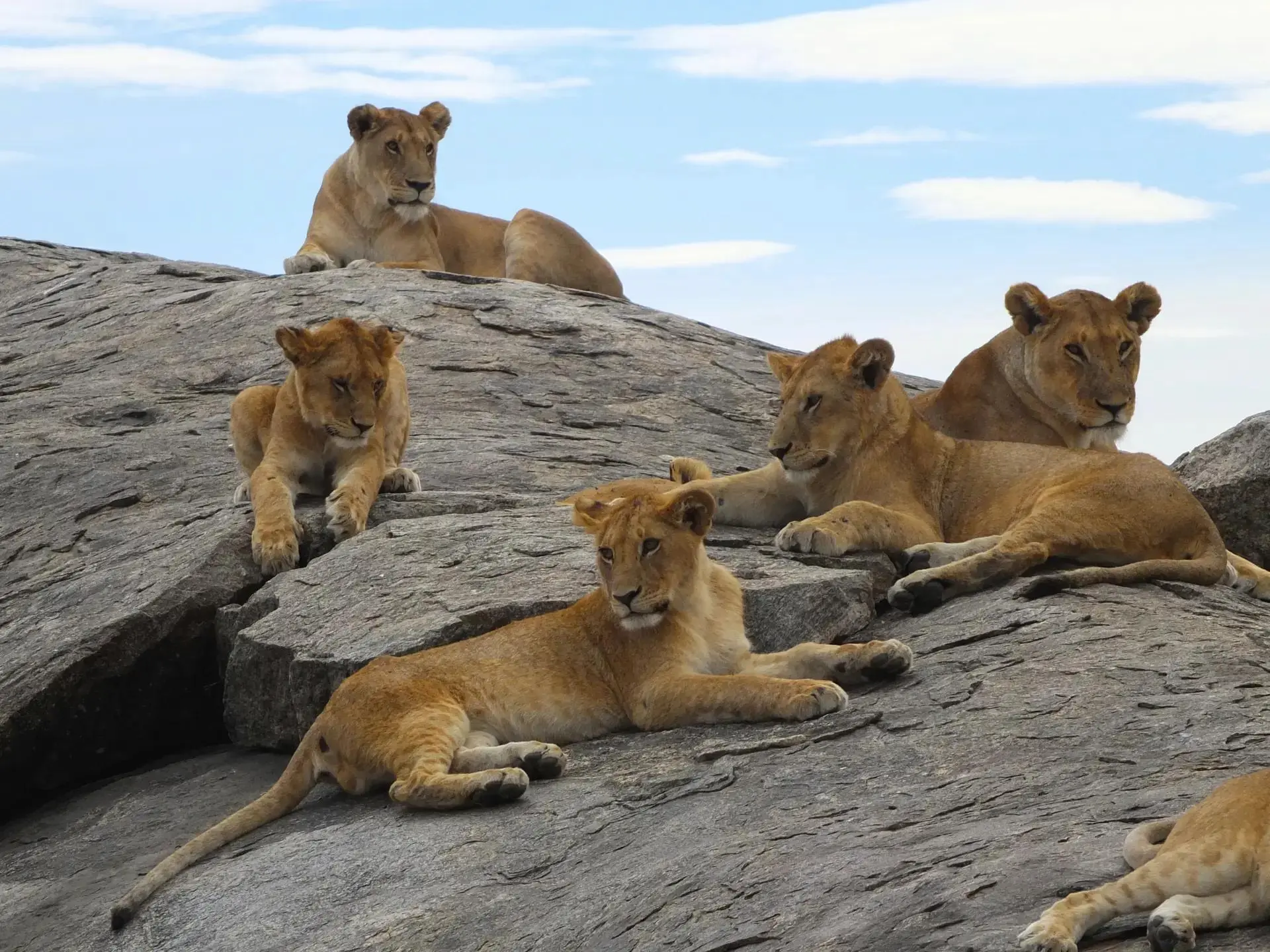
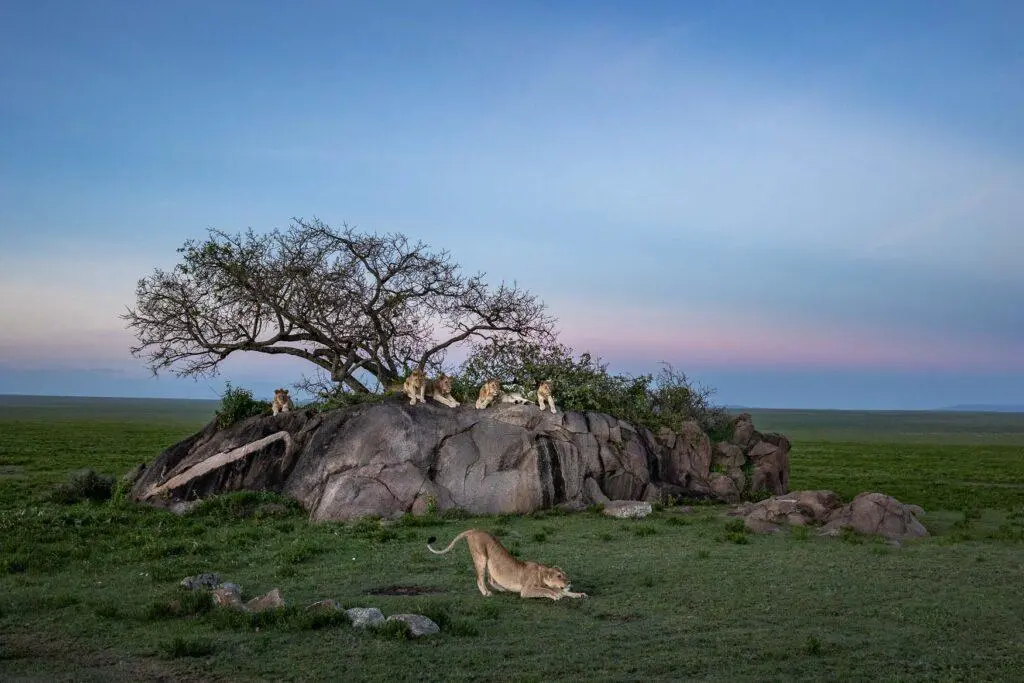
ZoneKopjes at midday
Granite outcrops where prides rest in the open during the heat of the day, using the elevation for shade, breeze, and a vantage point over approaching prey — a highly reliable sighting spot at almost any hour.
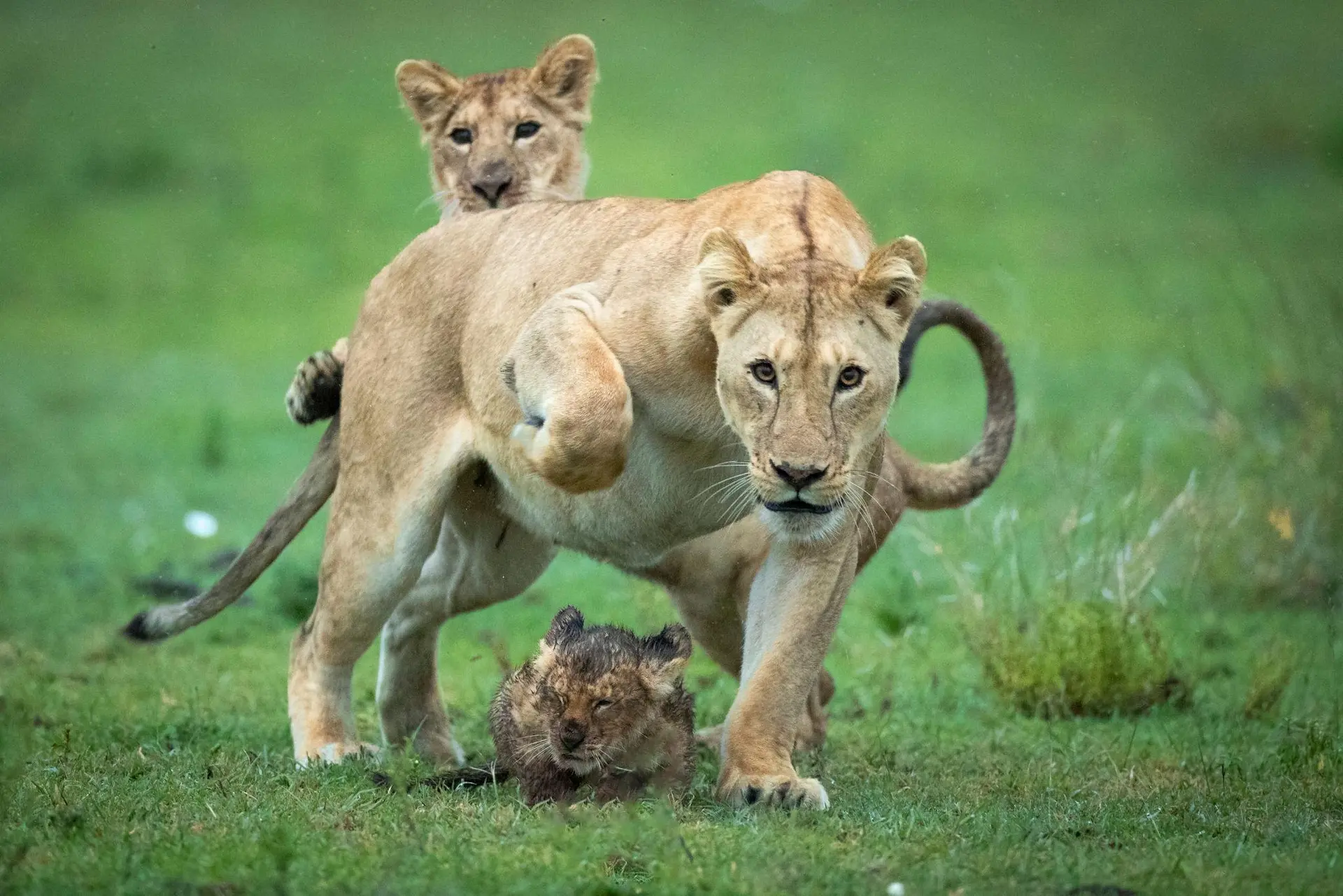 Zone
ZoneSouthern plains, calving season
December–March, prides shift toward the Ndutu area to take advantage of newborn wildebeest calves — an easy, abundant food source that draws multiple prides into overlapping territory.
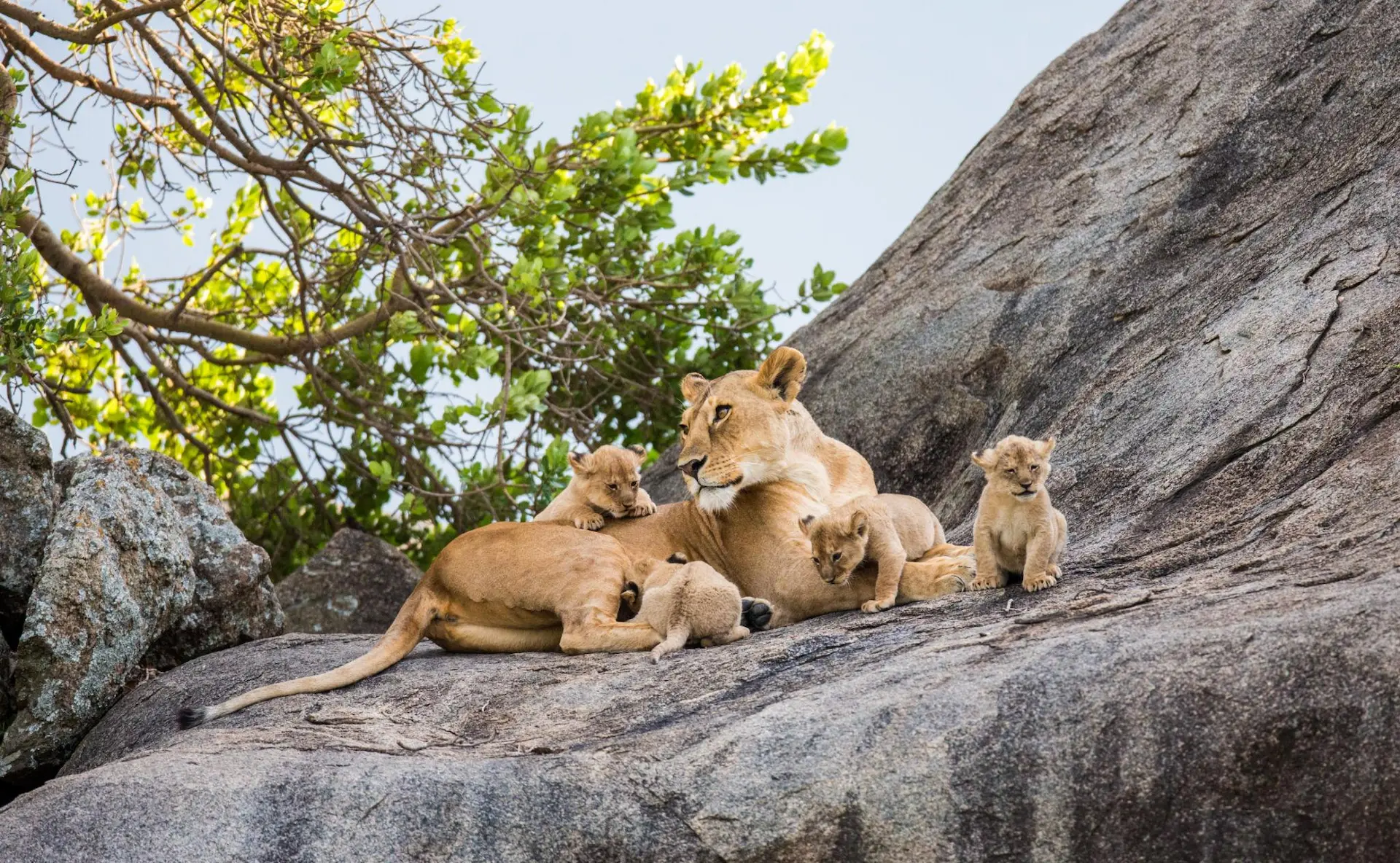
Kopje living
Prides favour granite kopjes for shade, vantage points, and safe cub-rearing — a classic Serengeti sighting, and one of the reasons kopjes are a first stop on most guided drives.
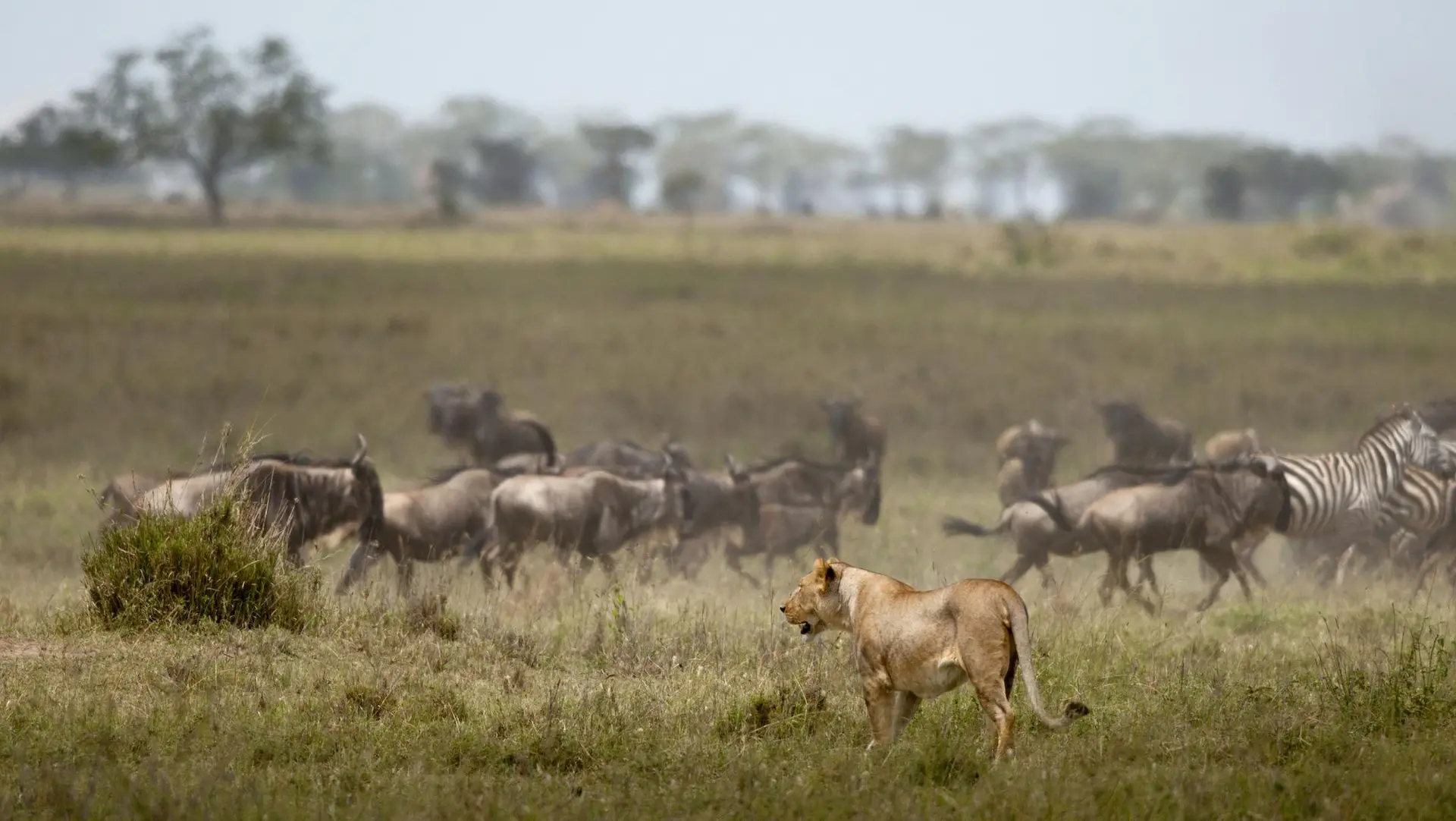
Migration followers
Some prides shift territory seasonally to stay close to migrating herds, especially near river crossing points, effectively timing their own movements around the wildebeest calendar.
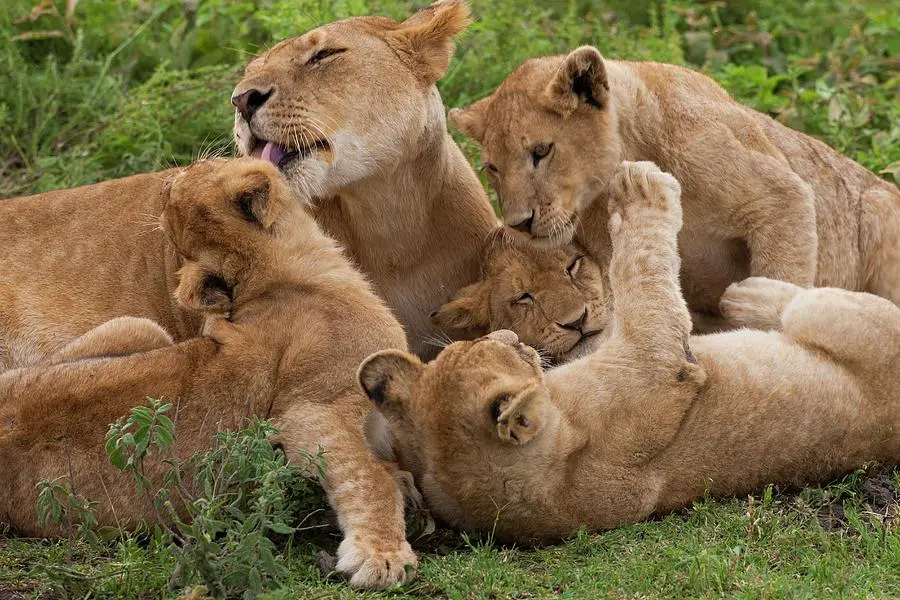
Large, stable prides
Serengeti prides can be larger than average, with several adult females sharing cub-rearing duties — a behaviour called communal nursing, where cubs may suckle from any lactating female in the pride.
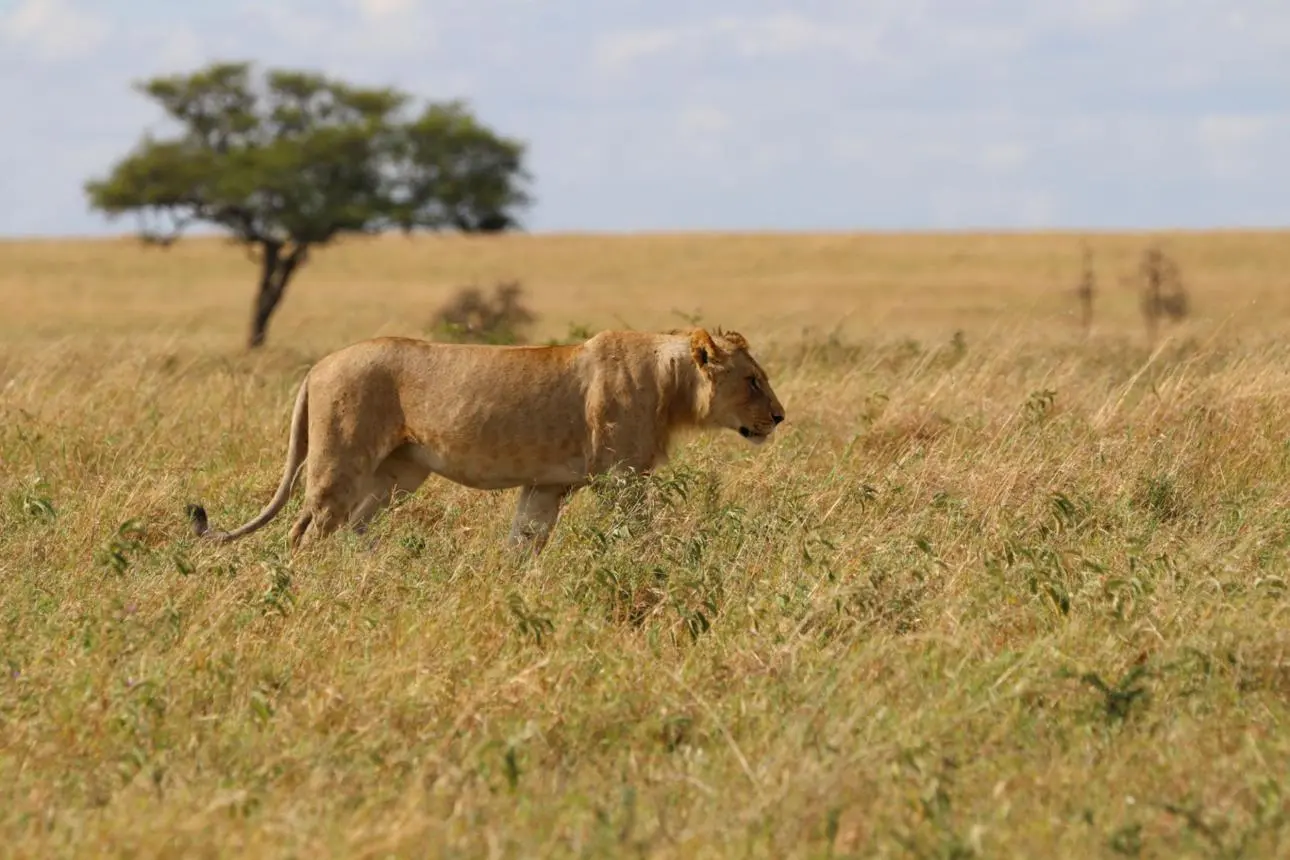
Diurnal activity
Unlike more skittish populations elsewhere in Africa, Serengeti lions are commonly active and visible during daylight game drives, having grown habituated to decades of vehicle presence.
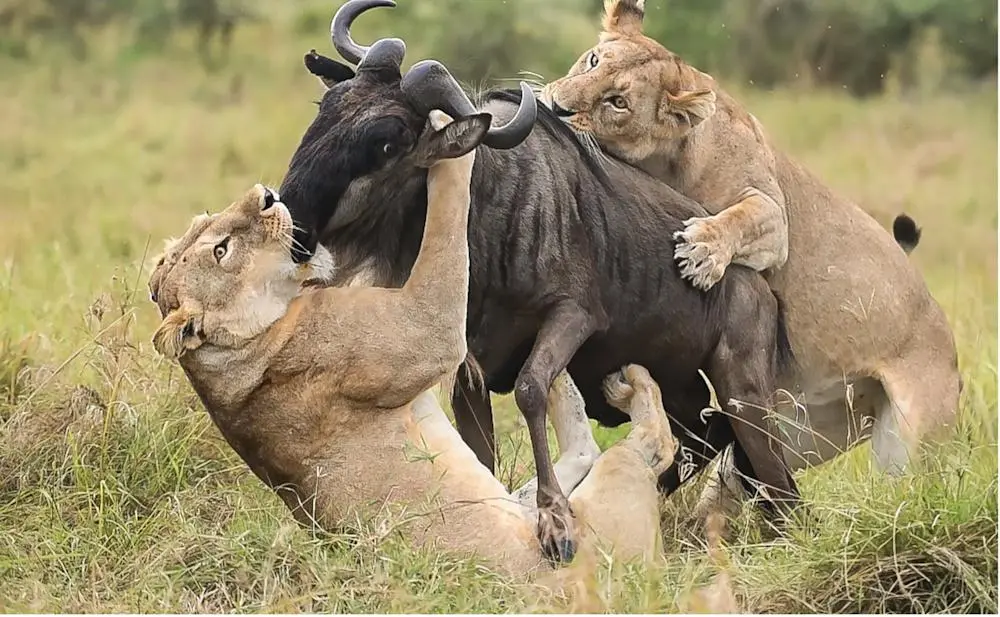
Cooperative hunting
Females often hunt in coordinated groups, with individuals taking different roles — some flushing prey toward others waiting in ambush — a strategy that significantly raises success rates against large prey like buffalo.
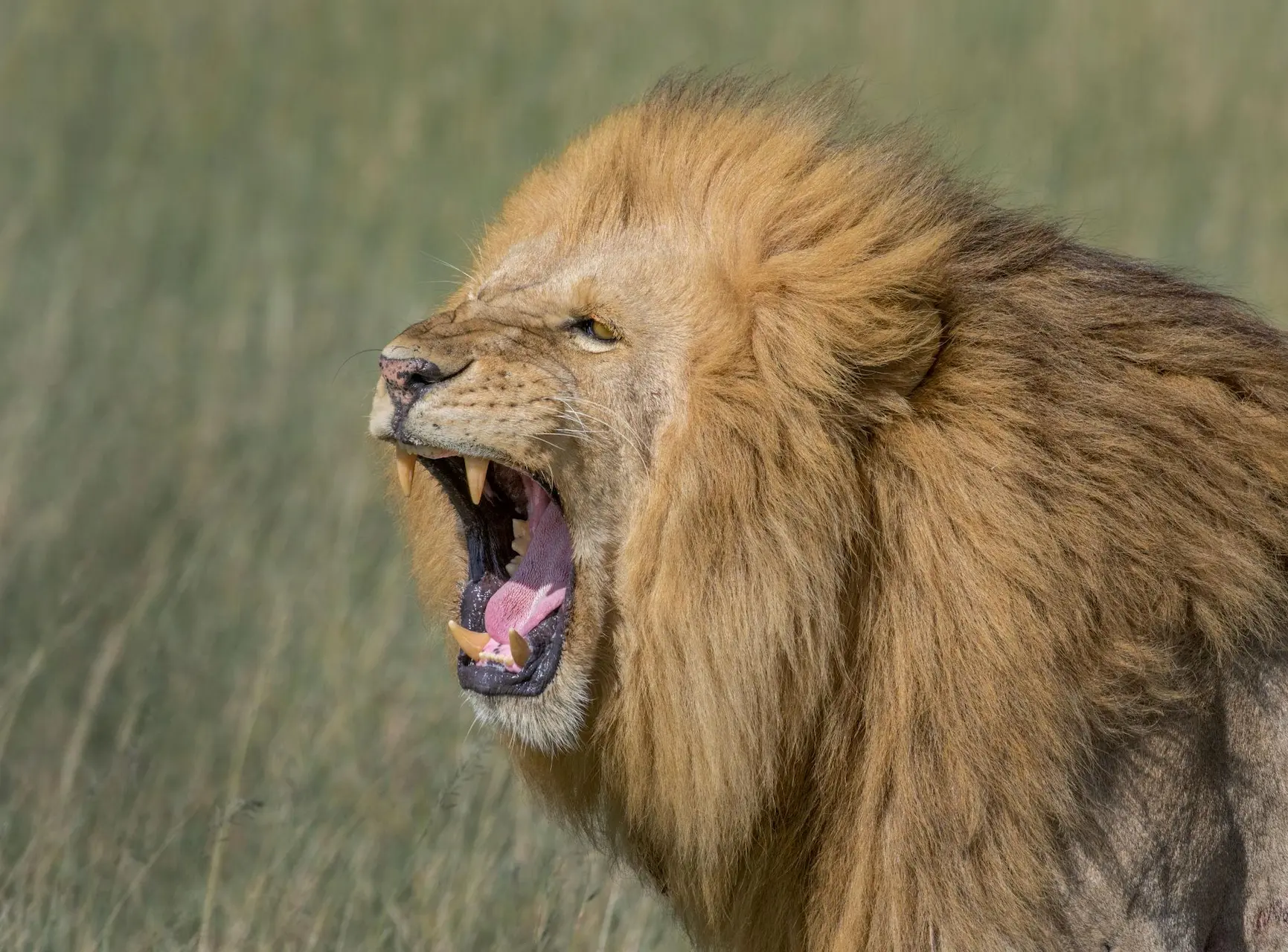
Territorial roaring
A pride's collective roar can carry up to 8 km across open plains, both warning off rival prides and helping scattered members relocate each other after a night of hunting.
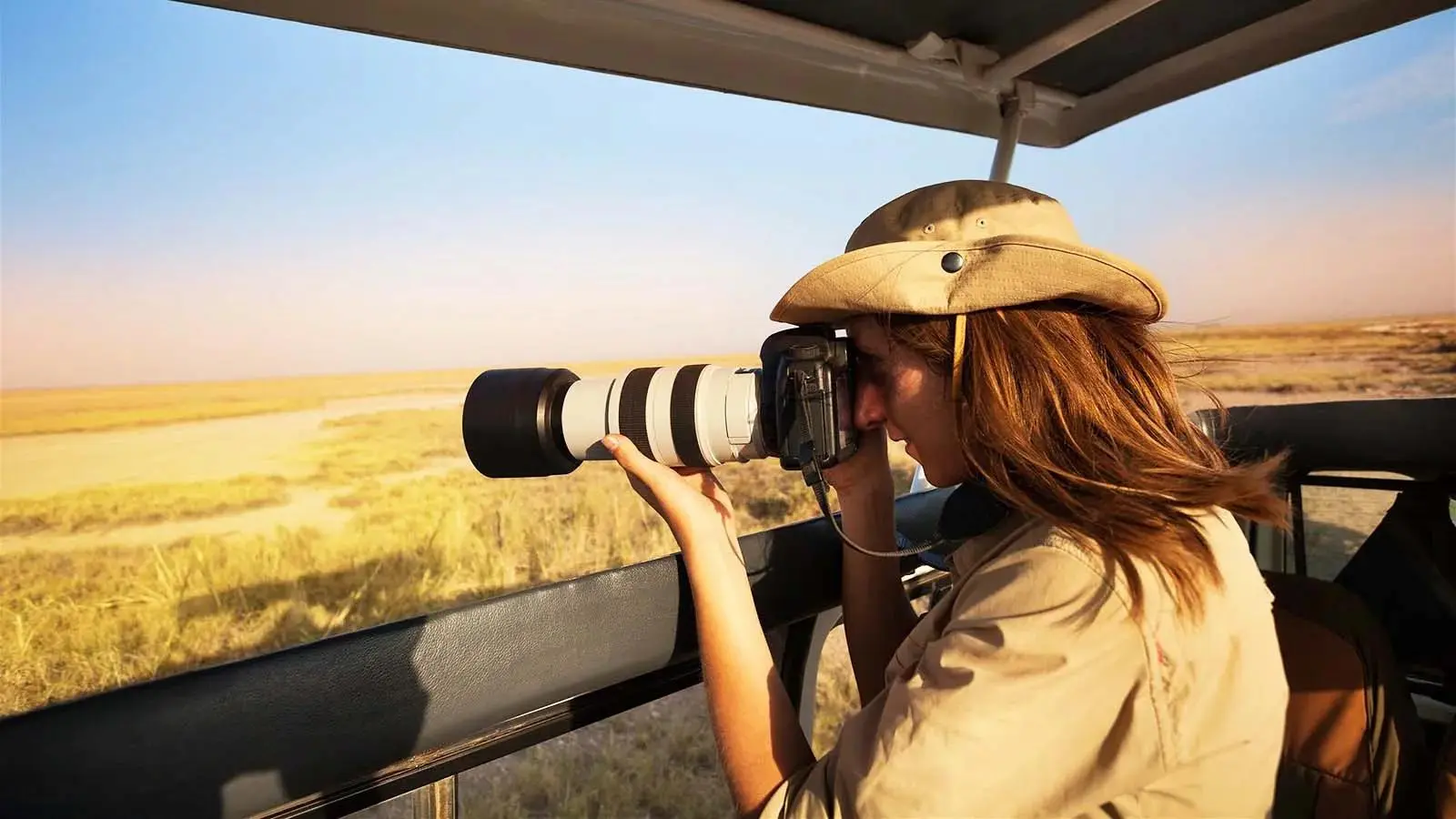
Getting a great lion shot
- →Shoot kopje scenes in golden hour light for warm, dramatic tones on the rock and a lion's mane or coat.
- →Use continuous/burst mode around cubs — interactions happen fast and often, and the best expressions are usually fleeting.
- →Ask your guide to angle the vehicle for a low perspective, closer to eye level, rather than shooting down at a resting lion.
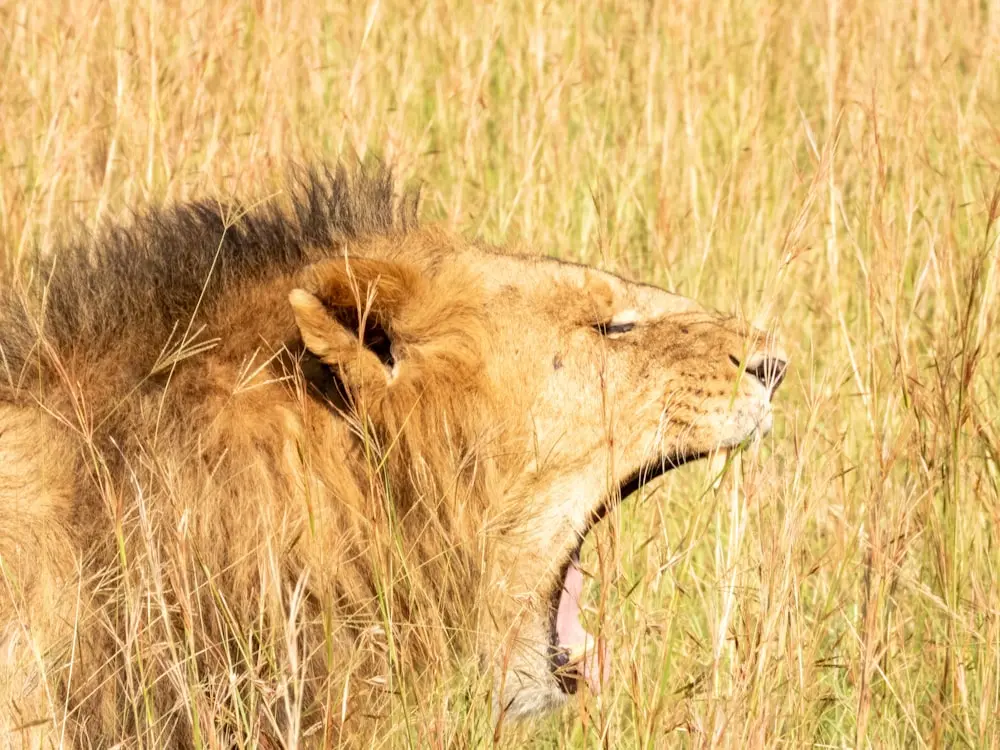
- →Watch for yawning and stretching after rest periods — reliable, photogenic moments that often precede a pride becoming active.
- →A 200–400mm lens covers most sightings well; save longer glass for cautious individuals further from the road.
- →Early morning light around 6:30–7:30am gives the softest, most flattering tones on a lion's coat before the harsh midday sun arrives.
Plan your Serengeti lion safari
Tell us your travel dates and we'll route your itinerary through the strongest lion territories, from Central Serengeti's resident prides to the Mara River during migration season.