
- Large mammal species
- 70+
- Bird species
- 500+
- Big Five present
- All 5
- Total large animals
- 3M+
- Resident lions
- 3,000+
- Ecosystem size
- 30,000 km²
Serengeti
Wildlife Guide
From the Big Five to over 500 bird species, the Serengeti holds one of the densest concentrations of wildlife on Earth. Here's what lives there, how it fits together, and where to find it.
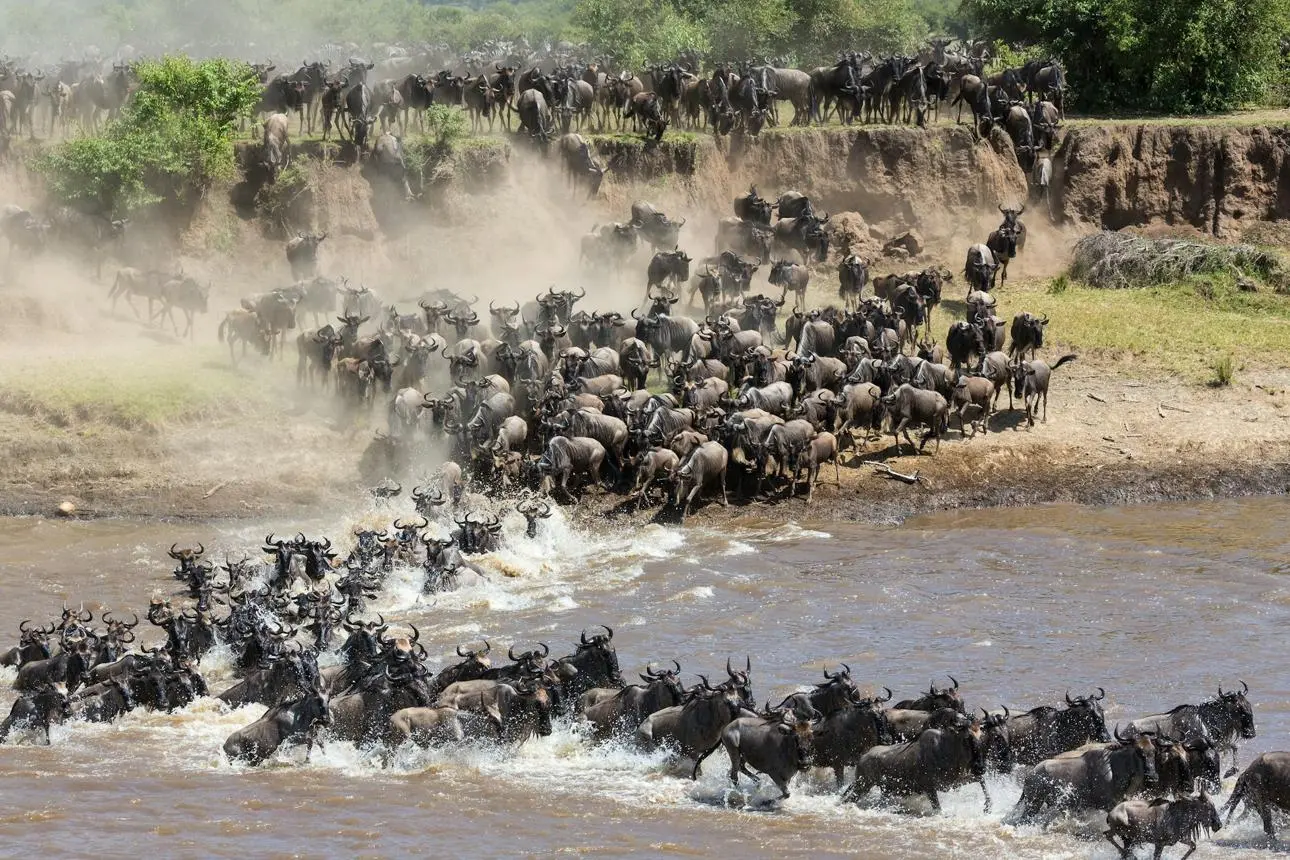
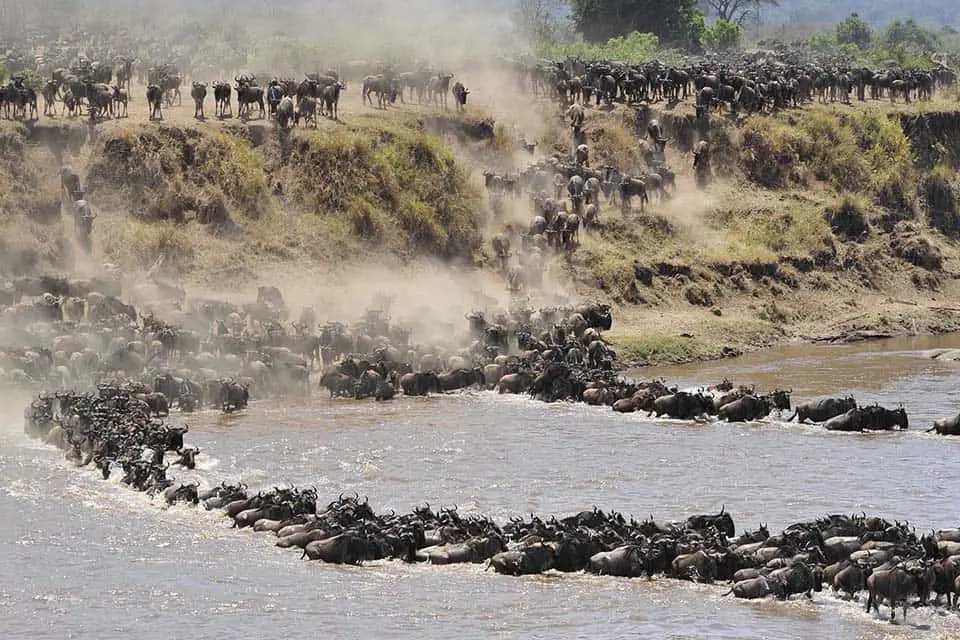
The Serengeti ecosystem spans roughly 30,000 km² of savanna, woodland, riverine forest, and rocky kopjes, supporting one of the last great concentrations of large mammals on the planet — alongside the annual movement of 1.5–2 million wildebeest and hundreds of thousands of zebra and gazelle that anchor the entire food chain.
That volume of prey sustains an equally impressive predator population: healthy numbers of lion, leopard, cheetah, spotted hyena, and a small but recovering population of African wild dog, giving the Serengeti some of Africa's most reliable and varied predator sightings in a single park.
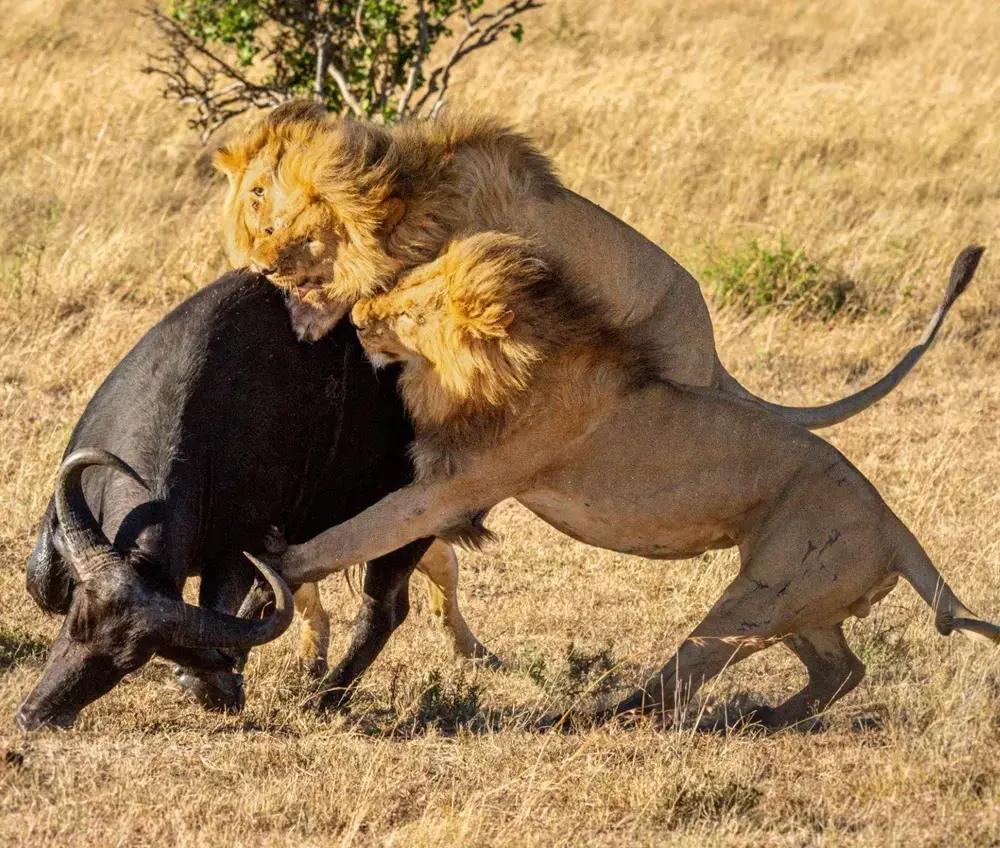
The predator-prey relationship here is worth understanding on its own terms: it isn't simply predators versus prey, but a layered hierarchy. Lions dominate most contested kills, hyenas both scavenge and hunt cooperatively in large clans, leopards avoid direct competition through stealth and tree-caching, and cheetahs avoid it through speed and daylight hunting. Wild dogs, though rare here, are among the most efficient pack hunters in Africa when present. Watching how these species interact — not just individual sightings — is often what turns a good safari into a genuinely memorable one.
Beyond the headline predators and the migration itself, the ecosystem supports over 70 species of large mammal — elephant, buffalo, giraffe, hippo, several antelope species, baboon and other primates, and smaller, less-photographed carnivores like serval and African wild cat — plus more than 500 recorded bird species ranging from the ground-hunting secretary bird to flocks of lesser flamingo on seasonal alkaline lakes.
Wildlife distribution across the Serengeti isn't uniform — it's shaped by water, grass type, and vegetation cover, which is why the park is generally understood in terms of its four main zones rather than as a single uniform landscape. Matching your travel dates and interests to the right zone, rather than expecting to see everything everywhere, is the single biggest factor in how satisfying your wildlife viewing will be.
Since 1951, when the Serengeti was gazetted as a national park, and reinforced by its 1981 UNESCO World Heritage listing, strict protection has allowed populations of most species to remain remarkably stable — a rare success story compared to many ecosystems elsewhere in Africa that have seen significant declines in large mammal numbers over the same period.
First safari tip: Central Serengeti (Seronera) has the most consistent resident wildlife viewing in any month, migration or not — a dependable base if your travel dates don't line up with a specific seasonal event.
 Zone
ZoneCentral Serengeti (Seronera)
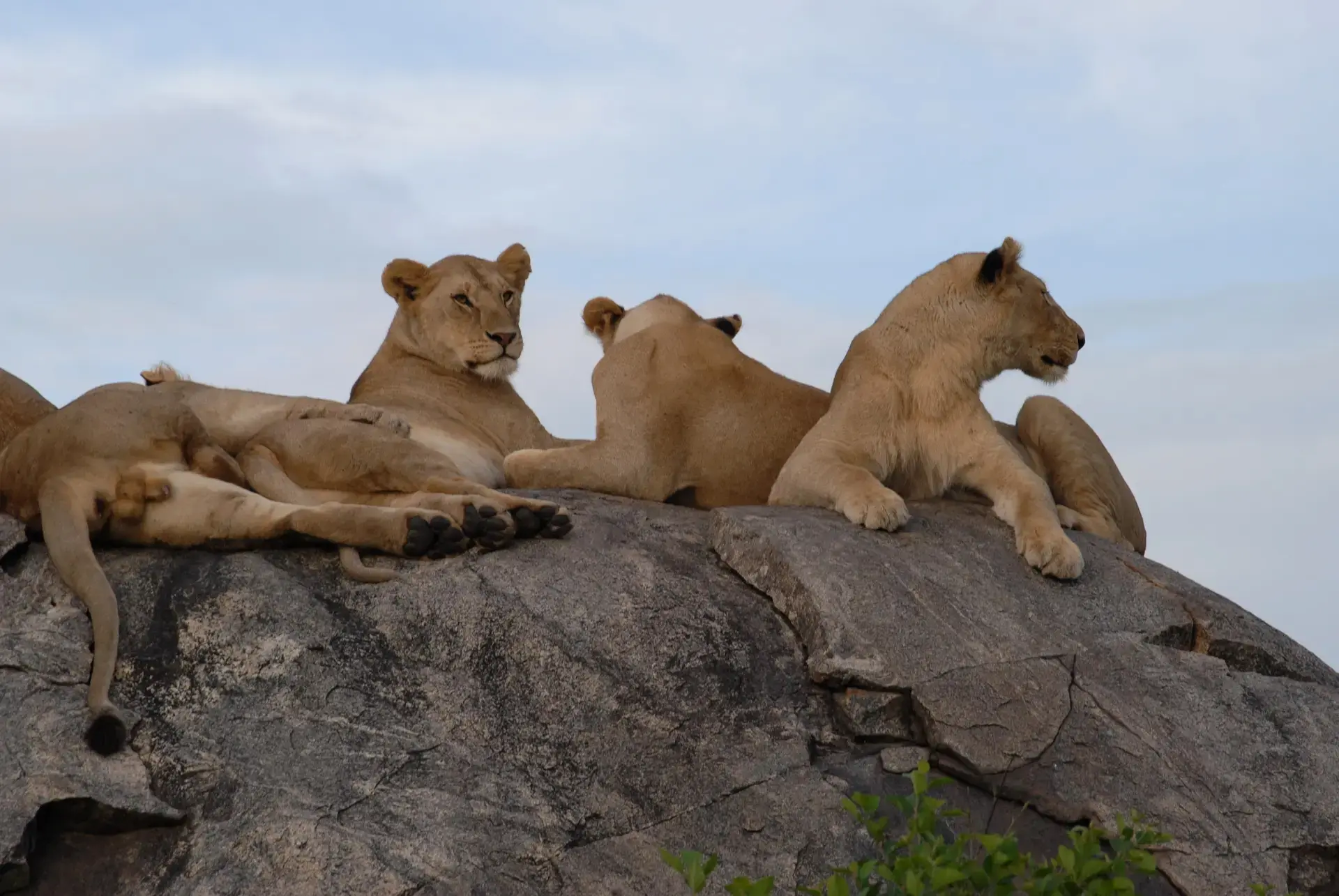
Year-round predators — lion, leopard, and cheetah — thanks to permanent water along the Seronera River and dense resident prey populations that don't depend on the migration passing through. This is also the most accessible zone, with the widest choice of camps and reliable road and air access, making it the natural first stop for most itineraries.
 Zone
ZoneSouthern Serengeti (Ndutu)
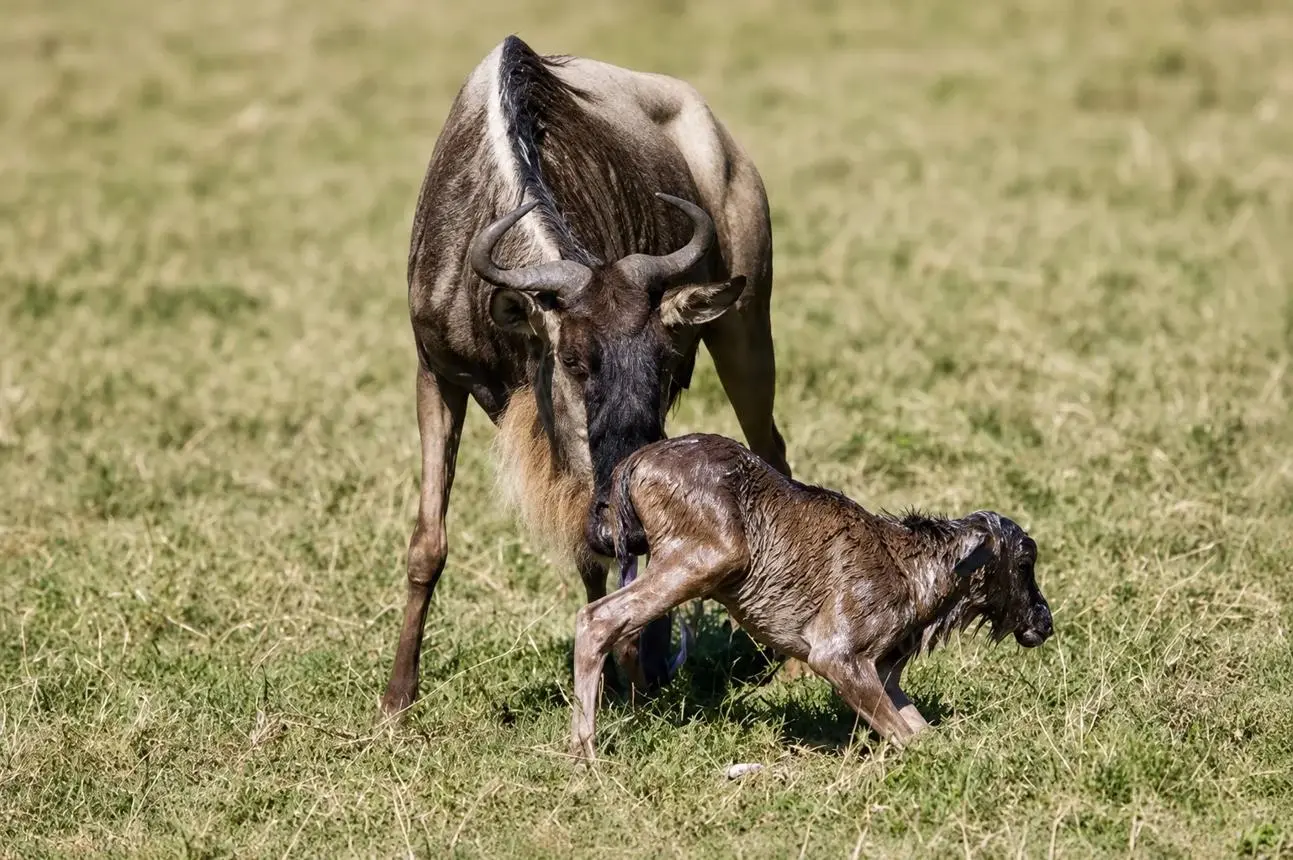
Calving-season predator action (Dec–Mar) and some of the best cheetah sightings in East Africa, on open, short-grass plains ideal for spotting hunts at a distance. This zone technically sits in the Ngorongoro Conservation Area rather than the national park proper, which uniquely allows walking safaris and night drives at select camps.
 Zone
ZoneWestern Corridor
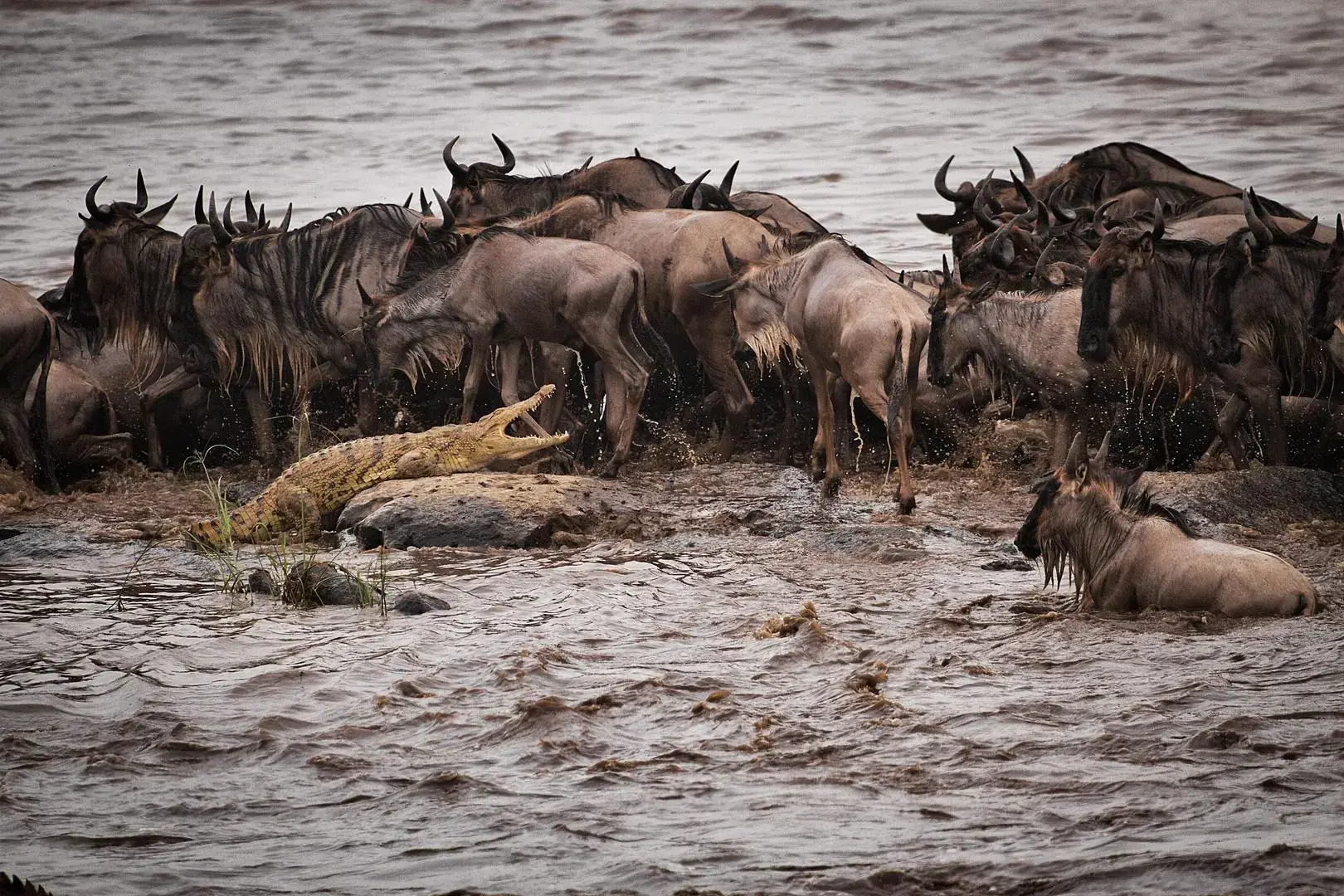
Large elephant herds, hippo pools, giant resident crocodiles, and Grumeti River crossings from May to July, plus some of the park's best riverine-forest birding. Tsetse flies are more common here than elsewhere, so pack neutral-coloured, long-sleeved clothing if you're visiting this zone.
 Zone
ZoneNorthern Serengeti
Migration herds and the legendary Mara River crossings from July to October, plus resident wildlife year-round in a far less-visited, more remote setting than Seronera. Fly-in access is strongly recommended given the 6–8 hour road transfer from Arusha.
Lion
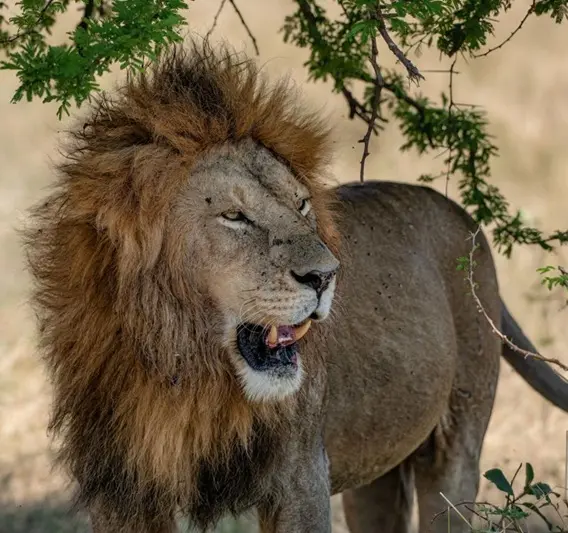
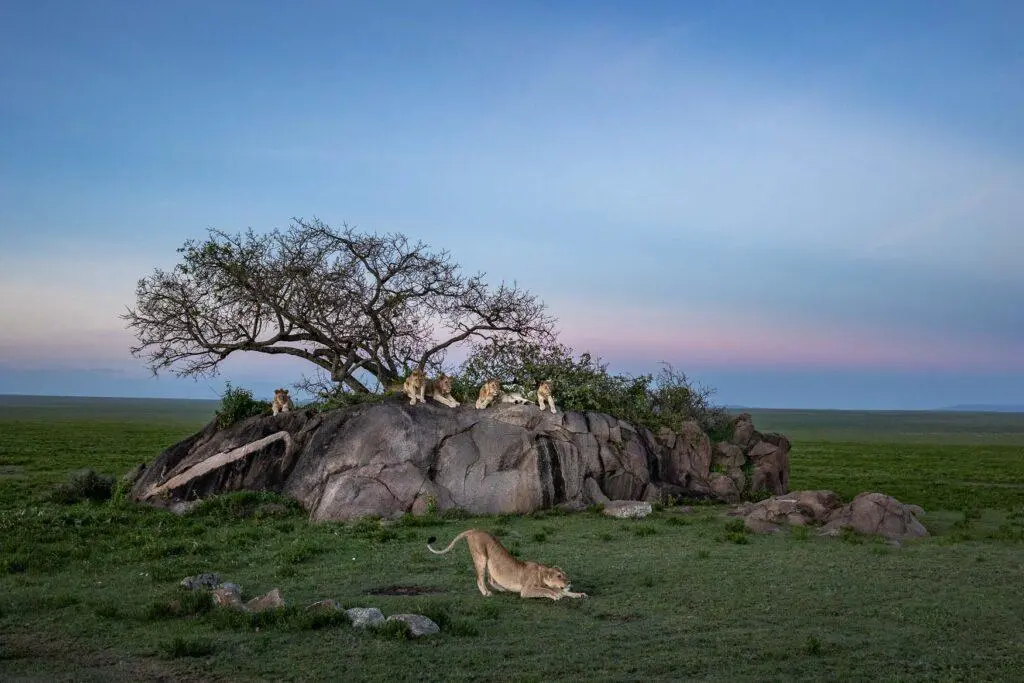
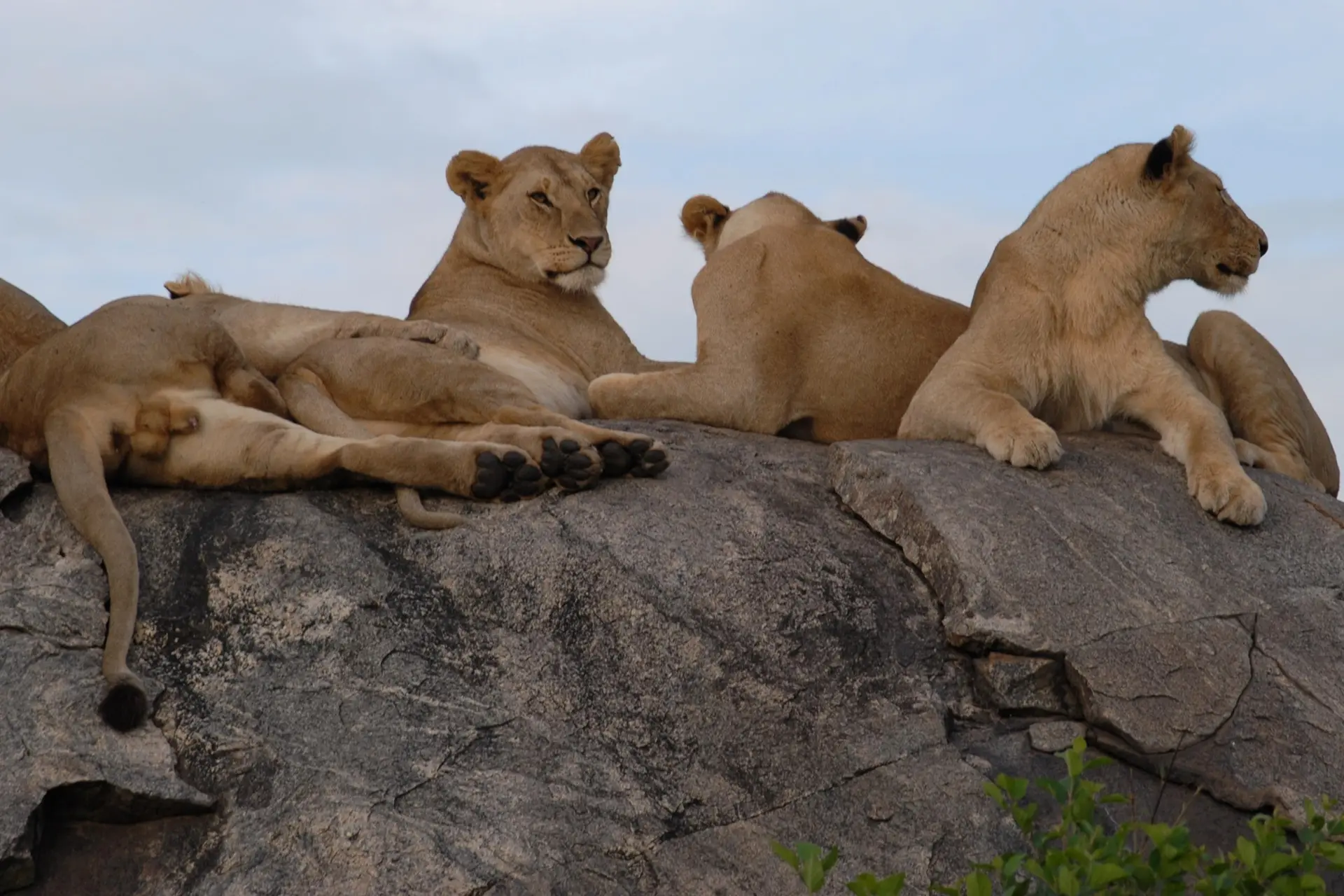
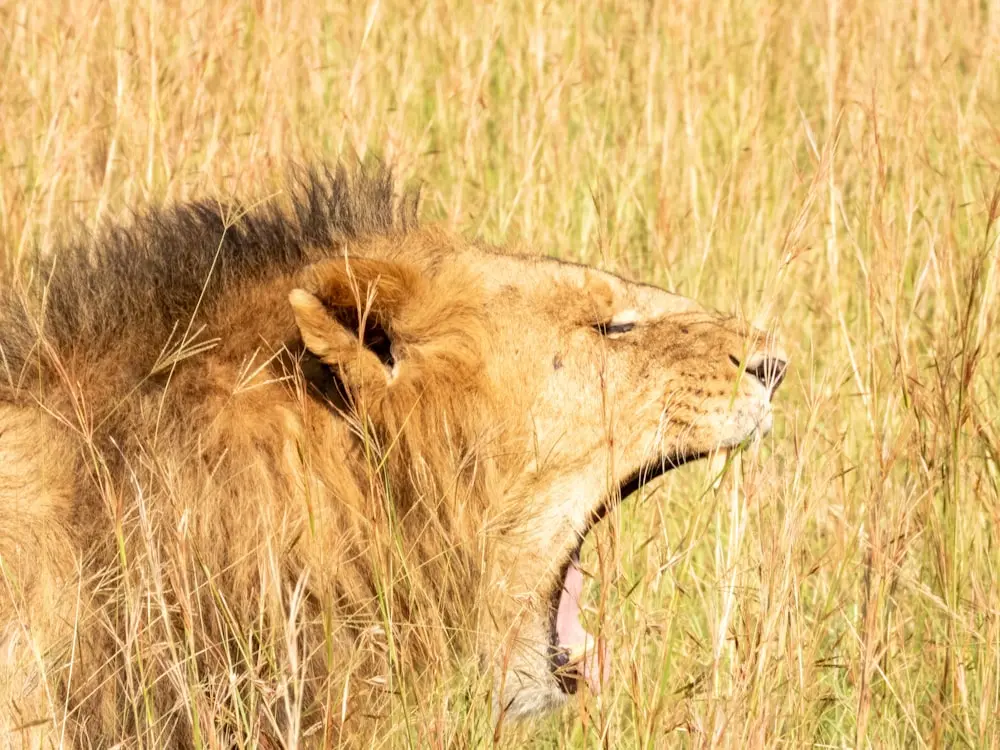
One of Africa's healthiest lion populations, with an estimated 3,000+ individuals, often seen resting on kopjes. Sighting odds: very high.
Leopard
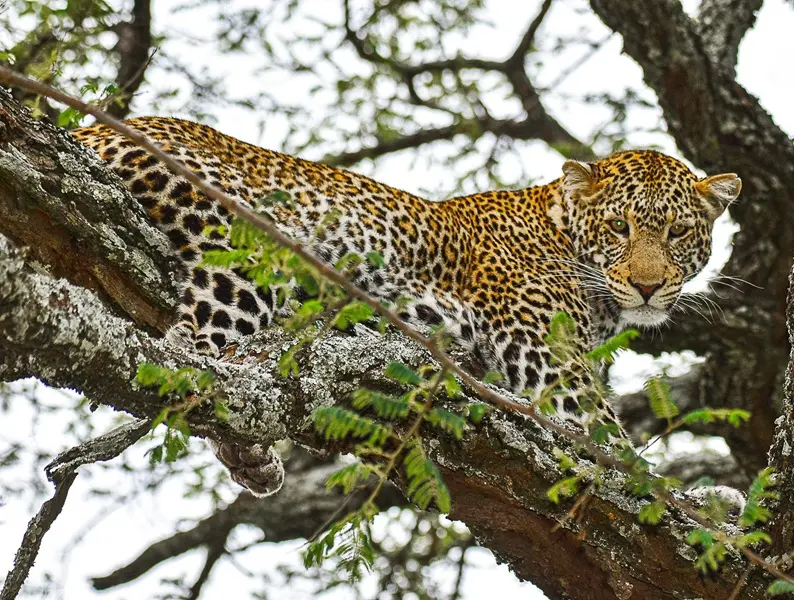
More elusive, favouring riverine trees and rocky outcrops, and largely solitary and nocturnal. Sighting odds: high, with patience.
Cheetah
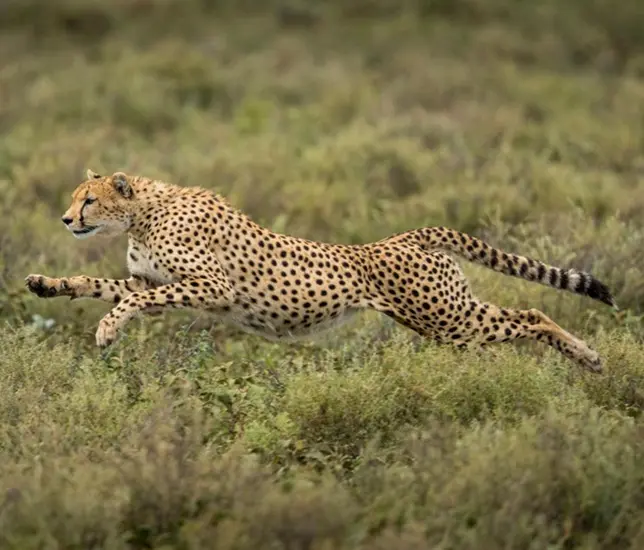
Thrives on the open plains, especially around Ndutu, and hunts almost exclusively during daylight. Sighting odds: high.
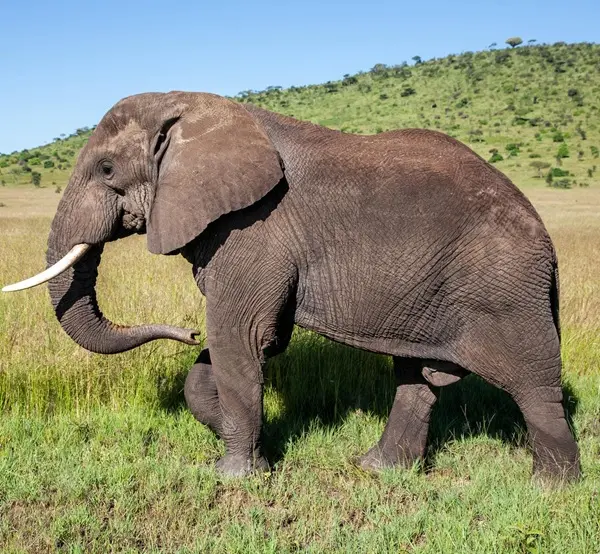
African Elephant
Found throughout the park, with the largest herds concentrated in the Western Corridor's woodland. Sighting odds: very high.
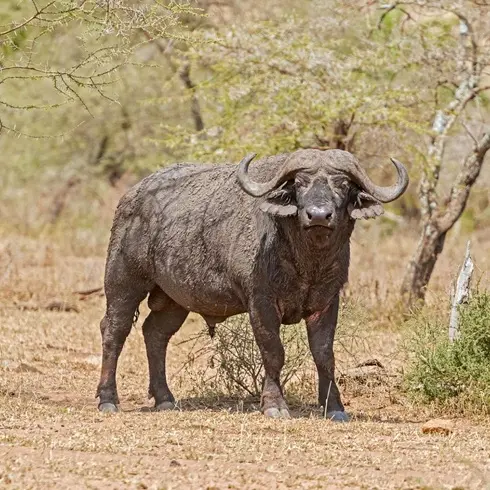
African Buffalo
Herds of several hundred are common near permanent water sources, especially in Central Serengeti. Sighting odds: very high.
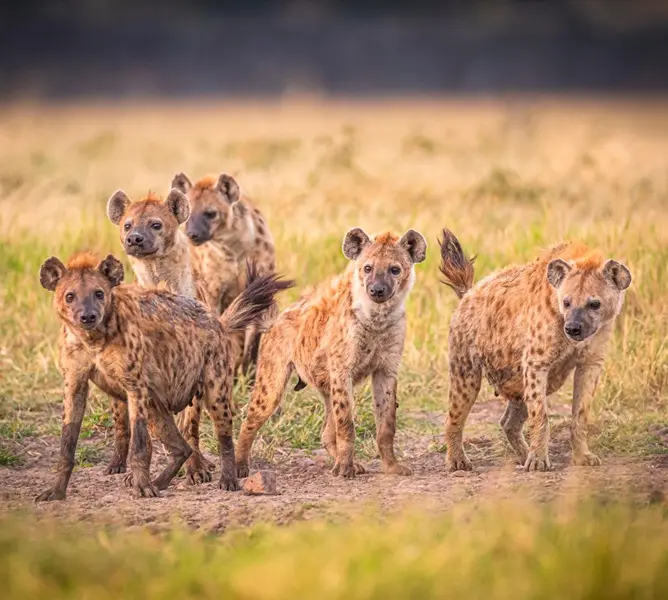
Spotted Hyena
Abundant and active day and night, living in complex matriarchal clans, often seen near kills. Sighting odds: high.
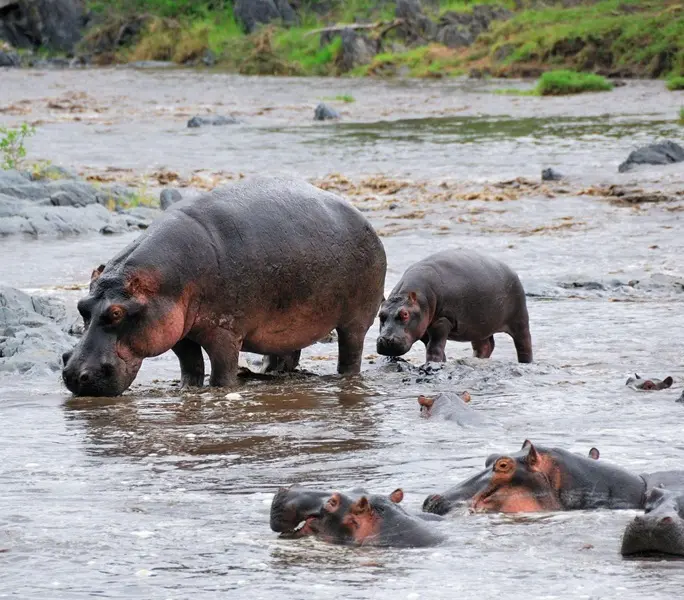
Hippo
Concentrated in dedicated pools along the Seronera River, easily viewed from designated viewpoints, especially early morning. Sighting odds: very high.
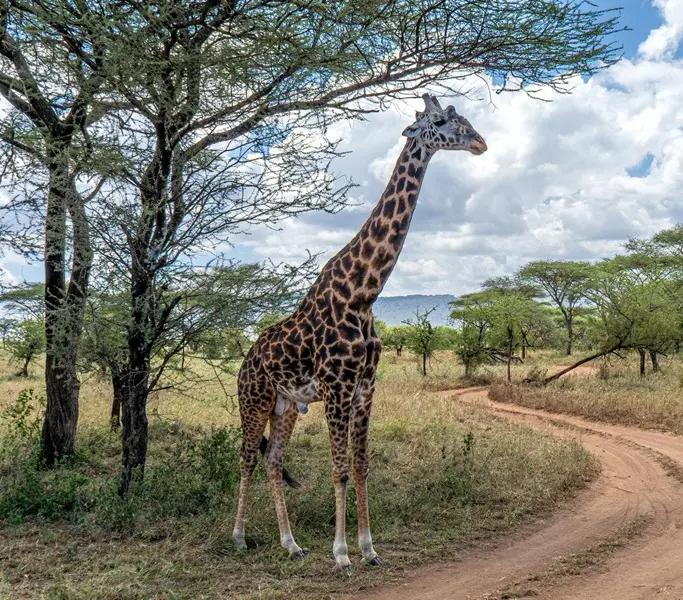
Giraffe
Reticulated giraffes are abundant throughout acacia woodland, particularly around Central Serengeti. Sighting odds: very high.
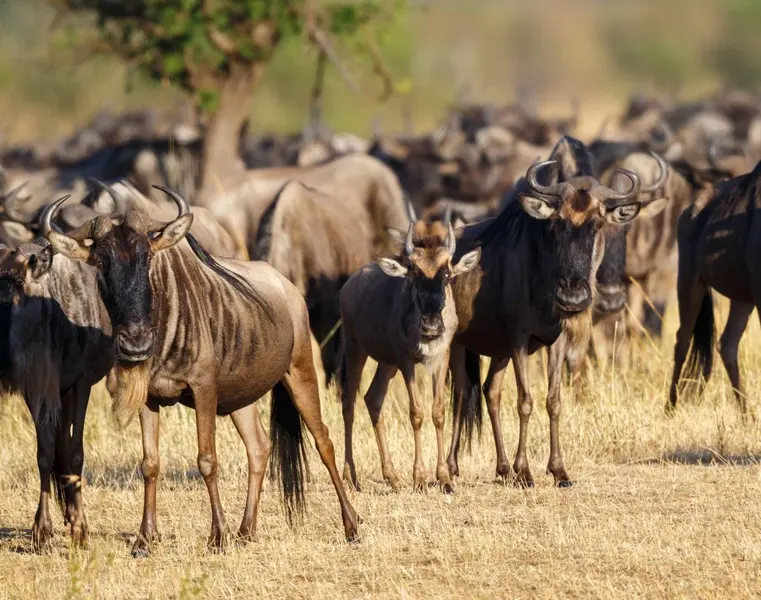
Wildebeest & Zebra
The migration's main players — herd size and location depend heavily on season. Sighting odds: seasonal, but some herds present year-round.
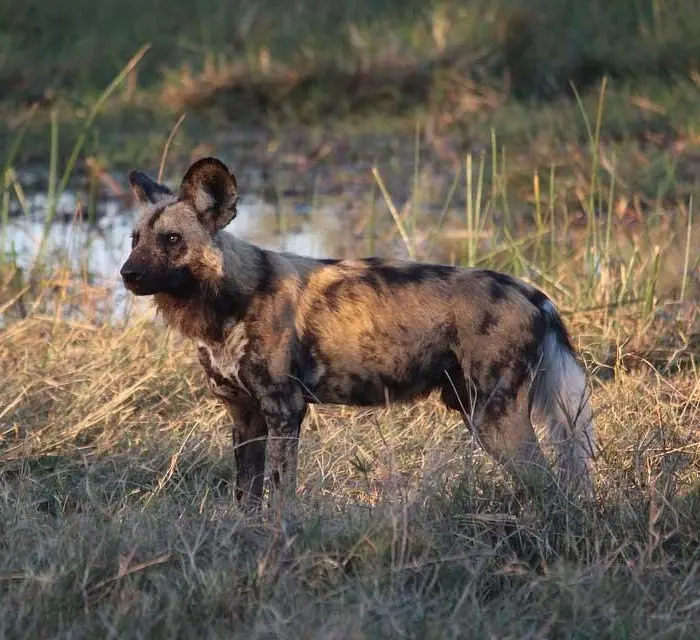
African Wild Dog
Tanzania holds a small, slowly recovering population, with denning season (Jan–Mar) offering the best chance. Sighting odds: rare.
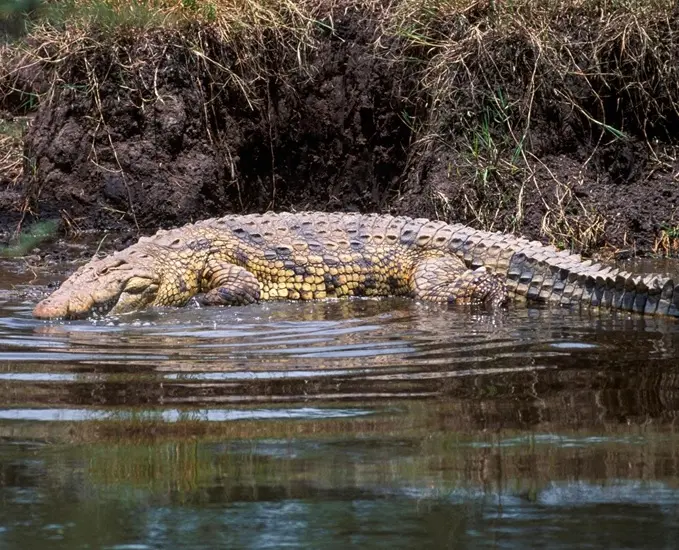
Nile Crocodile
Concentrated at Grumeti and Mara River crossing points, some individuals exceeding 5 metres, but visible year-round basking on riverbanks. Sighting odds: high in the west and north.
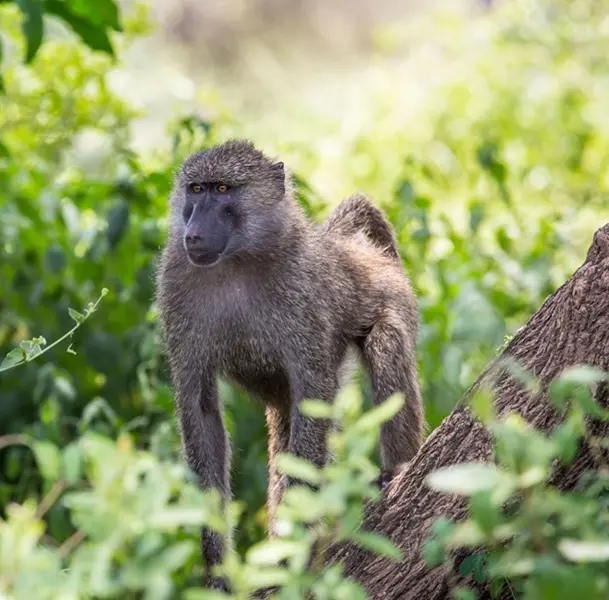
Olive Baboon
Large, highly social troops are common along river valleys and near camps, offering fascinating behaviour to observe up close. Sighting odds: very high.
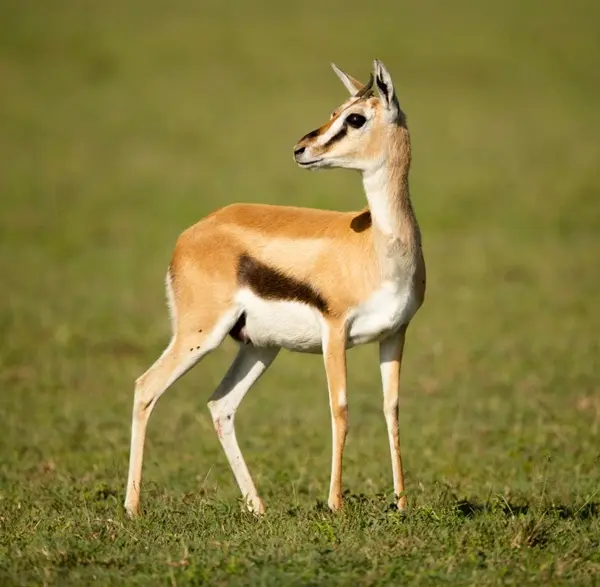
Topi & Hartebeest
Often overlooked antelope species, both frequently seen standing sentinel on termite mounds within mixed migrating herds. Sighting odds: high, seasonal.
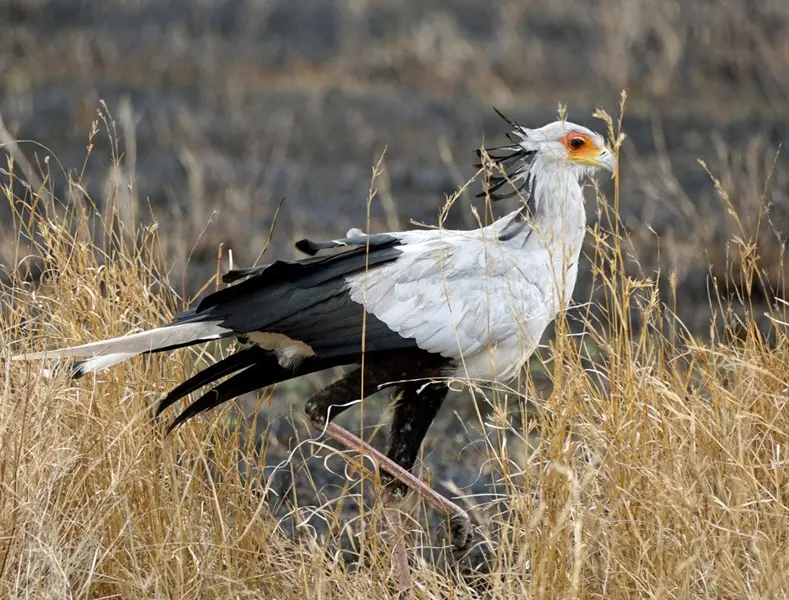
Secretary Bird & Kori Bustard
Two of the Serengeti's most striking ground-dwelling birds, both hunting on foot across the open plains rather than from the air. Sighting odds: good.
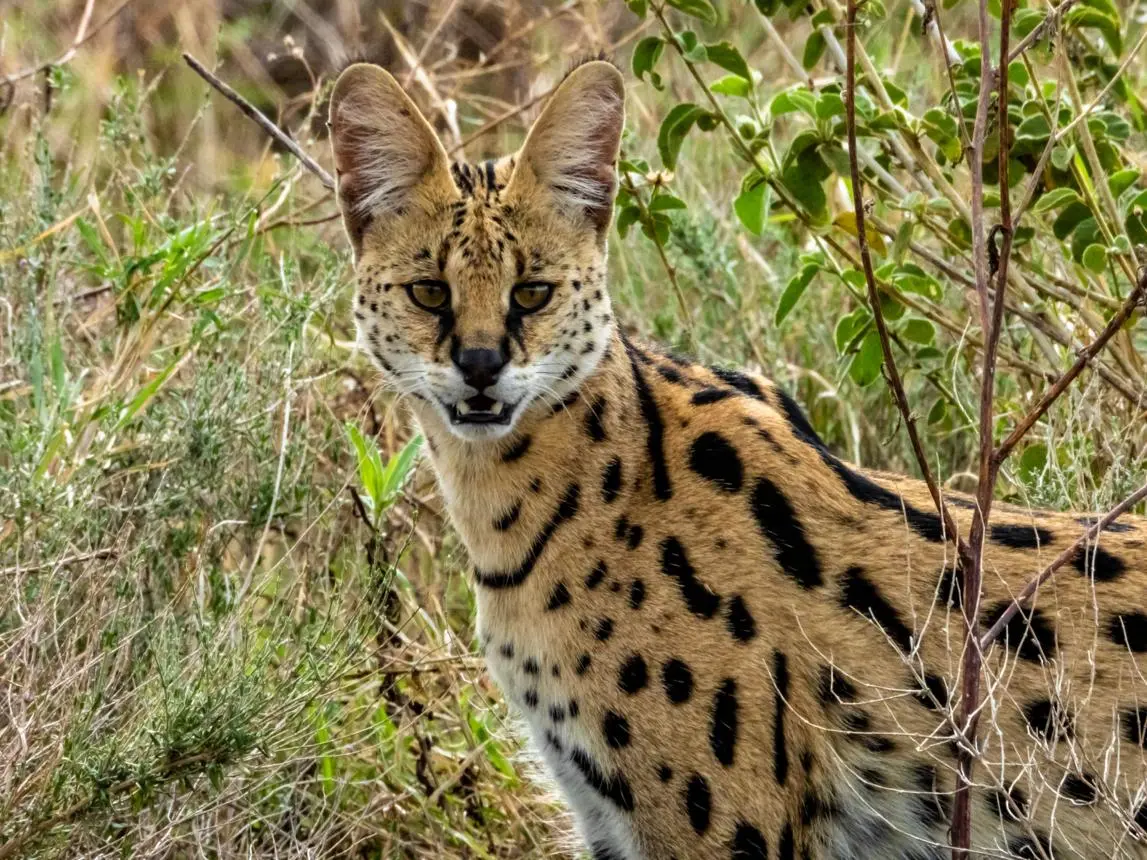
Serval & African Wild Cat
Small, elusive cats rarely noticed by casual visitors, most active around dawn and dusk hunting rodents in long grass. Sighting odds: rare, but a real treat for dedicated wildlife watchers.
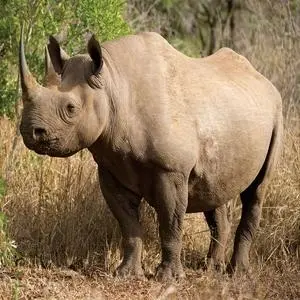
Black Rhino
A small, closely protected population survives around the Moru Kopjes, though sightings within the Serengeti itself remain genuinely rare — Ngorongoro Crater offers far better odds. Sighting odds: low.
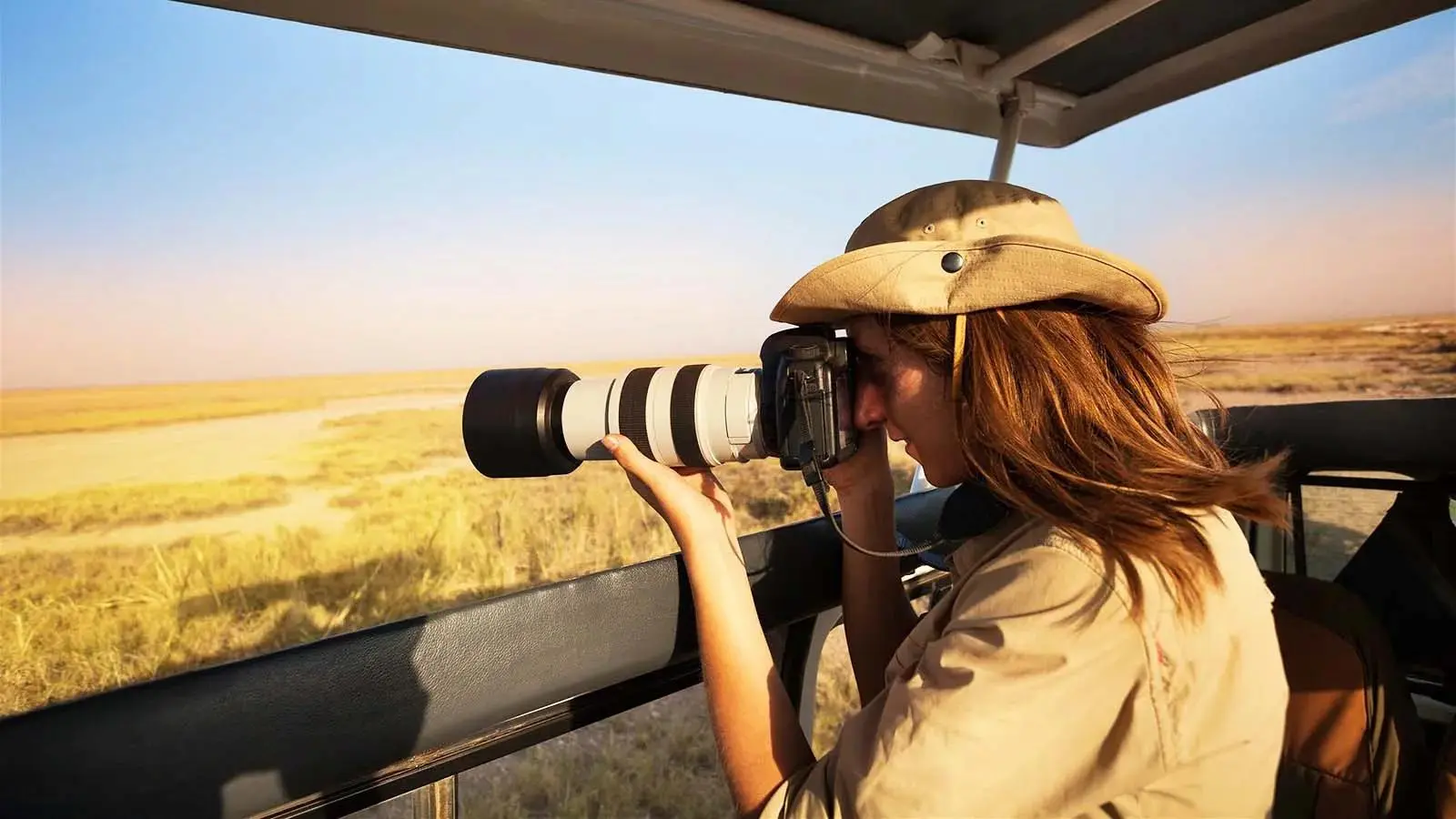
Getting the most from your wildlife photography
- →Shoot early morning and late afternoon for warm, low-angle light and more active wildlife across almost every species.
- →Bring at least a 200mm zoom lens — predators are often further away than they appear, and 400mm+ helps for elusive species like leopard.
- →Ask your guide to position the vehicle with the sun behind you for cleaner exposures and richer colour.
- →Keep a wide-angle lens handy too — sweeping landscape shots capture the Serengeti's scale in a way a telephoto never can.
- →Be patient at kopjes and waterholes — wildlife activity often builds slowly, then happens fast and without warning.
- →For birds, a lighter 100–400mm zoom with fast autofocus is more practical than a heavy prime lens for the variety of species and distances involved.
- →Set your camera to continuous shooting mode before approaching any predator sighting — behaviour can change from resting to action in seconds.
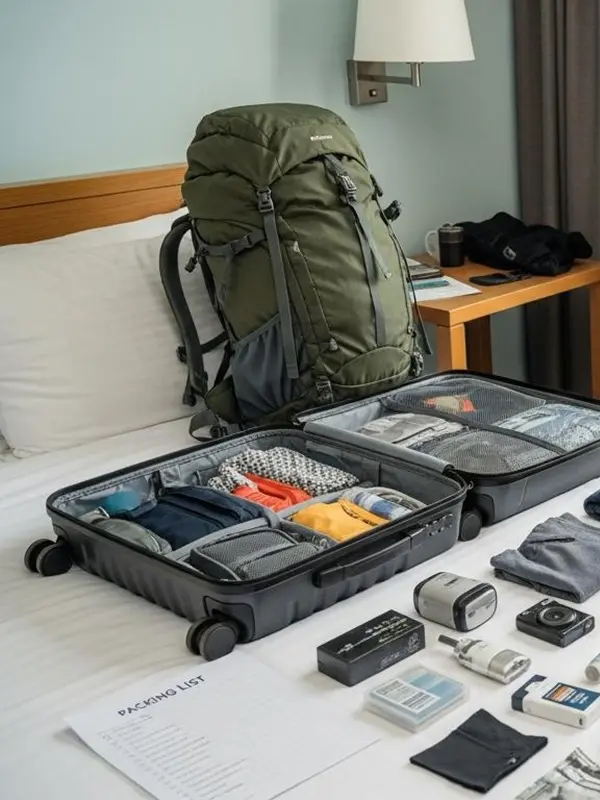
- →Bring spare batteries and memory cards; cold mornings drain battery life faster than expected, and full-day drives generate far more images than most trips anticipate.
Plan your Serengeti wildlife safari
Tell us which species matter most to you and we'll recommend the zones and season that give you the best realistic odds.